Every landlord I know hits the same wall. You cannot take a day off without wondering if your phone is about to ring with bad news. The usual fix is handing your rentals to a company that takes over every decision, from who lives in your unit to how your repair money gets spent.
Liat Arama of Keasy Landlord Concierge built a different option after fourteen years of managing her own portfolio, and this episode walks through exactly how it works.
On this episode of the Make Yourself at Home Podcast, we dig into how she keeps owners in the driver's seat while still providing real support.
Curious about this conversation? Here's a quick preview before you dive in.
The Wall Every Landlord Eventually Hits
I sat down with Liat Arama, CEO and co-founder of Keasy, a property management technology company, because I kept hearing the same complaint from landlords in my circle. They want their time back, but not at the cost of their say in how the property runs.
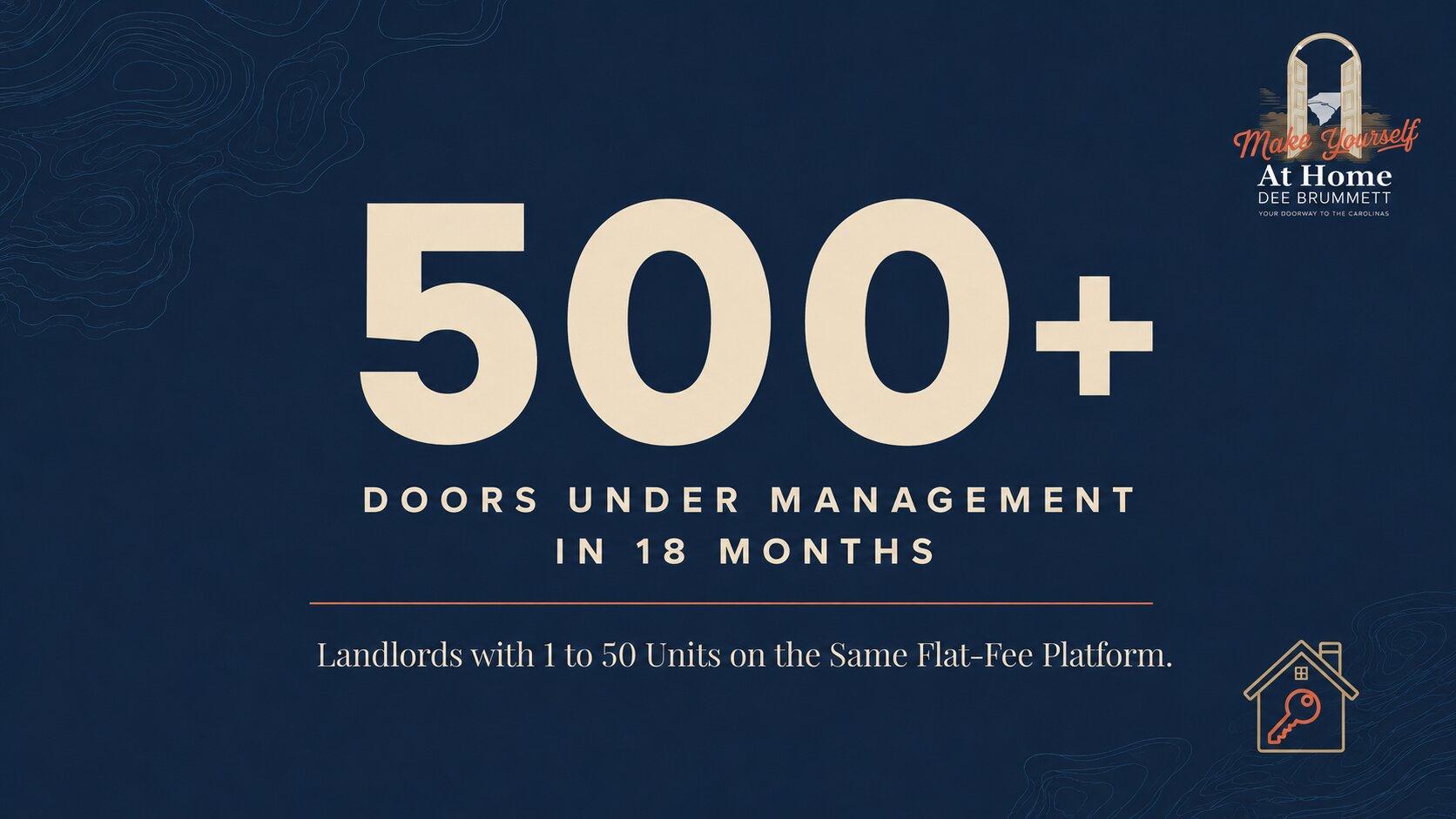
Liat spent fourteen years as a self-managed investor before building Keasy from scratch. The company now manages more than five hundred doors after a year and a half, and she still personally owns 140 apartments with her husband. Her model runs on four words: we execute, we don't decide.
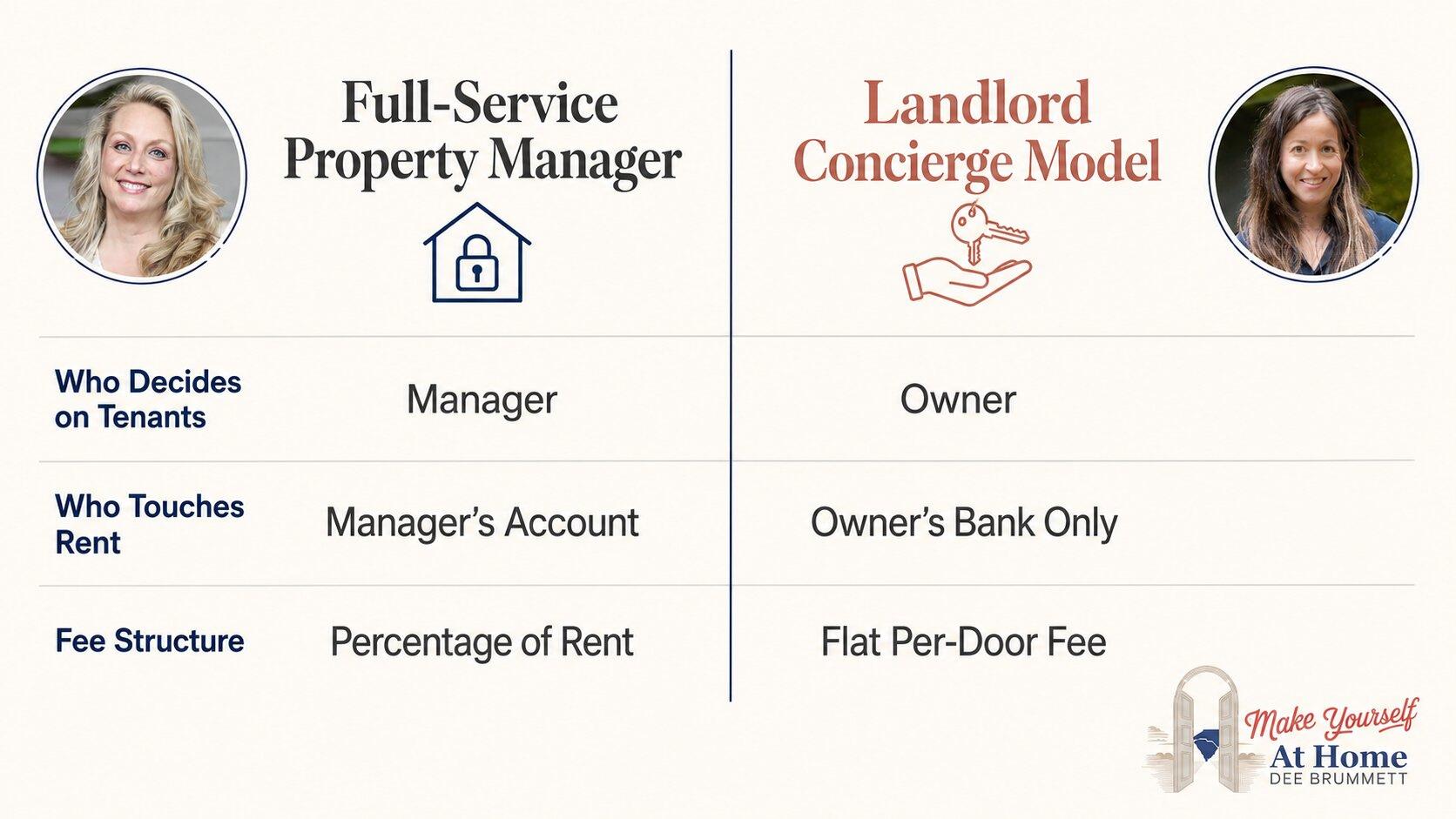
A landlord concierge service does the legwork you assign it, from tenant calls to notices, but leaves the actual decisions in your hands. You are not signing over your portfolio, only handing off the parts you no longer want to carry.
If you want the plain-language version of how that works, Keasy answers the most common landlord questions here.
Watch the full episode here:
Why Your Rent and Your Repair Bill Should Never Touch
Keasy separates money by design. Rent goes straight into the landlord's own bank account and never passes through Keasy. Repair and maintenance expenses run through a separate approval process, where the landlord decides how and when to pay each bill.
That separation protects your net operating income more than most owners realize.
The U.S. Census Bureau's latest housing vacancy report puts the national rental vacancy rate at 7.3 percent for the second quarter of 2026, meaning units sit empty longer before they lease. Knowing your exact cash flow matters even more once you factor that in.
Charlotte real estate rentals have felt this shift too, as large investment groups have bought up entire blocks of housing across the metro. Liat watched something similar happen around Charlotte years before Keasy existed, and it shaped her belief about who should hold the power in a lease: the owner, not a distant fund and not a manager collecting a cut of every dollar that moves.
I talk about this shift often, and if you want more of my take on where Charlotte rentals are headed, my Facebook page is where I post it.
Fixed costs matter just as much as market shifts when you are running these numbers yourself.
Before bringing on outside help, this breakdown of what drives your Fort Mill property tax bill is worth a read, since taxes are the highest fixed cost most landlords underestimate.
The Hidden Incentive Behind a High Repair Bill
Liat spent years managing her own units before she noticed something the rest of the industry treats as normal. A traditional property manager gets paid more when things go wrong, not when they go right.
“What I found in traditional property management companies, in addition to their business model that I don't like, is they don't have any motivation to get any better at anything that they do because they get paid for problems. Tenant doesn't pay rent, oh, you have an eviction, they get paid for the eviction. Tenant moves out, they get paid for the turnover, the repair and maintenance, they mark those up. So basically I'm hiring someone, I'm giving them the keys to my asset, and I'm motivating them to cause me expenses.”
If a manager earns more from an eviction, a turnover, or a marked-up repair bill, their financial interest is not aligned with yours. That is the entire case for flat fee property management. When the fee stays the same whether the job is a three hundred dollar plumbing call or a twenty thousand dollar sewer repair, the manager has no reason to inflate anything.
Liat talks through this exact conflict of interest often, and you can find more of her thinking on her LinkedIn.
This pricing made more sense decades ago, before online payments and digital screening, when a higher rent check carried more physical risk. That justification disappeared with the technology, but the pricing stuck around anyway.
Research from the Joint Center for Housing Studies at Harvard confirms how much the rental landscape has shifted since, with vacancy rates rising as new construction adds supply nationwide.
What Actually Stops a Landlord From Scaling
I asked Liat what she sees as the biggest bottleneck for small landlords trying to grow past a handful of doors. Her answer: not money, not finding deals, but fear of regulation.
Once you cross from owning one or two houses into running something that looks like a business, licensing and compliance pile up fast, and many landlords freeze there, assuming they need a full-service manager just to stay legal. Liat built Keasy Academy to close that gap, so landlords can handle their own compliance instead of outsourcing every decision out of fear.
Weighing a repair decision as part of that growth right now? This conversation with a local home inspector on the defects that cost owners the most is worth a read before your next work order goes out.
Growth in Charlotte real estate rentals makes this relevant close to home too. Neighborhoods that used to be a quiet mix of owner-occupied homes and small landlords now compete with institutional capital at scale, and that pressure changes what "scaling" even means for an independent owner.
Keasy's team documents a lot of this day-to-day shift in property management on their Instagram, which is worth a follow if you want to see how a modular concierge model actually runs behind the scenes.
Bigger capital does not automatically mean better management. It just means more competition for the same renters.
This look at how Ballantyne stopped functioning as a pass-through neighborhood shows how fast a submarket shifts once bigger money moves in.
Why the Tenant Not the Property Is the Real Asset
Most of the industry treats the property as the asset and the tenant as a line item. Liat flips that entirely.
“If you ask me, the asset is the tenant. It's not the property. Property isn't worthless if there's no tenant. The entire philosophy of Keasy is we want tenants to choose us. We want tenants to enjoy working with us, and one day when we're all over the place, to actually go and look for a Keasy-managed property because they know that they have 24/7 access to repair and maintenance, their voice is heard, their problem is being reviewed. Even if the owner is nonresponsive, there's somebody there in between watching.”
A property with no tenant in it produces zero income no matter how nice the finishes are. Liat's team treats tenants as people who chose to live somewhere, not a paycheck to collect and forget, a mindset she carries into small gestures like the holiday gift she has delivered to every tenant she owns for years, which has paid off in low turnover and steady referrals.
I see the same thing across my own client base at At Home in the Carolinas, where the relationships that last are never purely transactional.
It is easy to underestimate how much that reputation compounds over years of referrals.
I share more of those client stories on my Instagram throughout the year.
The numbers side matters too, especially once you decide which tasks you actually want off your plate.
On the pricing side, if you are a self-managing landlord trying to model out what to hand off first, Keasy's breakdown of what flat per-door pricing actually covers is worth reading before you commit to anything.
The First Step Out of Landlord Overwhelm
I wanted a practical answer for the landlord who feels buried right now. Liat did not hesitate.
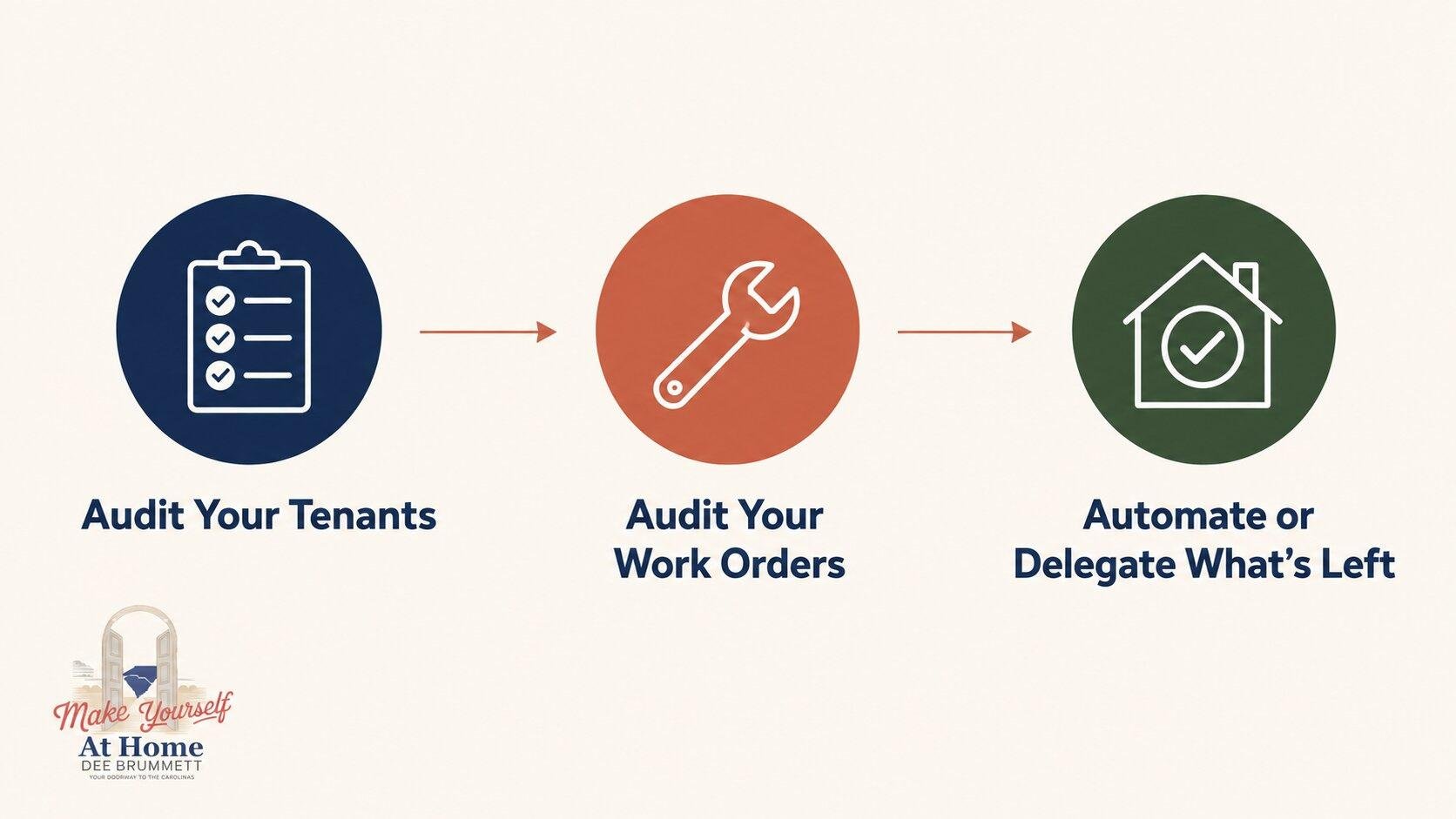
“Write it all down. You have three departments. You've got rent collection, you've got repair and maintenance, and you've got your tenants. Count your tenants, count your rent, make sure everything is under control there. If it's not, look at the work orders, see what's going on, see if you've got that under control. Once you're done reviewing those two, solve what's left. You're good to go.”
It is a simple framework, but most overwhelmed landlords skip past it and jump to hiring a full-service manager before they even know which part of their operation is broken.
We also talked about 2026, with rising costs on nearly every side, from insurance to loans to repairs. Liat's advice: skip cosmetic upgrades that don't affect safety, and prioritize the maintenance that prevents a bigger problem later.
The National Association of Realtors' latest research shows financing conditions remain a defining factor for buyers and investors this year, and that pressure trickles straight into rental operations.
That kind of pressure is exactly why the operational side of the business matters as much as the deals themselves.
Landlords who want to keep learning past this episode can find more of Keasy's own advice on their blog, where the team publishes regularly on compliance and cash flow.
Liat Arama of Keasy proves a self-managing landlord does not have to choose between control and support.
For a sense of how fast a submarket can move while you are figuring all this out, this look at why Downtown Monroe home prices are climbing well ahead of the rest of the city is a useful companion read.
Markets like that reward owners who are paying close attention, not just those with the biggest portfolio.
You can also catch more from Liat's team on Keasy's Facebook page, where they post landlord wins and behind-the-scenes updates.
If you want to keep up with the show and my day-to-day work in Charlotte real estate, my LinkedIn has the most regular updates.
Curious to hear my full conversation with Liat Arama of Keasy Landlord Concierge about how the landlord concierge model is changing the game for property owners? You can listen to the entire episode right here.
FAQ
What does a landlord concierge do differently than a traditional property manager?
A landlord concierge like Keasy executes the tasks an owner approves instead of making unilateral decisions about tenants, repairs, or evictions, and it charges a flat per-door fee instead of a percentage of rent or a repair markup.
How does Keasy keep rent separate from maintenance expenses?
Rent deposits directly into the owner's own bank account and never passes through Keasy. Maintenance expenses are billed and paid separately, based on how the owner wants each bill handled, so there is no commingling of funds.
What is the first step for a self-managing landlord who feels overwhelmed?
Audit what already exists. Review your tenants, your rent collection, and your open work orders before deciding what to automate or hand off, rather than jumping straight into a full-service management contract.
Apply to Be a Podcast Guest on Make Yourself at Home
Real estate is changing fast, and the owners, agents, and operators solving real problems in this space are exactly who I want on this show. If you have a perspective worth sharing with landlords and investors navigating today's market, I would love to hear from you.