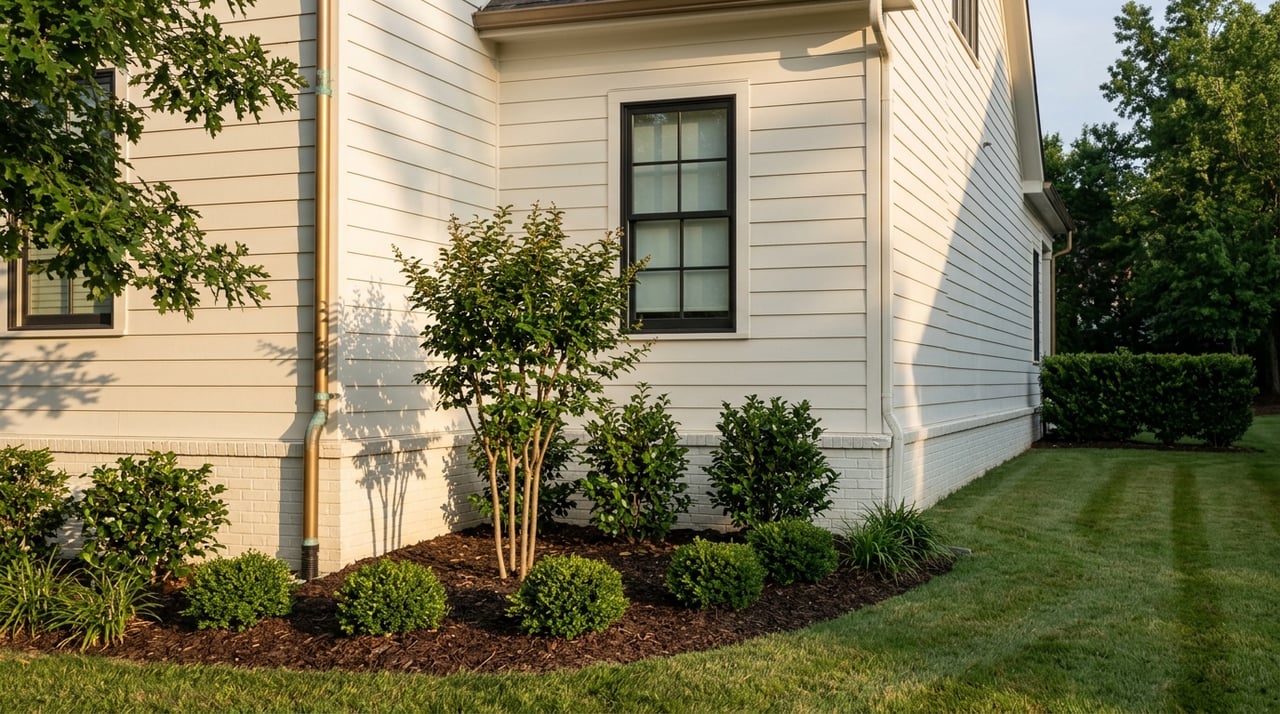
Picture the family that listed their four-bedroom on a quiet street off Rea Road back in May. They priced it to move fast, banked on a June contract, and figured on being unpacked well before Charlotte-Mecklenburg Schools opened its doors for the year. Instead their listing is still active. Last Tuesday came and went. Their kids started school on August 25 in the old house, on the old bus route, in the same bedroom they were supposed to have left behind in July.
That family's mistake wasn't the price. It was misreading the deadline that actually organizes this market.
South Charlotte gets talked about in quarters and seasons, the same way every suburb does. Spring is busy, summer is busier, fall cools off, winter goes quiet. That framing isn't wrong, but it hides the real mechanism. In neighborhoods like Ballantyne, Piper Glen, and the Providence Road corridor, the housing market doesn't actually run on the calendar quarter. It runs on one fixed date: the first day of school. And this year, that date has already come and gone.
The Date That Actually Runs the Market
Charlotte-Mecklenburg Schools opened for the 2026-2027 year on Tuesday, August 25. That date isn't a guess or a rough estimate. It's set months in advance on the official district calendar, the same way it is every year, and every family with school-age kids who's shopping South Charlotte is quietly building their entire timeline around it.
Nobody calls it a deadline out loud. Buyers talk about wanting to be "settled in" or "not disrupting the school year." But strip away the polite language and what's left is a hard date. If you're a South Charlotte buyer with kids, you don't actually have until December to close. You have until late August, because the alternative is starting the year in a rental, at a grandparent's house, or in the home you were trying to leave.
That single date does something interesting to the market. It doesn't just create demand. It creates a countdown, and countdowns change behavior in ways a simple month-over-month price chart never shows.
Why Summer Looks Tighter Than It Is
Here's the part most portal browsing misses entirely. When dozens of South Charlotte families are all racing to close before the same date, the market looks tighter in June and July than the underlying supply and demand actually justify. Buyers stop negotiating on price and start negotiating on speed. Sellers feel confident holding firm, because they can see the same countdown their buyers are working against.
The Canopy Realtor Association, which runs the region's MLS, described this exact rhythm returning after several disrupted pandemic years. The pre-pandemic pattern, in the association's own words, saw a natural winter slowdown followed by renewed spring buying, and that
"sustained momentum continued through the summer months as families made their moves."
That's not a coincidence of weather or vacation schedules. Families move in the summer because the school calendar tells them to. And once that calendar deadline passes, the pressure that was propping up summer urgency doesn't taper off gradually. It disappears in a single week, because the buyers who needed to close by August 25 either closed already or are no longer shopping with the same urgency they had in July.
What the County-Level Premium Is Really Measuring
The most recent county-level data from Canopy MLS, published in June 2026 covering May sales, puts the regional median sales price at $410,000 across the sixteen-county Canopy service area. Mecklenburg County alone posted a median of $469,000 that same month, nearly $60,000 above the regional figure. The City of Charlotte landed in between at $440,000.
That gap is worth sitting with. Based on standard lending guidelines, a household needs roughly $106,000 in income to afford the regional median home, but closer to $121,000 to afford the Mecklenburg County median. That $15,000 difference in required income isn't really a Mecklenburg County premium in the abstract. It's largely the premium of being close enough to South Charlotte's family neighborhoods to make the August 25 deadline realistic without a long commute or a risky closing timeline.
The same report noted that regional inventory had reached its highest level since before the pandemic, even as demand held steady. More homes on the market usually means more room for prices to soften once the deadline-driven urgency fades. For South Charlotte specifically, that combination, elevated inventory plus a deadline that just passed, is exactly the setup that opens a short window most buyers never think to look for.
The Air Pocket That Opens After the Bell
Here's the mechanism in plain terms. Sellers who listed in South Charlotte hoping for a pre-school-year close were, in effect, negotiating against a clock. That clock gave them leverage. Buyers with kids couldn't afford to walk away over ten thousand dollars when the alternative was missing the first day of school entirely.
Once that first day happens, the leverage doesn't transfer to the seller. It evaporates. A seller still sitting on the market in early September is now negotiating against buyers who no longer have a school-year reason to rush, at the exact moment their own home has been sitting long enough to start raising questions about why it hasn't sold. That's a fundamentally worse negotiating position than the one they had in June, even if they haven't touched their asking price.
This creates a real, if narrow, window for buyers willing to shop South Charlotte in the weeks right after the bell rings, before the next wave of demand builds toward the traditional fall push around Labor Day. Sellers, meanwhile, need to treat this moment as a genuine repricing decision rather than a wait it out. Anchoring to what a neighbor's house sold for in June, when the deadline was still doing the negotiating for them, is a comparison that no longer applies.
If you're buying in South Charlotte right now:
- Ask how long a listing has been active, not just what it's priced at. A home still sitting after August 25 is negotiating from a weaker position than the calendar suggests.
- Don't assume September softness means something is wrong with the house. It may simply mean the seller's original buyer pool has moved on.
If you're selling in South Charlotte right now:
- Compare your listing to what's actively under contract this month, not what closed in June or July.
- If your home was priced for a pre-school-year buyer and that buyer didn't materialize, the pricing conversation needs to happen now, not after another six weeks on the market.
Quick Answers
Does this mean South Charlotte prices are dropping? Not necessarily. The Mecklenburg County median was still $469,000 as of May 2026, well above the regional figure. This is about negotiating leverage shifting in the weeks after the school calendar deadline passes, not about a broad price correction.
Is fall really a worse time to sell in South Charlotte? It's a different time, not automatically a worse one. Canopy's own year-end reporting has described a slower, more traditional seasonal rhythm returning to the region, with fewer but often more serious buyers later in the year. The key is pricing to that reality instead of to summer's deadline-driven comps.
What if I don't have school-age kids? Does any of this matter? It still matters, because it explains why the sellers and buyers around you are behaving the way they are. Understanding why a listing has been sitting since July, or why a seller suddenly became flexible in September, helps you negotiate from an informed position even if the school calendar has nothing to do with your own timeline.
The families racing to close before August 25 already made their move, for better or worse. The ones paying attention now are the ones who understand that the real deadline in South Charlotte's housing market just passed, and the days right after it are where the leverage actually shows up. If you're trying to figure out what that means for a specific street in Ballantyne, Piper Glen, or anywhere else in South Charlotte, At Home in the Carolinas can walk you through what your home, or your target home, actually looks like against this fall's numbers. Get Home Value and let's talk timing before the next wave of buyers figures this out too.