
Most agents believe the biggest threat to their business is the market. It rarely is. The real drag is one person trying to be the lead generator, the showing agent, the listing expert, the negotiator, and the paperwork department all at once, and being merely adequate at each.
That gap is what I got to dig into with Mark Ryan of The Mark Ryan Group on Make Yourself at Home, where he shared how a broker serving Dayton and Cincinnati turned leverage into better client outcomes.
Here’s a preview of that episode:
Why I Had This Conversation
I keep watching agents work harder as things slow down, and I wanted someone who solved that with structure instead of hours.
Mark is the broker, owner, and team leader of The Mark Ryan Group at RE/MAX Victory + Affiliates, a multi-year Best of Dayton winner who coaches agents nationally. He came in from the mortgage side with zero training, bought books, hired a coach, and built a team almost immediately.
Buyers and sellers are asking harder questions now, and I want the agentshelping buyers and sellers across the Carolinas move with confidence to have real answers.
Watch the full episode here:
The Real Reason Doing Everything Yourself Costs Your Client
Mark's case for the real estate team specialist model is not about volume. It is about attention. He will admit he is probably the best person on his team at any single task, but only if that task is the only thing in front of him. It never is.
So, the work gets divided. Buyer specialists are in homes daily and often know a property before the client asks. His wife, Laura, runs contract to close. Mark keeps the listing side and steps in for negotiation and inspection issues.
A specialist can tell you why a listing looks better online than in person, or surface a three-bedroom you would never have clicked on.
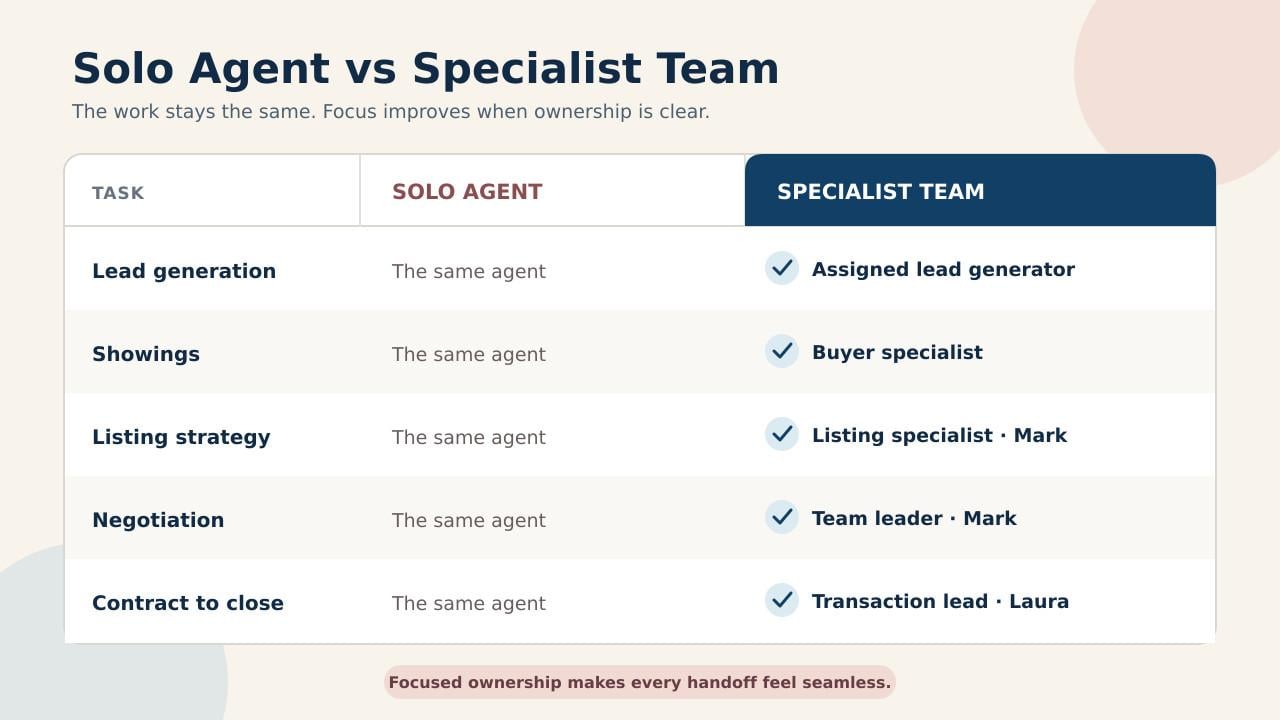
What sold me was his point about handoffs. Other teams compliment his because the transitions are rehearsed. Clients do not feel your org chart. They feel the seams.
Why I Stopped Telling Sellers What Their Home Is Worth
The traditional listing appointment is an announcement. An agent arrives with a finished report and reveals a number. Mark's problem is that a report can say almost anything if you stretch far enough, and he sees it constantly: comps a year and a half old, three miles out, wrong school district.
His alternative is a live property valuation method. He does no advance research. The seller sits with him, and they build the number together.
“I don't cheat, I don't look at what your house is worth before you, and I sit down. We're literally putting it in, and I'm walking you through what we're doing and why. The buy-in from the seller is so much better because I didn't tell you what your house is worth. We arrived at it together, and you have so much less pushback on the pricing situation.”
“Solds” first, because that is what an appraiser uses. “Pendings” next. “Actives” get a look at the end.
Then he pulls up a comparable kitchen and asks the seller to judge it. One client took a look, admitted his own was not close, and Mark lost the listing. He also did not waste three months of that seller's life. Any homeowner canwalk through a live valuation on their own property and watch the same logic play out.
The Three Day Window That Puts Thousands Back in a Seller's Pocket
Pricing, for Mark, is a marketing decision first. He prices at round numbers. Four hundred thousand, not 399,999 and not 400,005. Shave a nickel off, and you disappear from every search that stops or starts there.
He also discourages pushing high, because a low price corrects itself with multiple offers while a high one just sits.
Listings go active Thursday or Friday, and he asks the seller for two things, permission to disclose multiple offers, and permission to hold every offer until Monday.
Those three days are where the money is made. He can tell one buyer what another is doing and let the offers climb. It takes three days to sell your house because he made it take three days.
Why One Lender Beats a List of Three Every Time
This is where Mark knows he ruffles feathers. His preferred lender partnership is exclusive on purpose, and he calls handing buyers three names liability theater rather than protection.
"I think it's a much better defense to say, Yes, Your Honor, I gave them one name and said they should call them because I've used them personally multiple times. We've had hundreds and hundreds of clients that used them. They do a great job for our clients, and I had every reasonable expectation that they would continue to."
The return is speed. His lender came from processing, so she gathers documents up front instead of letting underwriting bounce a file back into the queue. Listing agents know which lenders close on time, which quietly wins his buyers offers.
The same logic drives his buyer consultation agreement process. He has used buyer agreements for decades, so the industry shift changed nothing for him. He closes casually, asks whether this feels like a good fit, then lets the paperwork formalize what you already agreed to.
What Actually Decides Who Wins the Offer
Mark's blunt view is that buyers think agents are people with keys and discover otherwise only after they are committed. Winning multiple offer situations comes down to knowing your own contract. Every box benefits one party at the other's expense, so the skill is finding what costs you little and means a lot to the other side.
A week of post-closing occupancy might be nothing to your buyer and ev
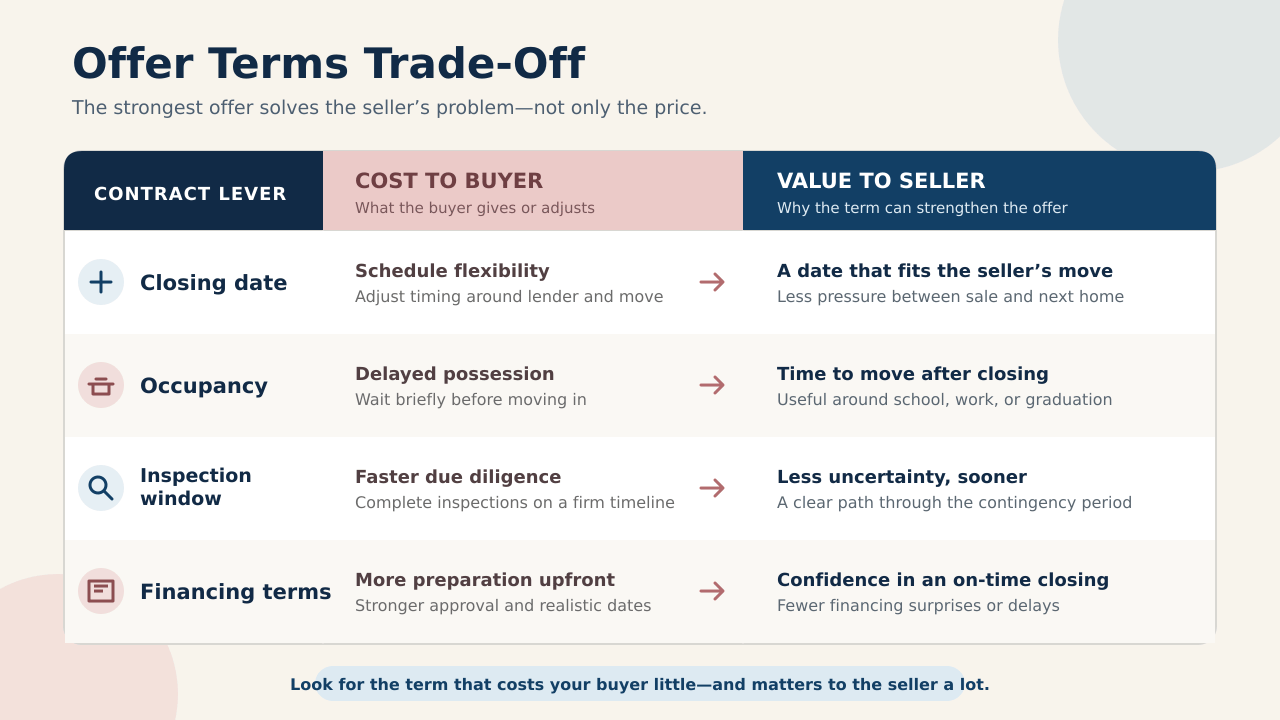
The mistakes are self-inflicted: one-day inspection windows, missing contact information, clear-to-close dates that are impossible, etc.
Clean offers earn the callback. His team regularly gets a second look without being the highest number.
What Changed for Me After This Conversation
I have always believed in walking clients through a contract before the emotional moment arrives. Mark gave me better language for it.
"If I have all of that stuff and I seem slimy, you won't win. If all I have is trust, but I don't have any history, I don't have any tools, I don't have any systems, that's still gonna be tough. But I think the guy with trust and no experience will be more successful than the slimy guy with all the systems and all the stuff behind him."
His line about a teammate's eighty percent beating a distracted agent's fifty percent reframed control for me. So, I am setting expectations earlier and treating trust as the deliverable, not the byproduct.
If you are curious aboutwhat your home could realistically sell for in today's market, the same honesty applies.Mark Ryan of The Mark Ryan Group built his systems around it, and after this conversation, so am I.
Want to hear my full conversation with Mark on building a real estate team that sells homes for more?
Frequently Asked Questions
Does joining a team mean my client gets less of my attention?
The opposite, when roles are clear. The leader stays on high-stakes moments while specialists handle the work they do daily.
How do I get a seller to accept a price they did not want to hear?
Build it with them instead of presenting it. When they reach the conclusion first, the number stops being your opinion.
Is one preferred lender risky for buyers?
Mark argues a documented history of on-time closings beats three names offered without endorsement, and exclusivity earns his clients priority.
Apply as a Guest on Make Yourself at Home
The agents thriving right now built something repeatable before the market forced them to. If you are running a team, coaching agents, or solving a real problem in lending or brokerage, I want to hear from you!
Make Yourself at Home is produced by Icons of Real Estate, the #1 Real Estate Podcast Network. If you are a real estate professional, apply to be a guest speaker across the network!