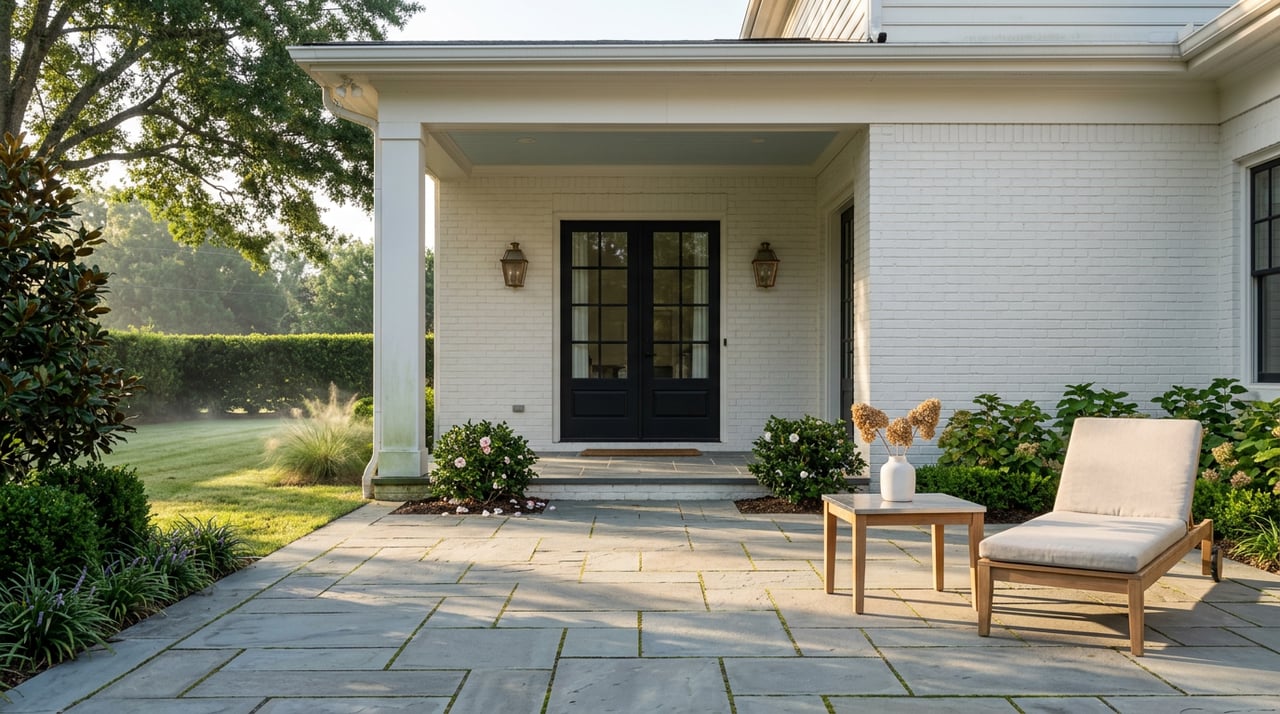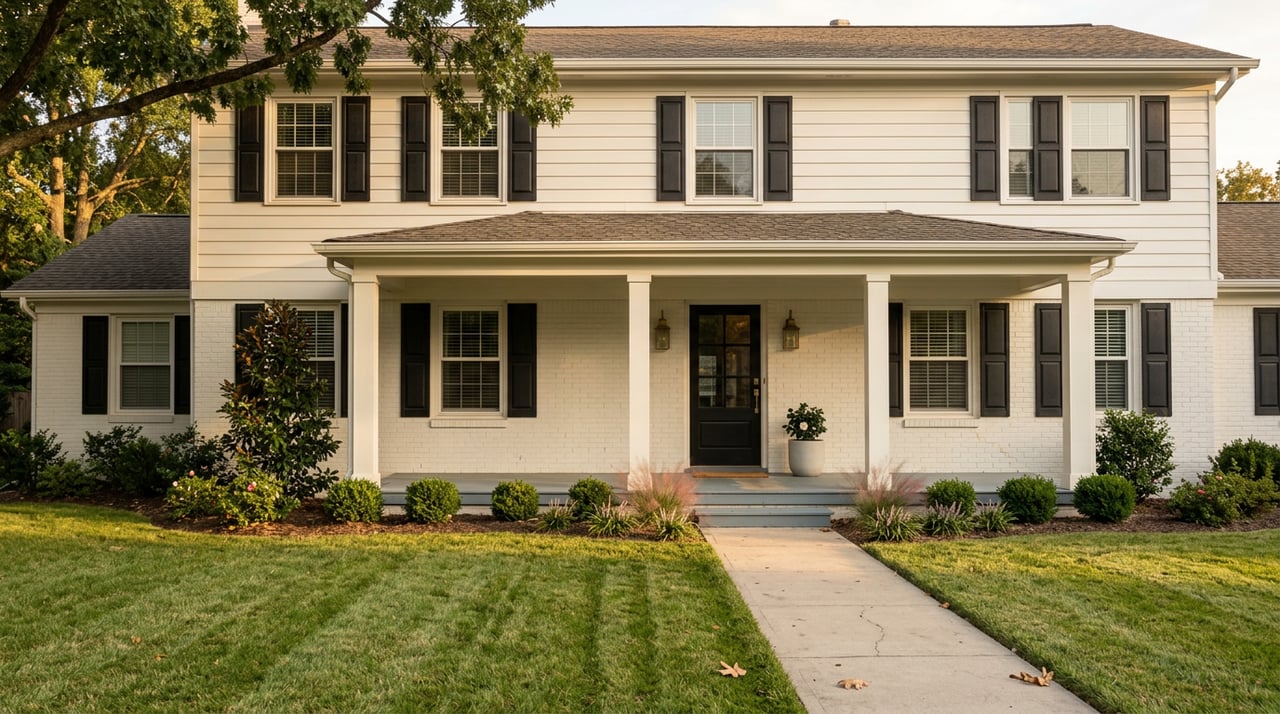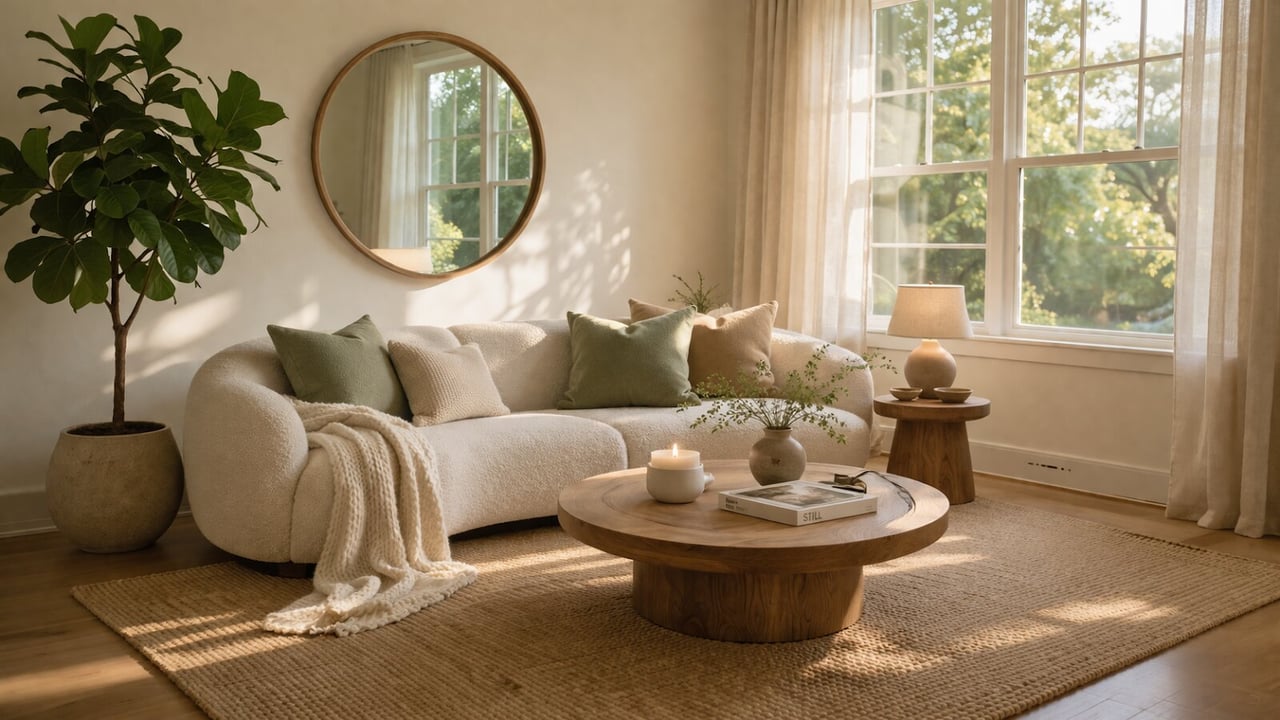
I've spent 18 years as a real estate agent staging homes, thinking about color and flow, and watching how buyers respond the moment they walk through a door. So when I sat down with Claudette Rowley - interior designer and creator of Claudette Rowley Design Wired Method - I knew we were going to get into territory that goes well beyond aesthetics.
Claudette builds environments that actively support your brain, your hormones, and your nervous system. Her approach - rooted in neuro aesthetic design for home wellness and biophilic principles - is backed by real neuroscience. And in this episode of Make Yourself at Home, she breaks down exactly how it works.
Here's what you'll take away:
-
Why your environment affects your mood and stress levels more than you realize
-
How color psychology interior design works - and which paint choices can hurt your resale price
-
Simple, budget-friendly design changes that reduce stress
-
What sellers get wrong about design - and what actually moves a home
🎧Listen to the full conversation here:
Your Brain Is Responding to Your Home - Whether You Know It or Not
The thread running through our entire conversation is this: your space is giving your brain continuous input, and your body is responding - with hormones, stress signals, or calm - whether you're conscious of it or not.
Claudette used an example that landed immediately: think about how you feel at a spa versus a hospital. Now ask yourself - if your spa looked more like a hospital, would you still relax? If your hospital room looked more like a spa, might you be slightly less anxious? The design is doing the work before you've registered a single detail.
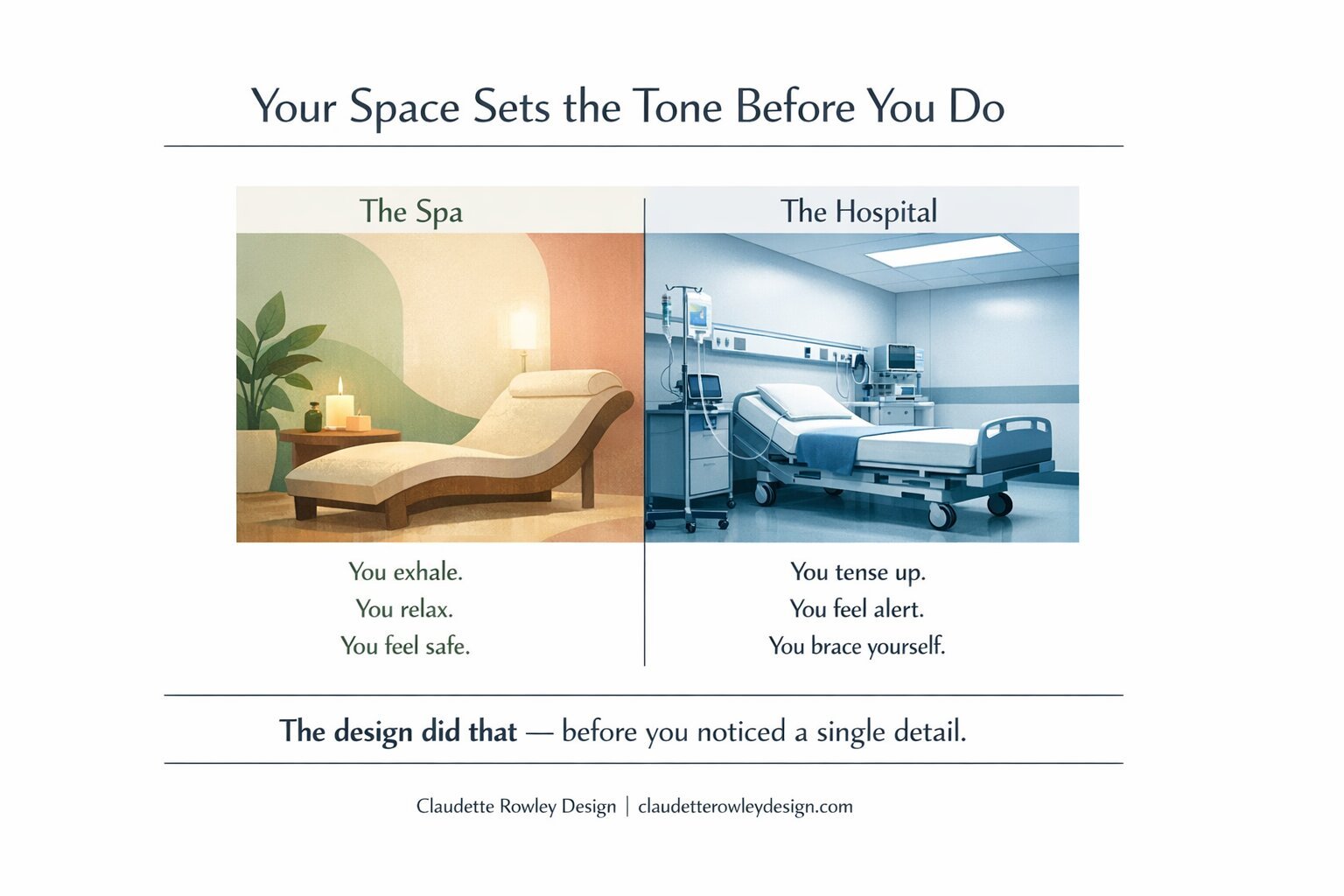
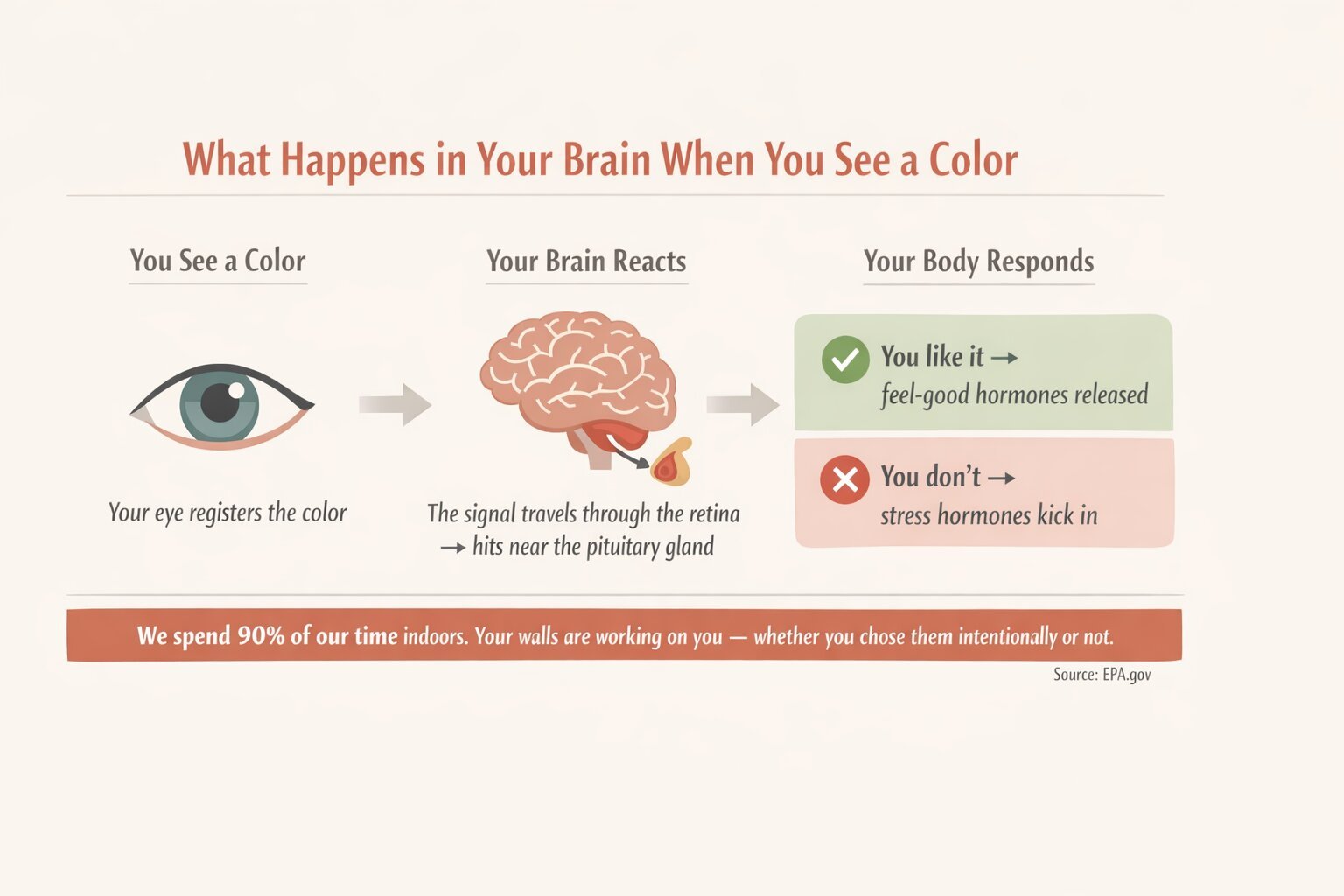
Color is where this becomes very concrete. According to EPA.gov, we spend about 90% of our time indoors. When your eye registers a color, the signal travels through the retina and lands near the pituitary gland - triggering feel-good hormones if you like it, or stress hormones if you don't. And yet most homeowners choose paint colors because they match the bedspread.
As Claudette mentioned in the podcast episode, almost no one stops to ask: how do I want to feel in this room? That question, she told me, is the first thing she asks every single client.
“It’s not ‘beauty is in the eye of the beholder.’ It’s beauty is in the brain of the beholder. Our brain responds universally to certain things - and that’s exactly why some of these tips and strategies work.”– Claudette Rowley, Founder, Claudette Rowley Design
Understanding why your home affects you the way it does is the first step. The second is knowing what to actually do about it.
What Neuro Aesthetic Design Actually Means - and Why It’s Not as Complicated as It Sounds
When Claudette mentions “neuro aesthetic design” to new clients, the phrase usually stops them cold. But the concept is simpler than it sounds.
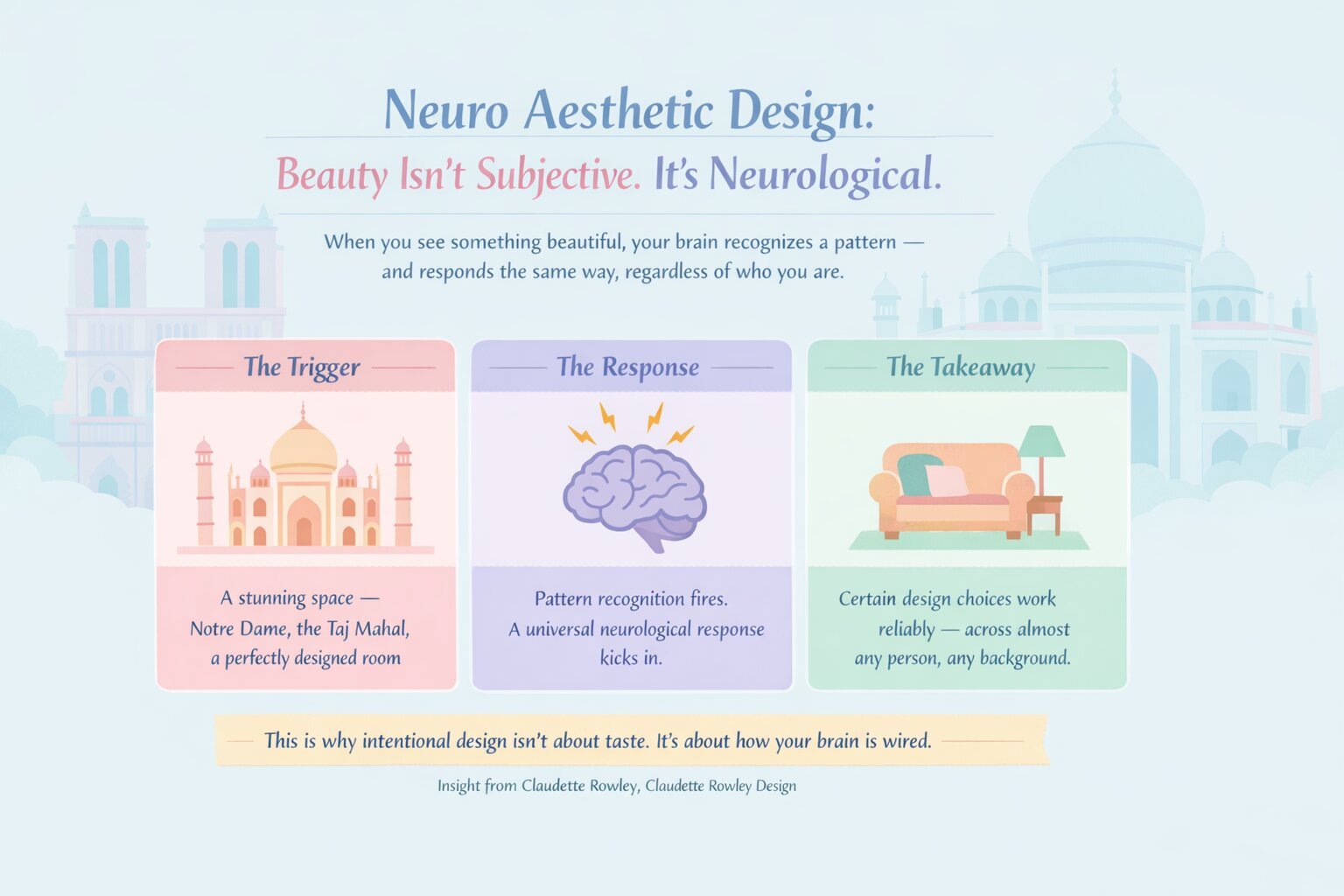
Neuro aesthetic design is the science of how beauty affects the brain. Think about standing in front of Notre Dame or the Taj Mahal.
Most people, regardless of background, respond to those spaces as beautiful. That’s pattern recognition - a universal neurological response to specific visual inputs. As Claudette explained in our conversation, it’s the same principle that makes certain design choices reliably effective across almost any person.
Biophilic design residential spaces sit within this same framework. Humans spent most of their evolutionary history outdoors, surrounded by green, organic shapes, natural textures, and light. Our brains still register those elements as safe and pleasant.
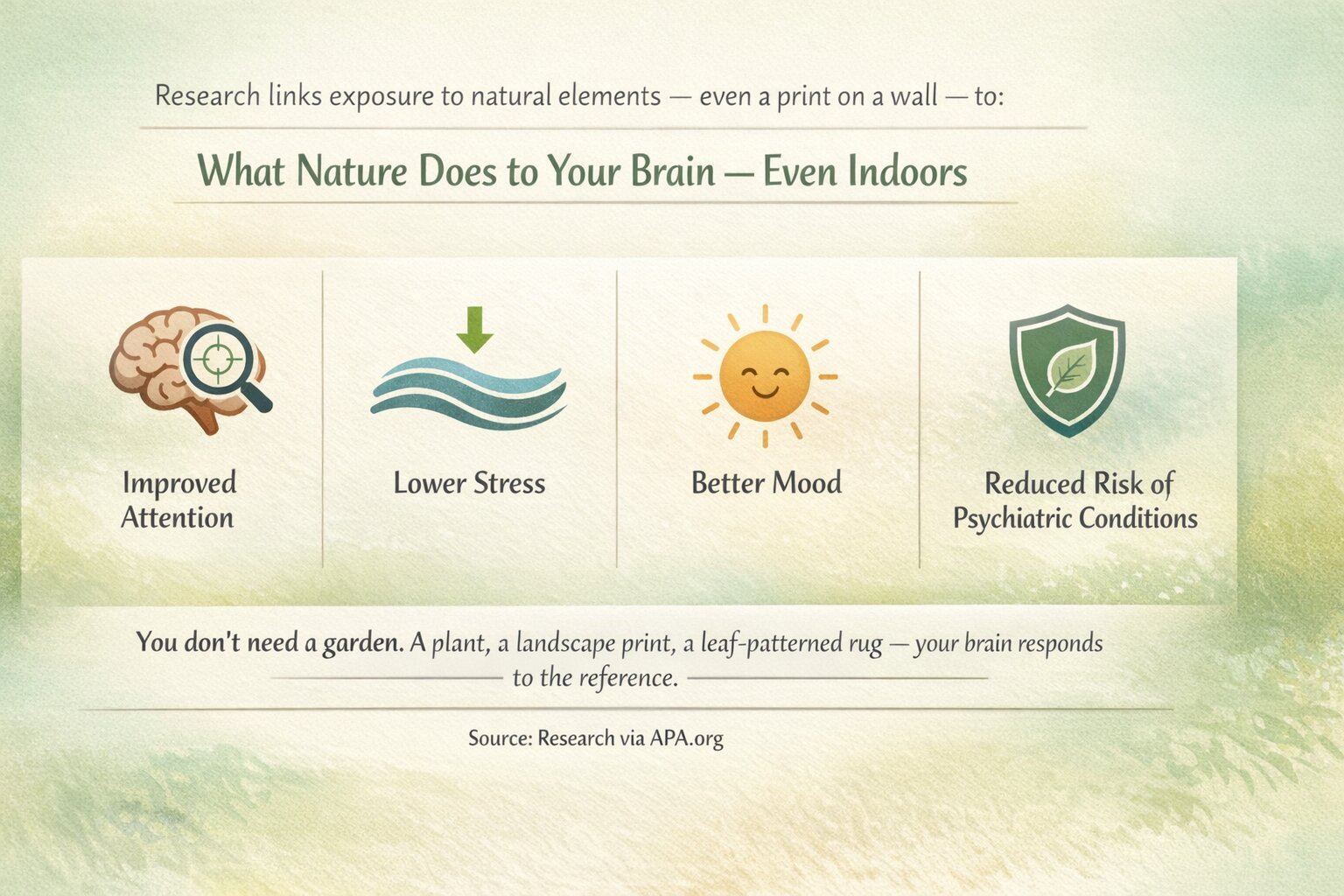
Research links exposure to natural elements - even a nature-inspired print on a wall - to improved attention, lower stress, better mood, and reduced risk of psychiatric conditions.
This is the foundation of Claudette Rowley Design Wired Method: a structured approach that moves through emotional intention, functionality, flow, color and texture, and what she calls “delight elements.”
Easy Design Changes That Actually Support Your Wellbeing
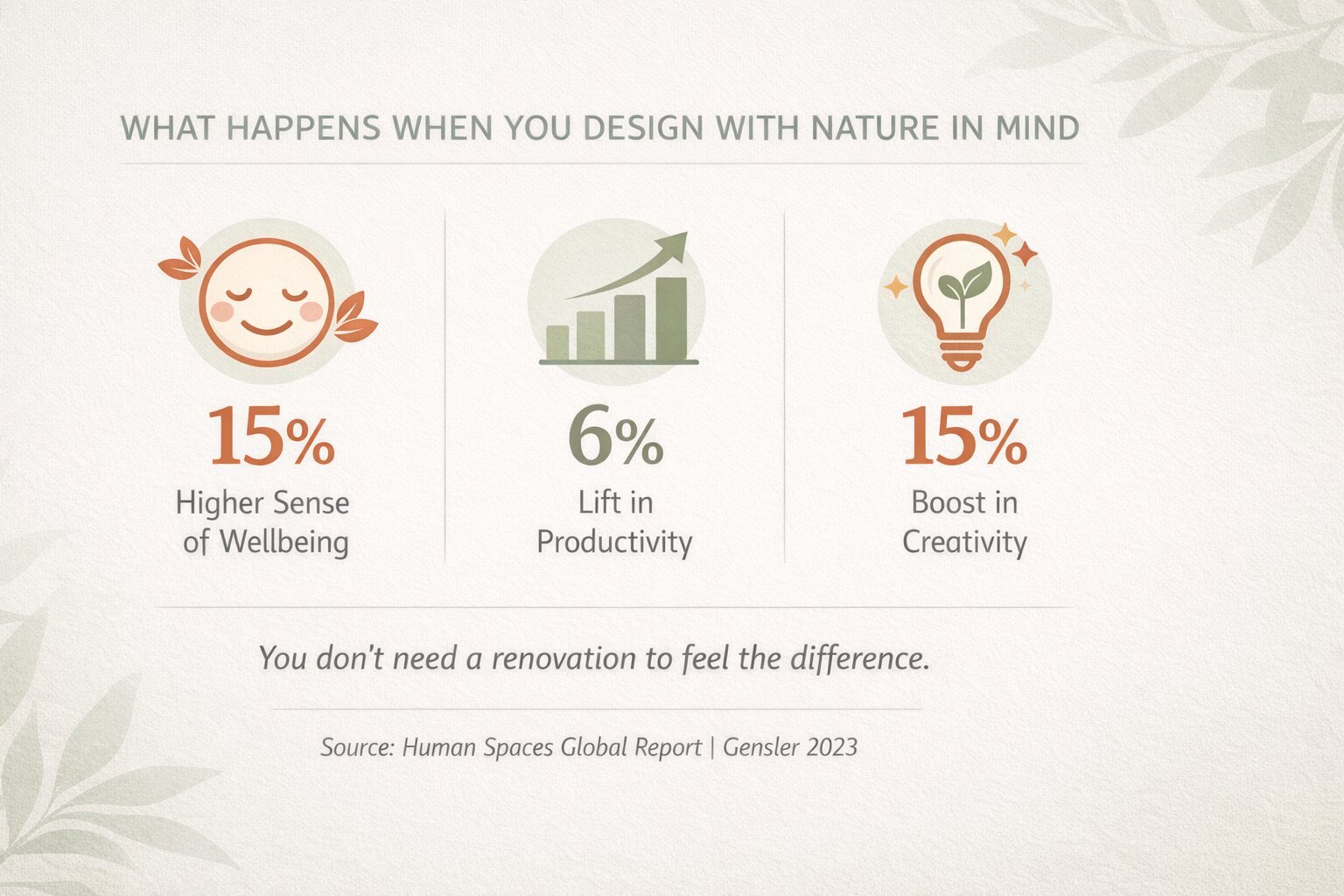
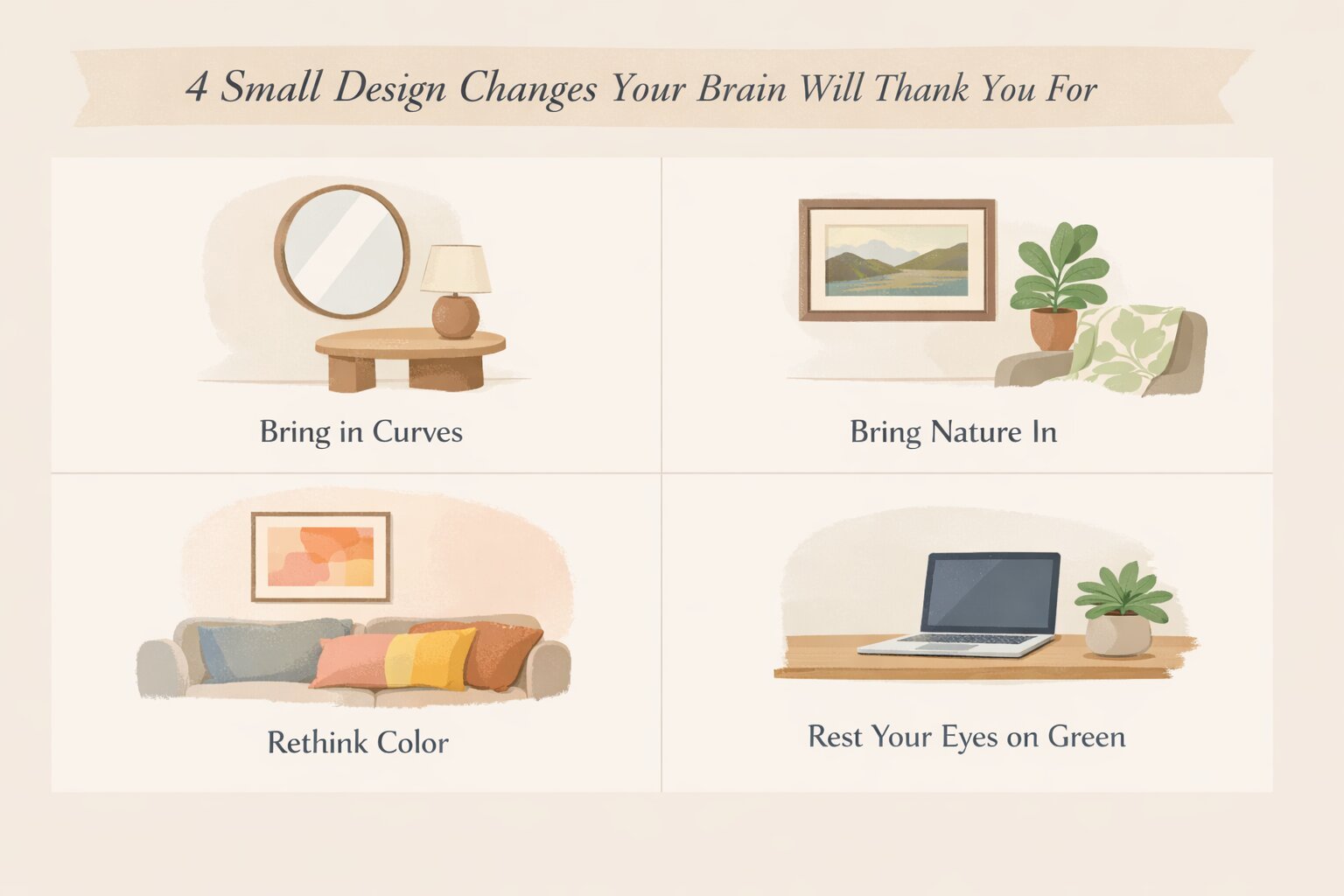
Claudette was clear about how interior design reduces stress: small, intentional changes make a measurable difference. You don’t need a renovation. Employees in spaces rich with natural elements report a 15% higher sense of wellbeing and a 6% lift in productivity, with creativity climbing up to 15% - and similar principles apply at home.
Bring in curves.
There are no right angles in nature. A round mirror, an oval table, a lamp with a rounded base - these echo organic shapes our brains find comfortable.
Add something from the natural world.
Plants work, but so does a landscape painting or a rug with a leaf pattern. As Claudette said in the podcast, your brain doesn’t need the literal thing. It responds to the reference.
Rethink color with intention.
Gray is the least stimulating color, and all-gray environments have quietly under-stimulated many people for years. Bringing in warm tones - pinks, blues, yellows - through throw pillows or artwork can shift the energy of an entire room.
Look at something green near your screen.
Green is the easiest color for the human eye to process. Taking a break and focusing on a nearby plant or piece of art genuinely rests the eye and can lower cortisol.
“Gray is the least stimulating color. A lot of people who lived in gray-and-white environments for years may not have realized it, but they might have been chronically under-stimulated. Bringing in color, texture, artwork - even a few throw pillows - can completely transform the energy of a room.”– Claudette Rowley, Claudette Rowley Design
What Sellers Get Wrong About Design - and What Actually Moves a Home
Buyers today don’t want a project.
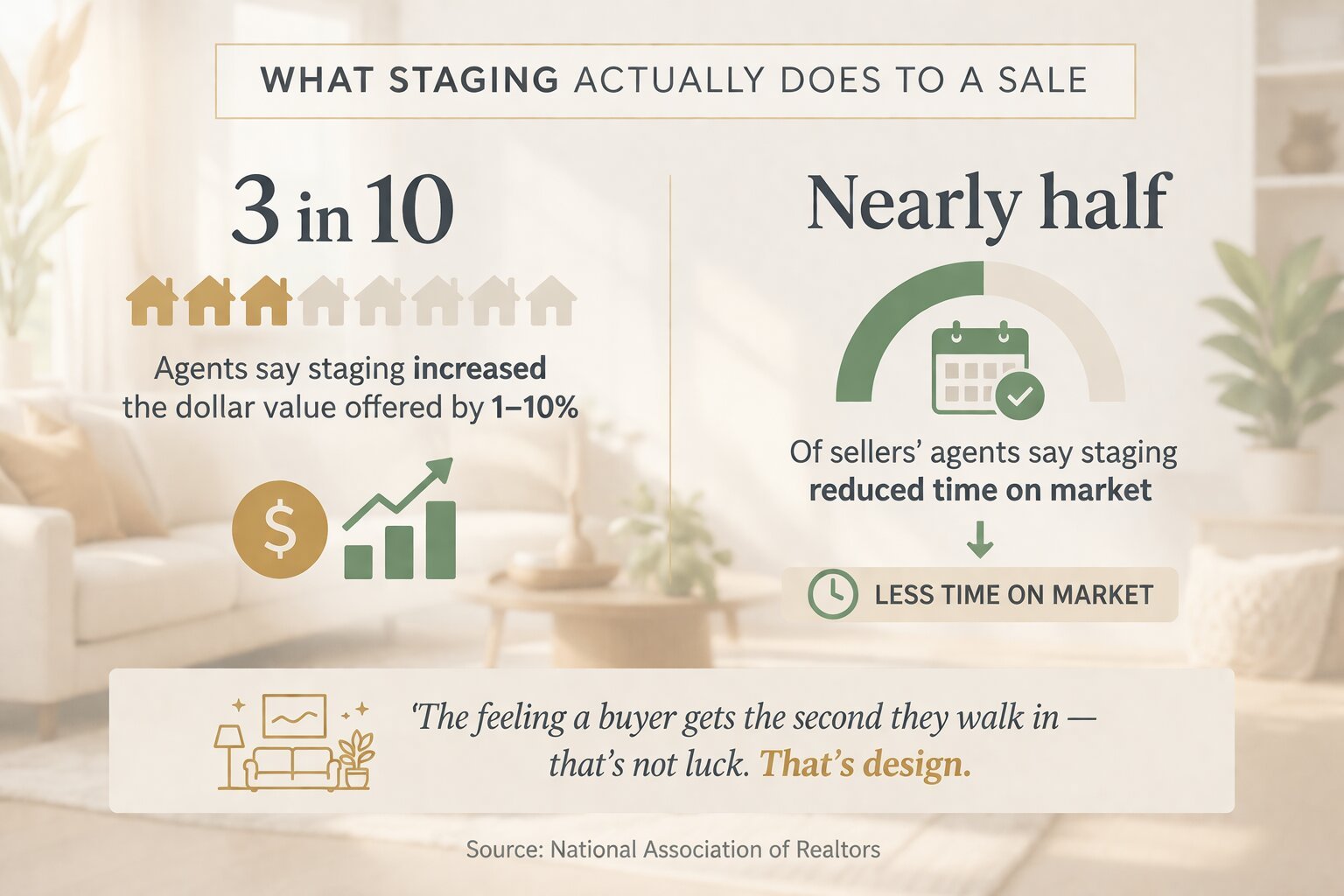
They want to walk in, exhale, and feel like they’ve already come home. According to the National Association of Realtors, nearly three out of ten agents report that staging their sellers’ homes led to a 1–10% increase in the dollar value offered - and almost half observed that staging reduced time on market.
That feeling a buyer has the second they step inside is design for resale value - strategy, not accident.
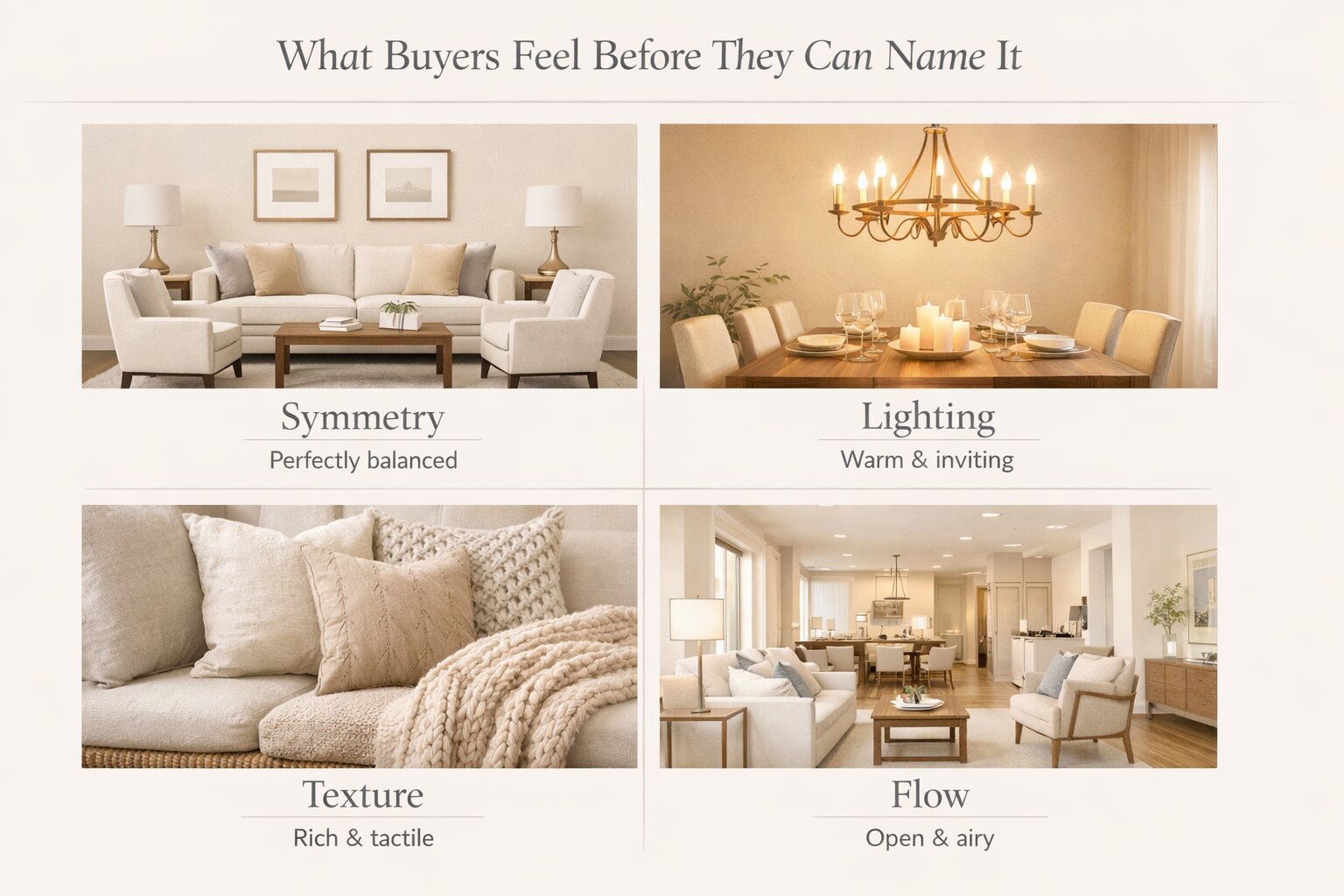
Claudette walked me through the specific choices that make or break that experience:
Symmetry.
Balanced furniture and distributed visual weight make buyers exhale. A lopsided or chaotic room creates tension they can’t always name.
Lighting.
My team replaces mismatched bulbs every time we prep a listing. Warm-toned bulbs create coziness. A fixture with mismatched color temperatures communicates neglect.
Texture.
Throw pillows, natural materials, varied fabric - our brains register textural variety as sensory richness, which reads as comfort and quality.
Flow.
Flow is defined by how easily people can move through a space, which directly dictates where furniture should be placed. It is something buyers "sense" immediately: they are looking for a home that feels visually organized rather than visually cluttered. When the flow is intentional, the brain registers the environment as organized, allowing a potential buyer to relax
Paint
Claudette’s rule for sellers: pick paint last. Identify your flooring, furniture, and hard finishes first, then harmonize with paint. Paint is the least expensive thing you’ll change. Don’t let it drive decisions for finishes that cost ten times more to replace.
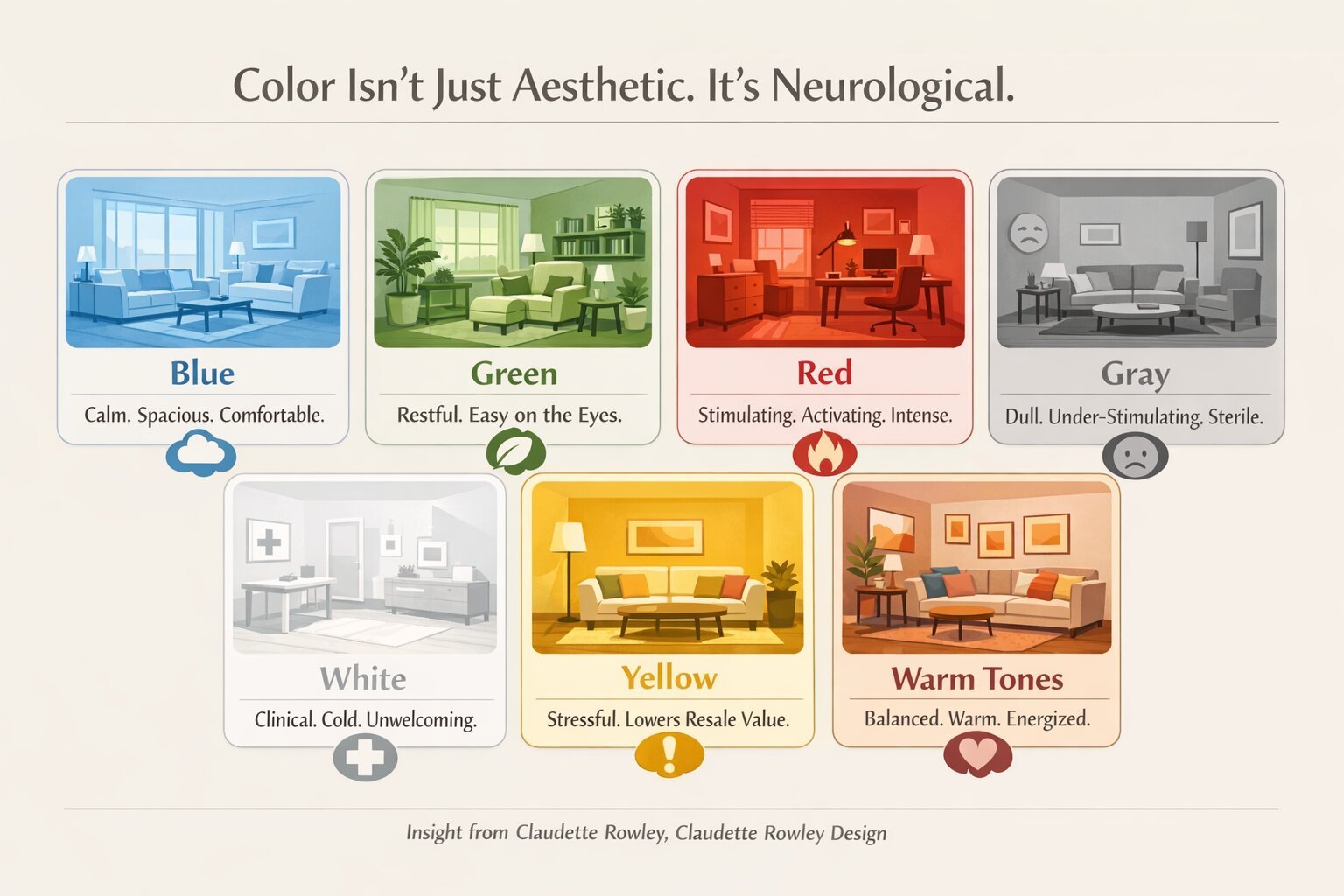
|
Color |
Mood / Neurological Effect |
|---|---|
|
Blue |
Calm, spacious, and comfortable. It is universally associated with pleasurable things like the sky and ocean, though it can feel melancholy if overused. |
|
Green |
Restful and relaxing. It is the easiest color for the human eye to process and is linked to lower cortisol levels because of its association with nature,. |
|
Red |
Stimulating, activating, and motivating. While it provides high energy, it can also be intense or feel like a "draining thing" to potential buyers,,. |
|
Gray |
Under-stimulating. It is described as the least stimulating color and can feel boring or sterile if not balanced with other tones,. |
|
White |
Clinical and sterile. If the shade is too bright, it can make a space feel like a hospital rather than a home,. |
|
Yellow |
Stressing. While not assigned a positive mood, it is noted to trigger stress hormones in those who dislike it and is proven to lower the resale value of a home,,. |
|
Warm Tones (Pinks, Peds, Yellows, Blues) |
Balanced and energized. Adding these colors to a neutral environment helps "warm up" the space and shift its energy |
And when you're ready to list, context matters just as much as color.
A quick home valuation tells you where your property stands, and browsing current listings shows you what buyers in your market are actually walking into.
What Changed for Me After This Conversation
“If you have a space that makes you feel really good and you walk in and think, I love this room - you’ve just added a dopamine hit. That’s brain chemistry. And if your space makes you feel irritated every time you walk in, you’ve added to your mental load, your emotional load, your nervous system load.”– Claudette Rowley, Claudette Rowley Design
I came into this episode already convinced that design matters. But Claudette gave me a new frame for why. The spaces I list, stage, and help people buy aren’t just properties. They’re environments that will shape how someone feels every single day. When a buyer walks in and says “I feel like I’m home,” that’s not sentiment. That’s neuroscience.
Claudette also offers a free Color Code Quiz at claudetterowleydesign.com - a great first step if you want to take this seriously without knowing where to begin. It asks how you use your space, what you want to feel, and your style preferences, then suggests paint colors and tips tailored to you.
FAQ Section
What is neuro aesthetic design and how is it different from regular interior design?
Neuro aesthetic design accounts for how design choices affect mood, hormones, stress levels, and overall wellbeing - not just how a space looks. Claudette Rowley’s WIRED Method applies these principles to create spaces that actively support physical, emotional, and mental health.
What’s the most important design change someone can make on a budget?
Bringing in something from the natural world - a plant, landscape art, a rug with a natural pattern. The brain is wired to respond to nature as a signal of safety. Lighting is a close second: swapping cool-white bulbs for warm ones and adding a lamp can dramatically shift the emotional temperature of a room.
How should sellers use design to attract buyers?
Focus on flow, symmetry, lighting, and emotional invitation. Declutter, depersonalize, and make sure every fixture has warm-toned, matching bulbs. Add texture through throw pillows and natural materials. Buyers today want to exhale the moment they enter.
Keep the Conversation Going
If you're interested in learning how intentional design can transform how you feel at home, or want to work with Claudette directly, visit her at:
-
🌐 Website → https://www.claudetterowleydesign.com/
-
📸 Instagram →https://www.instagram.com/claudetterowley/
-
LinkedIn → https://www.linkedin.com/in/claudette-rowley-1ba268/
If something in this episode made you think, question, or laugh, don’t let it stop here.
Follow Make Yourself at Home and stay part of the conversation:
🎧 Follow Deana Brummett:
-
🌍 Website → https://athomeinthecarolinas.com/
-
📷 Instagram → https://www.instagram.com/AtHomeintheCarolinas/
-
📘 Facebook → https://www.facebook.com/HomeintheCarolinas
This podcast is produced by Icons of Real Estate - #1 Real Estate Podcast Network
Apply to Be a Guest on the “Make Yourself at Home” Podcast
If you serve the real estate industry - through staffing, lending, brokerage, technology, or advisory - and help agents grow smarter, not harder… let’s spotlight your insights.