Most people keep three things in separate buckets: how they think, how they take care of their body, and how they choose a home to live in. But what if the same mental patterns holding you back in the gym are the same ones making you hesitate on the right house?
That question came up throughout my conversation with Arnice Foster - attorney, certified Zumba instructor, business strategist, and creator of the Arnice Foster: The Foster Fit Method. Arnice works as a high-performance women’s coach, combining her background in law, fitness, and neuroencoding to help women close the gap between where they are and where they want to be. We had this conversation on my podcast, Make Yourself at Home.
Here is what we covered:
-
Why mindset work goes deeper than positive thinking - and what neuroencoding actually does
-
The four pillars of optimal health you can start applying this week
-
Five simple diet rules that do not require perfection
-
How your internal mental blocks show up in the home-buying process
-
What to look for in a home that supports long-term health and family
Check out the highlights here:
Listen to the full conversation here:
Why I Had This Conversation
I have been dealing with health issues for the last eight years. In recent year alone, I spent ten out of twelve months in a cast. So when someone like Arnice shows up with a real, practical framework for living better - one that ties together how you think, how you move, and where you choose to live - I pay close attention. What I did not expect was how directly her work connects to the decisions we make around housing.
Arnice Foster’s Foster Fit Method - And Why It Goes Deeper Than Mindset
Arnice did not start in coaching. She founded a real estate closing firm in Georgia in 2005, stepped back when the market crashed in 2008, opened an indoor play facility called Monkey Joe’s, discovered Zumba while running programs for parents, became certified, and eventually completed Hello7 high-impact business coaching training. Everything she teaches is grounded in real experience, not theory.
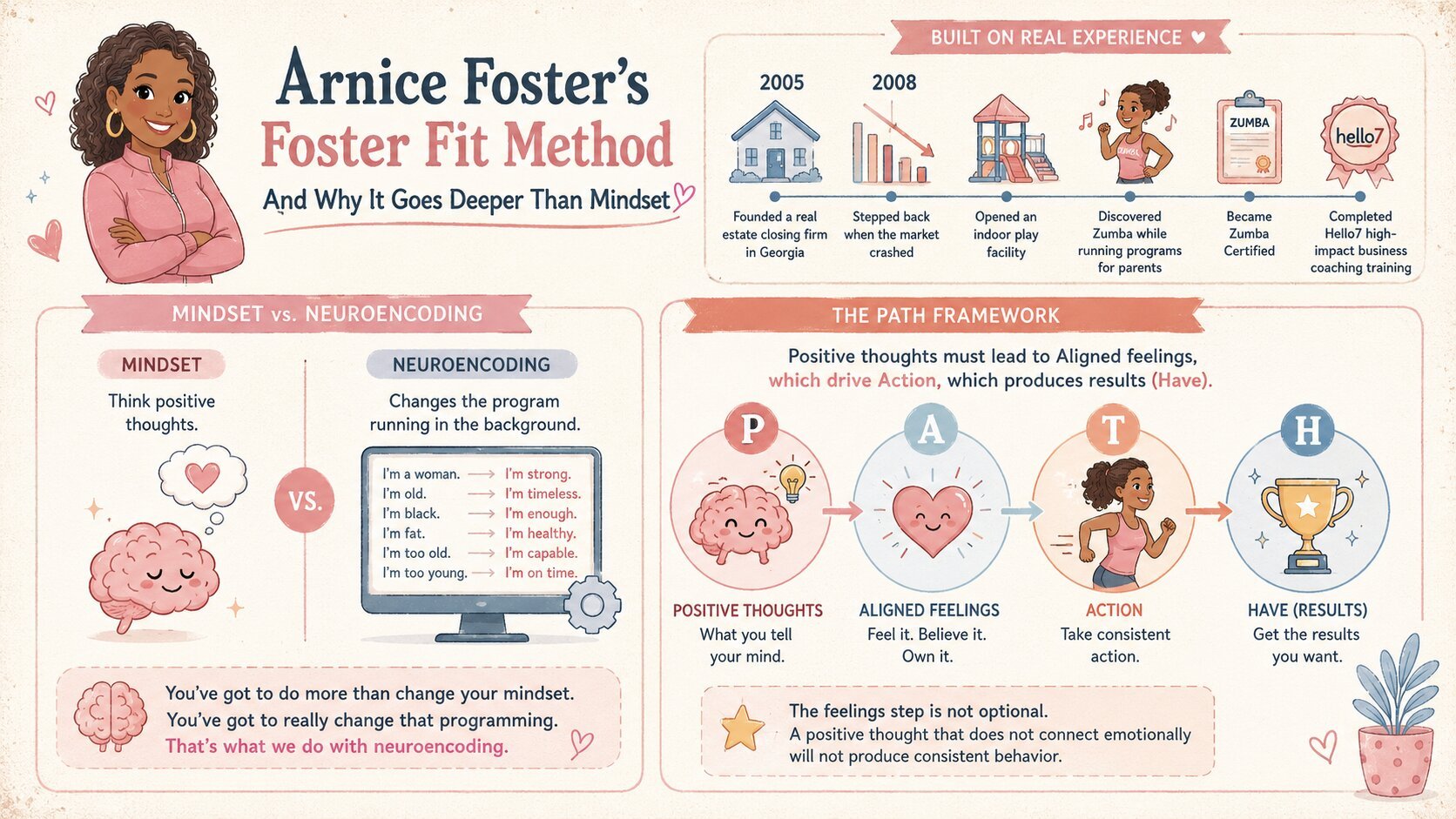
The core of her work is neuroencoding, which is the practice of rewiring the subconscious programs running beneath your conscious thoughts. Arnice is a certified neurocoding mindset specialist, and she draws a clear line between standard mindset advice and what neuroencoding actually changes:
"Mindset is just think positive thoughts, kind of. But with neuroencoding, what we do is - we’re all running a program in our minds. I’m a woman, I’m old, I’m black, I’m fat, I’m too old, I’m too young. We have all that. We think we can’t do things. And that is constantly running in the back of our minds. You’ve got to do more than change your mindset. You’ve got to really change that programming. And that’s what we do with neuroencoding."– Arnice Foster, Neurocoding Mindset Specialist
Her PATH framework makes this actionable: Positive thoughts must lead to Aligned feelings, which drive Action, which produces results (Have). The feelings step is not optional. A positive thought that does not connect emotionally will not produce consistent behavior. That framework underpins everything else she shared in the episode - from exercise habits to diet to the psychology of buying a home.
The Four Pillars of Optimal Health - And Where Most People Get Stuck
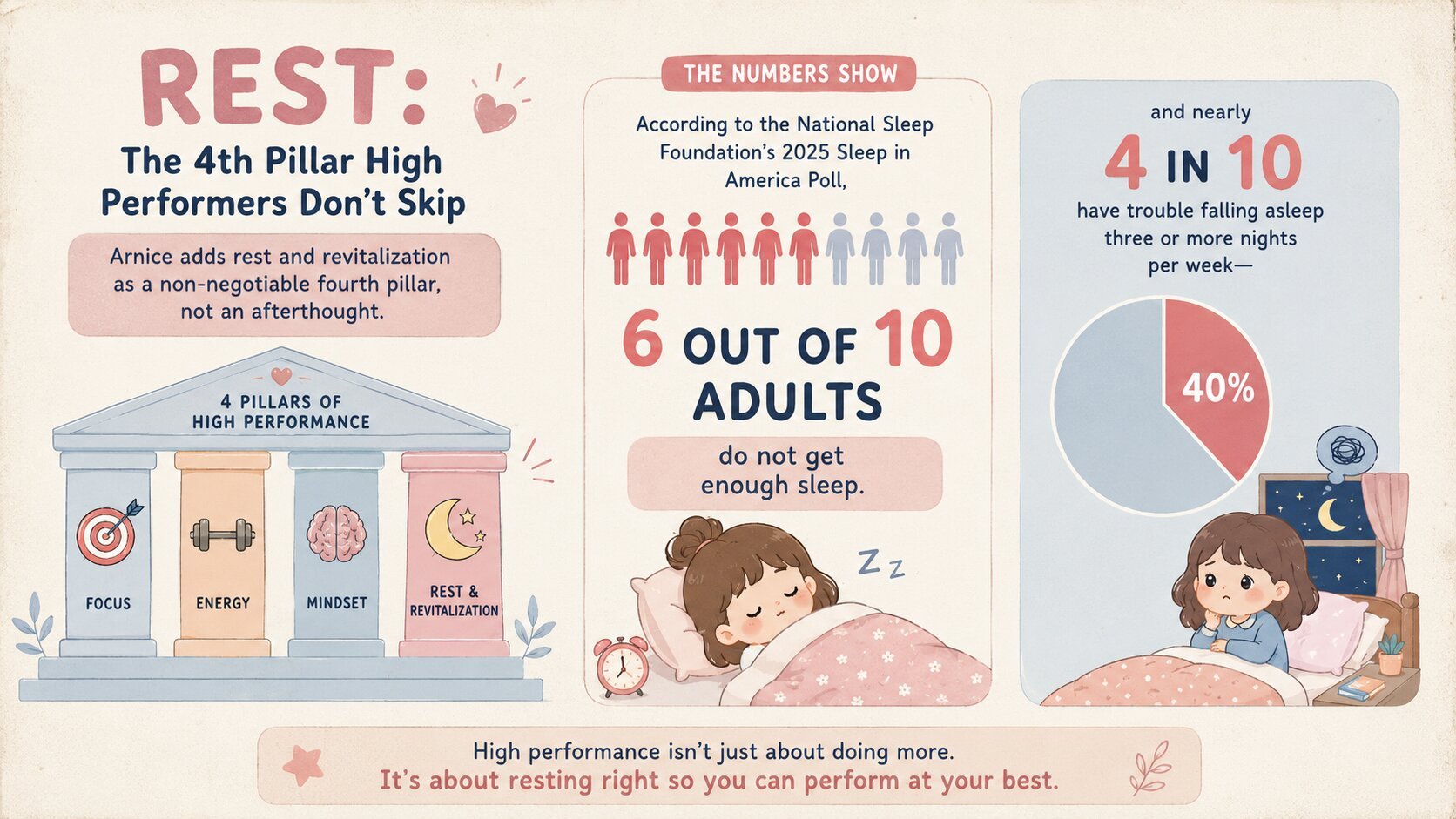
The four pillars of optimal health, as Arnice defines them in the episode, are food and water, exercise, rest, and mindset.
Mindset
She is direct: mindset sits at the foundation. Without it, the other three do not stick. Her phrase for the whole system: “The food you eat, the water you drink, the moves you make, the thoughts you think - and your rest and revitalization.”
Exercise
Even small amounts of movement may have a major impact on long-term brain health. According to Johns Hopkins Bloomberg School of Public Health, researchers found that increasing physical activity by as little as five minutes per day was associated with reduced dementia risk in older adults - directly backing Arnice’s point in the episode that exercise helps people “live longer and put off Alzheimer’s.”
Here’s a 5 minute workout warmup by Arnice Foster that will help you boost circulation and improve your flexibility:
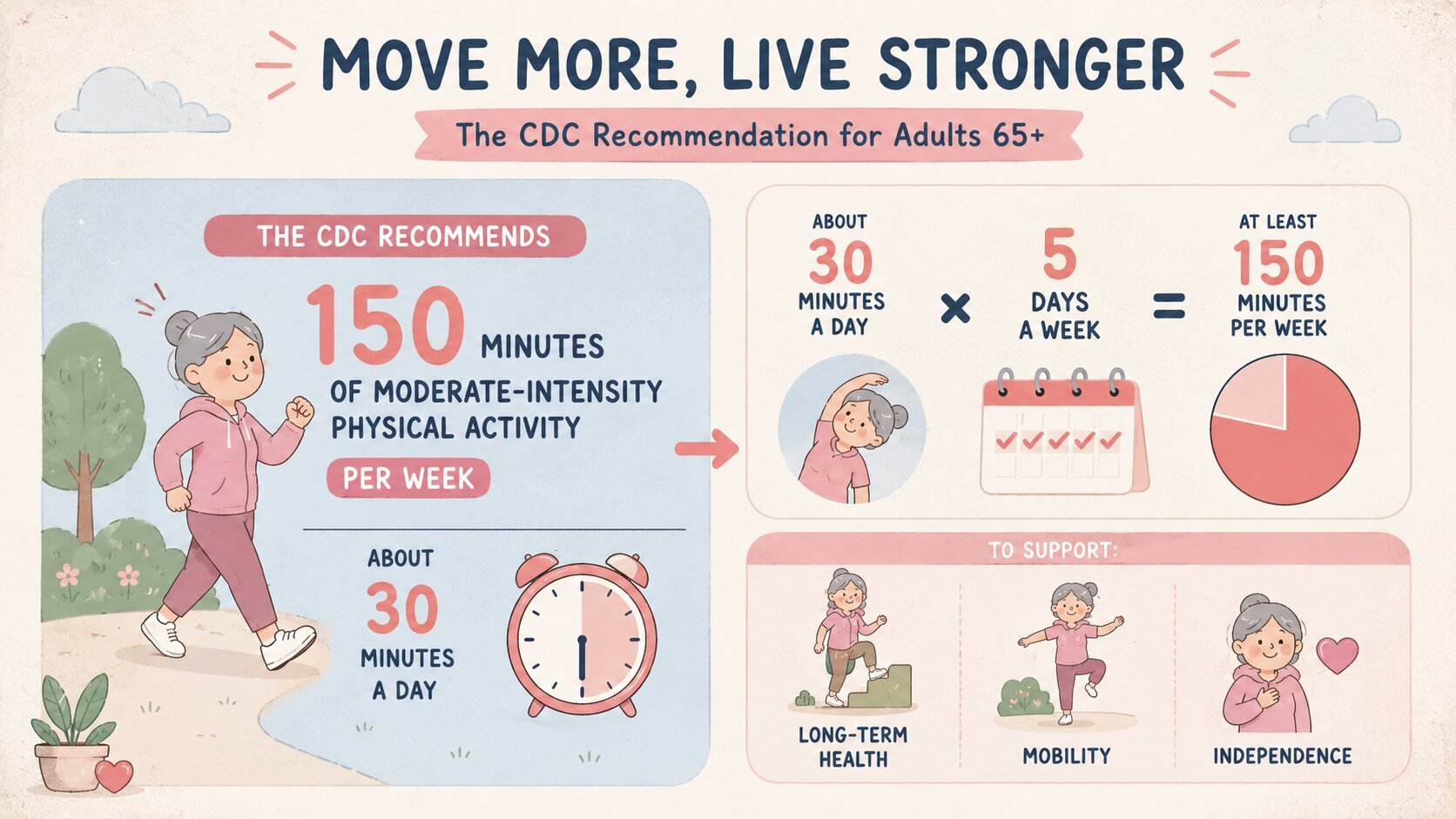
The CDC recommends that adults age 65 and older get at least 150 minutes of moderate-intensity physical activity per week - about 30 minutes a day, five days a week - to support long-term health, mobility, and independence. That is exactly the baseline Arnice sets in the episode.
Rest
Rest is the pillar most high performers cut first. And the numbers show how widespread that is. According to the National Sleep Foundation's 2025 Sleep in America Poll, 6 out of every 10 adults do not get enough sleep, and nearly 4 in 10 have trouble falling asleep three or more nights per week — which is exactly why Arnice adds rest and revitalization as a non-negotiable fourth pillar, not an afterthought
Food and Water
On food, the rules are simple: whole foods, water only (black coffee is fine; a sugary drink from a drive-through is not), and the five-ingredient rule for anything packaged. If an ingredient ends in “-trate” or “-trite,” put it back. If you cannot pronounce it, skip it.
On protein, Arnice gave a concrete rule: aim for grams of protein equal to your ideal body weight. If your target is 150 pounds, aim for 150 grams of protein per day, spread across meals in 30 to 40 gram increments. Protein shakes help fill the gaps. She also shared a quick test: multiply the grams of protein in a food by 10. If the calorie count of that serving exceeds that number, it is not truly a high-protein food, no matter what the label claims.
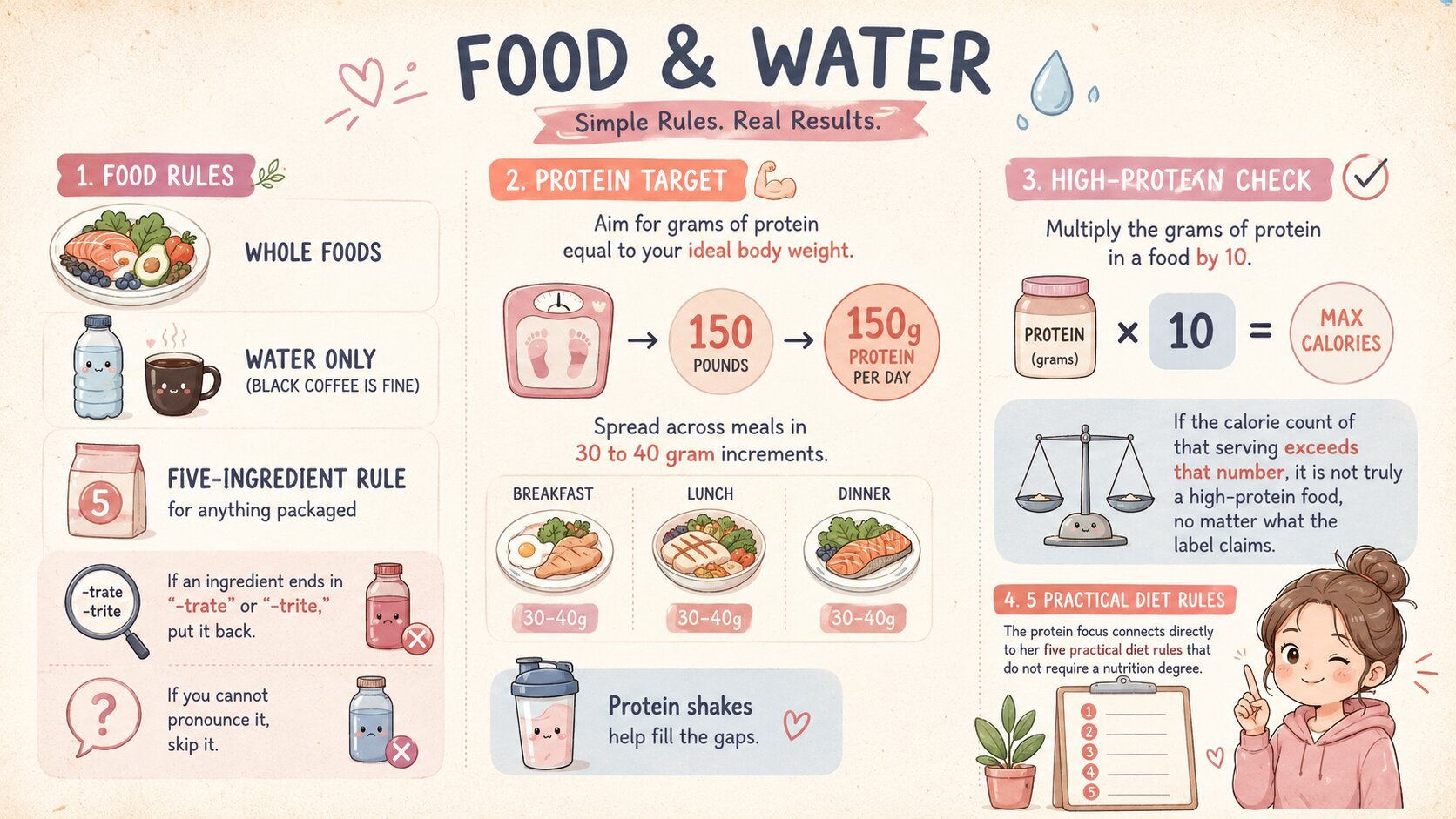
That protein focus connects directly into the next part of the conversation - her five practical diet rules that do not require a nutrition degree.
Five Simple Diet Rules You Can Actually Follow
Arnice laid out a clear dietary framework during the episode. Here it is, straight from the conversation:
-
Drink only water. Black coffee is acceptable. Anything handed through a drive-through window is not black coffee. Treat sugary drinks as a once-a-week occasion, not a daily habit.
-
Eat whole foods. If it comes in a package, apply the five-ingredient rule.
-
Read labels for preservatives. Any ingredient ending in “-trate” or “-trite” is a no.
-
Get 30 to 40 grams of protein per meal. Start the day with 40 grams to jumpstart your brain and your metabolism.
-
Use the protein ratio check: multiply the grams of protein by 10. If the serving’s calorie count exceeds that number, it is not a high-protein food.
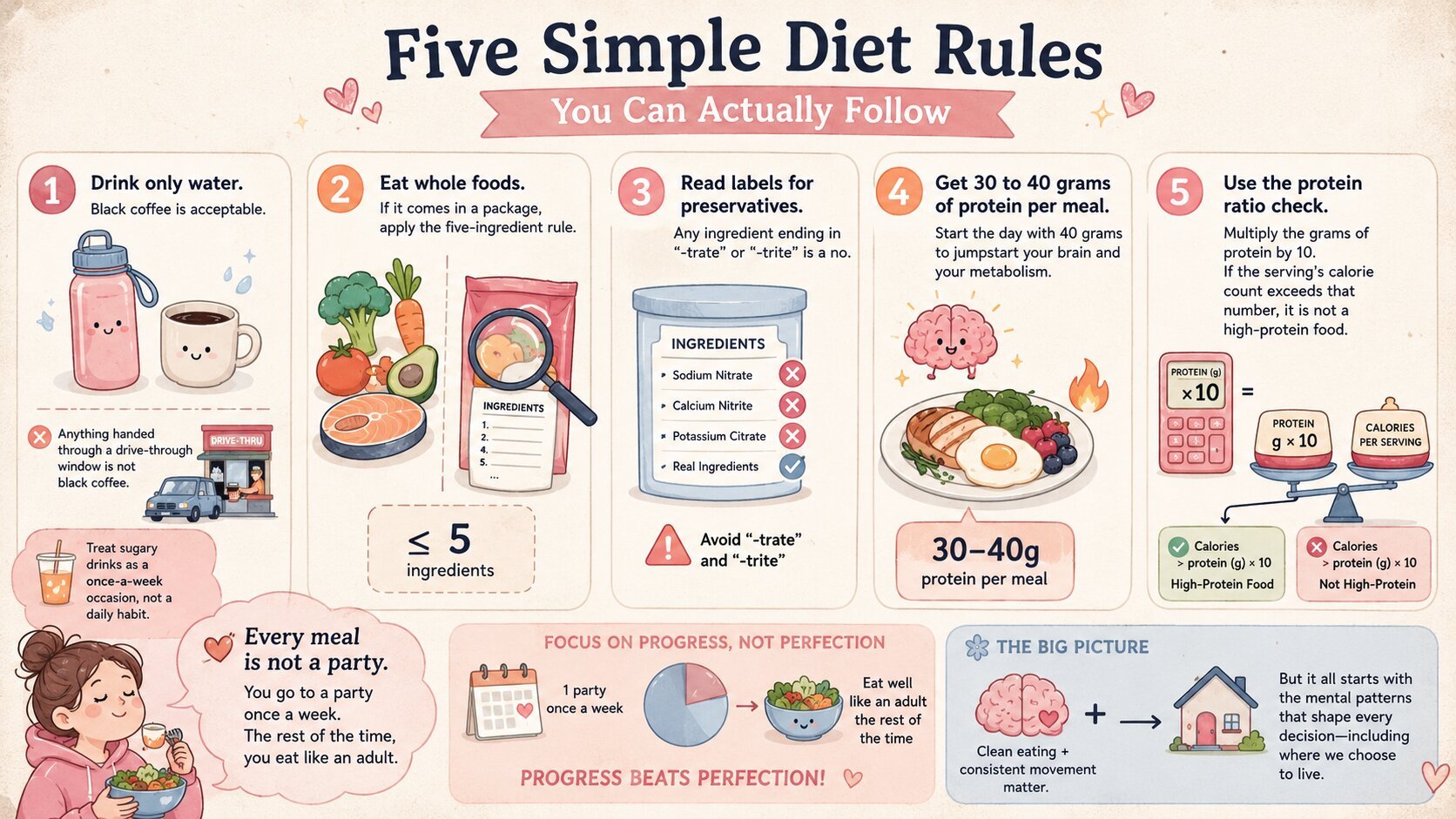
One thing Arnice said that stuck with me: every meal is not a party. You go to a party once a week. The rest of the time, you eat like an adult. That mental reframe alone removes a lot of the pressure people put on themselves to eat perfectly every single day. Progress beats perfection every time.
Clean eating and consistent movement matter. But as Arnice made clear in the episode, none of it sticks without addressing what is running underneath - the mental patterns that quietly shape every decision we make, including the ones around where we choose to live.
How the Toxic 10 Mindset Blocks Show Up in Real Estate Home Buying Mindset
This is where the conversation shifted in a direction I did not expect - and it turned out to be one of the most useful parts of the episode. Arnice identifies ten mental patterns that block people from moving forward. She calls them the toxic 10 mindset blocks: stress, overwhelm, procrastination, hesitation, imposter syndrome, self-doubt, self-loathing, fear of failure, fear of success, and fear of rejection.
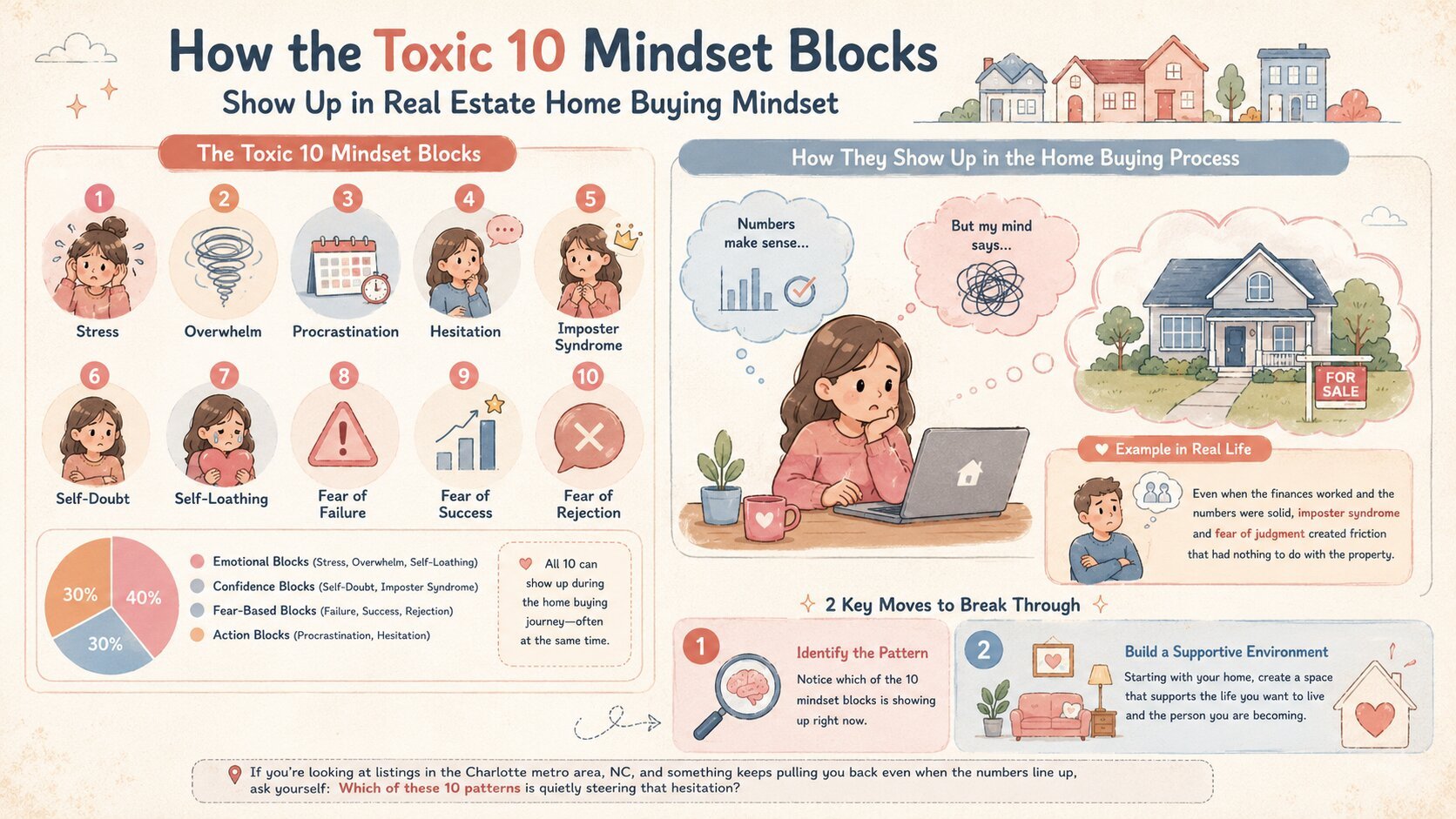
Every single one of these could show up in the home-buying process. Arnice gave a specific example from her own family: when she and her husband moved into a nicer neighborhood, his working-class roots triggered imposter syndrome and fear of judgment. The finances and the numbers worked. But those internal patterns created friction that had nothing to do with the property itself.
"And maybe a little fear of rejection - certainly fear of judgment - by his family. And so these are things that factor in. Sometimes you're ready. You can afford the house. It's time for you to upgrade, or you can go ahead and get the one with the basement so that your mom can come and live with you. You can afford that extra $50,000, or whatever a basement might be. But you've got all that other stuff going on in your mind. Now, of course you want to make practical financial decisions - but you've got to see who you really are, who you are today, and who you are prepared to be."– Arnice Foster, High-Performance Women’s Coach
If you are looking at listings in the Charlotte metro area, North Carolina and something keeps pulling you back even when the numbers line up, it may be worth asking which of those ten patterns is quietly steering that hesitation.
Identifying the pattern is the first move. The second is building an environment - starting with the home itself - that actively supports the life you want to live.
How to Choose a Home That Supports Your Health and Your Future
Arnice brought a health-informed real estate home buying mindset to this conversation that more buyers need before they go looking. The question is not just whether you like the house today. The question is whether the house will work for who you are going to be in ten or twenty years.
She walked through a practical scenario during the episode: a 30-year-old buyer with young kids and aging parents should be asking whether there is a guest bedroom on the main floor, whether the basement can convert to an in-law suite, and whether the HOA allows an ADU in the backyard. Arnice’s own mother lived with her for two and a half years in a finished basement - with caregivers, her own space, and the ability to be seen and cared for every single day.
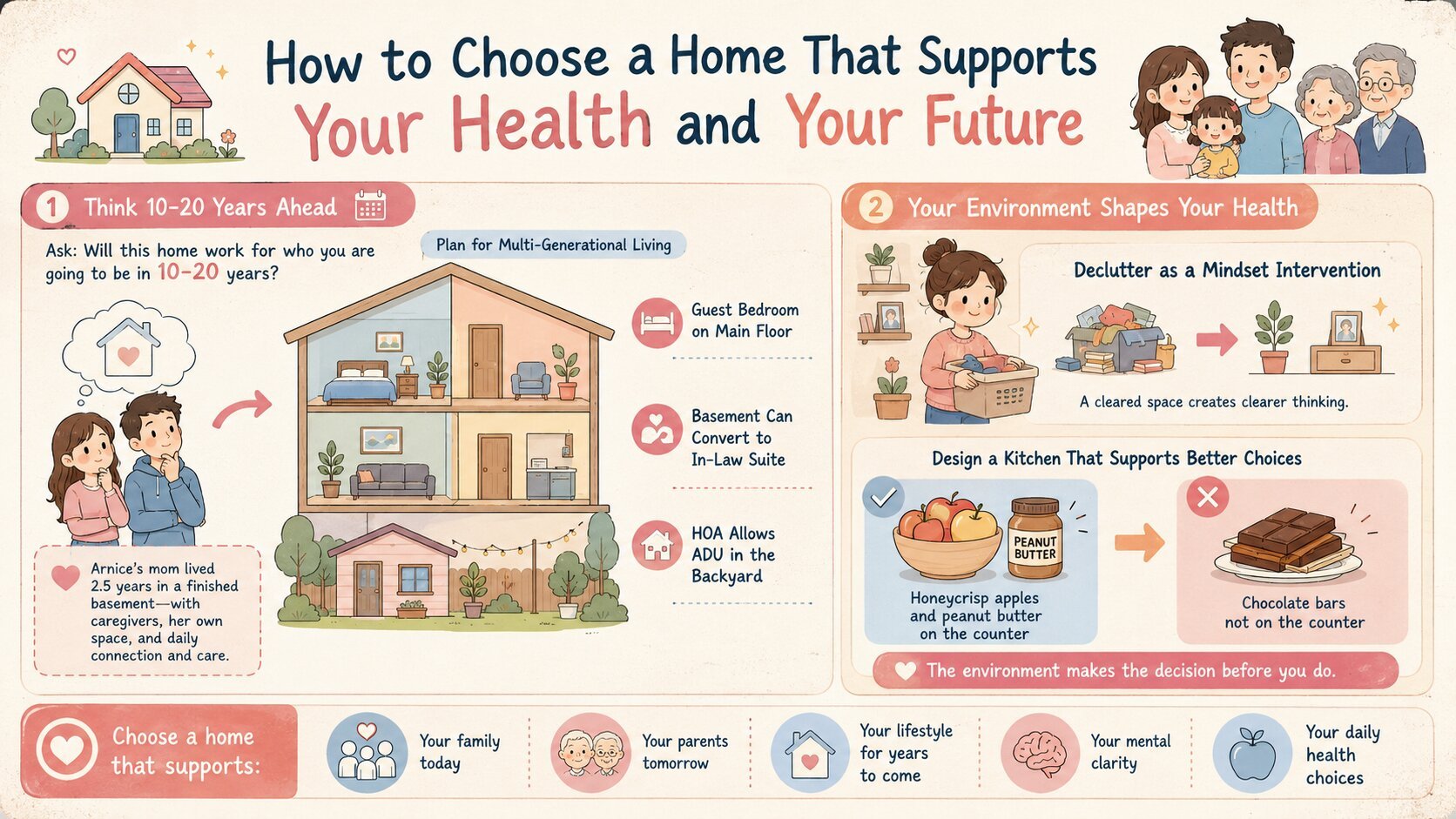
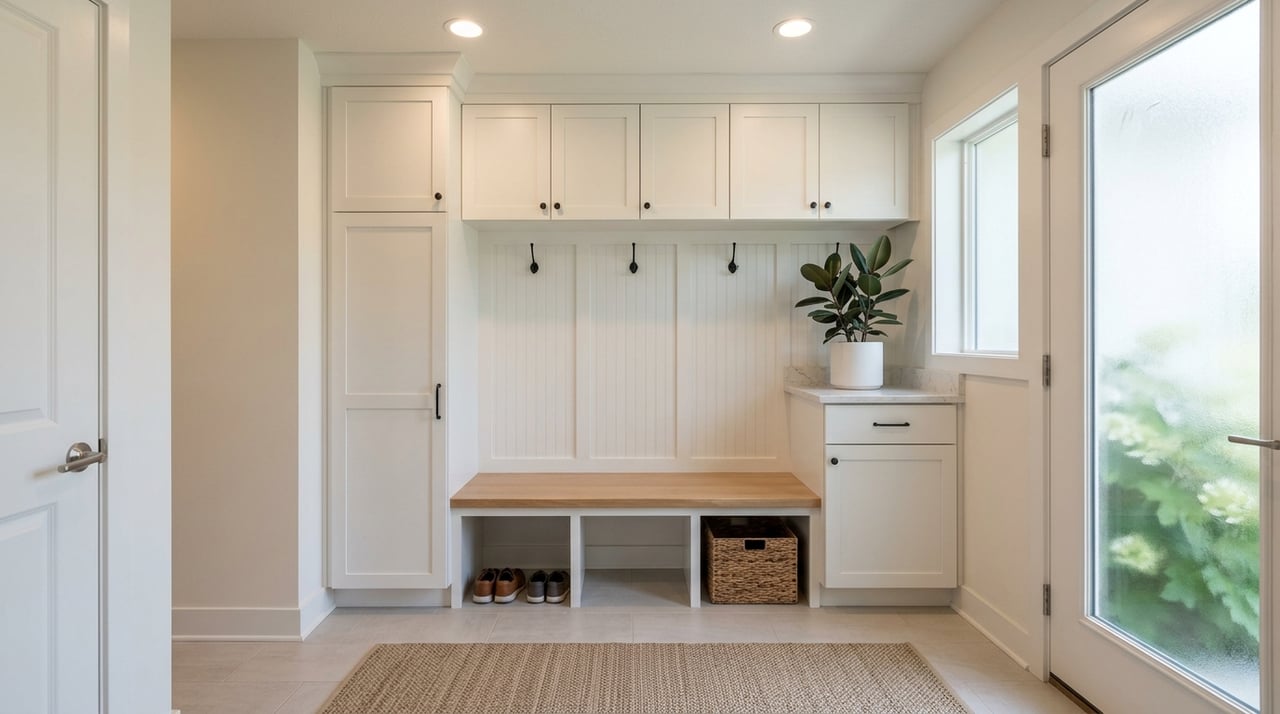
On home environment and clutter: Arnice recommends decluttering as a direct mindset intervention. A cleared space creates clearer thinking. The same logic applies to the kitchen - if Honeycrisp apples and peanut butter are on the counter and the chocolate bars are not, that is what you will reach for. The environment makes the decision before you do.
If you want to understand what your current home is worth before making a move, you can request a free home valuation in Charlotte. And if you are ready to look at layouts built for multi-generational living or long-term lifestyle needs, you can browse properties in the Charlotte metro area, North Carolina that include the features Arnice and I discussed throughout this episode.
Keep the Conversation Going
If you want a holistic mindset, health, fitness, and business coaching, reach out to Arnice Foster:
-
Website → https://arnicefoster.com/
-
Instagram → https://www.instagram.com/arnicefoster/
If something in this episode made you think, question, or laugh, don’t let it stop here.
Follow my channel at Make Yourself at Home and stay part of the conversation or reach out:
-
Website → https://athomeinthecarolinas.com/
-
Instagram → https://www.instagram.com/AtHomeintheCarolinas/
-
Facebook → https://www.facebook.com/HomeintheCarolinas
Apply to Be a Guest on “Make Yourself at Home” Podcast
If you serve the real estate industry - through staffing, lending, brokerage, technology, or advisory - and help agents grow smarter, not harder...
Let’s spotlight your insights.