Most of my clients come to me focused on one thing: finding the right property. And that makes sense. But what I have learned after years in the real estate business is that finding the deal is only half the game. What happens after you close is where most people quietly lose money they never even knew they had.
That is exactly why I brought Thomas Castelli of Hall CPA onto Make Yourself at Home. Thomas is a CPA, CFP, partner at Hall CPA, co-host of the Tax Smart REI podcast with over 4 million downloads, and a real estate investor who has been on both sides of the table. He is the kind of guest who changes how you think about real estate tax strategy for investors, and this conversation did not disappoint.
You can watch or listen to the full episode here:
Why I Had This Conversation
As a real estate broker in the Charlotte area, I build teams for my clients. Not just the agent and the lender, but the full picture. Most buyers think the team looks like this:
Agent
Lender
Done
The real team looks like this:
Agent
Lender
Attorney
Insurance professional
Tax strategist
That last one is where most people drop the ball. They do not think aboutreal estate tax strategies for W-2 earners or investors until after the deal is done. By then, some of their best options are already off the table.
Thomas is not a typical CPA, and his background is exactly why. Before he ever sat behind an advisor's desk, he was on the investor side. Here is what that journey looked like:
Attended a real estate syndication weekend before starting his first accounting job
Got a behind-the-scenes look at a live deal as a limited partner
Sat in on property management calls and visited the asset firsthand
Helped source and close an 82-unit apartment community in 2017
Took that same deal full cycle by May 2020
Built his career at Hall CPA simultaneously and became a partner
That is not a resume. That is a playbook. He has been the investor sitting across the table from the advisor. He knows both sides, and that changes everything about the quality of guidance Thomas Castelli of Hall CPA brings to every single client.
The Two Strategies That Actually Move the Needle
When I asked Thomas for the single most overlooked strategy for everyday investors, he gave me two. Neither of them is flashy. Both of them are game-changing.
Strategy one: work with a tax strategist before you buy.
Thomas made this case clearly. A good tax strategist has already seen your exact situation dozens of times. They know the playbook. And more importantly, they canmaximize your investment by catching mistakes before they happen rather than cleaning them up after.
He shared a real example: a client who acquired a property in January missed out on 100% bonus depreciation real estate investing eligibility simply because of the acquisition date. Had they waited two weeks, they would have qualified.
That is the kind of guidance that only comes from having someone in your corner who has already seen this play out.
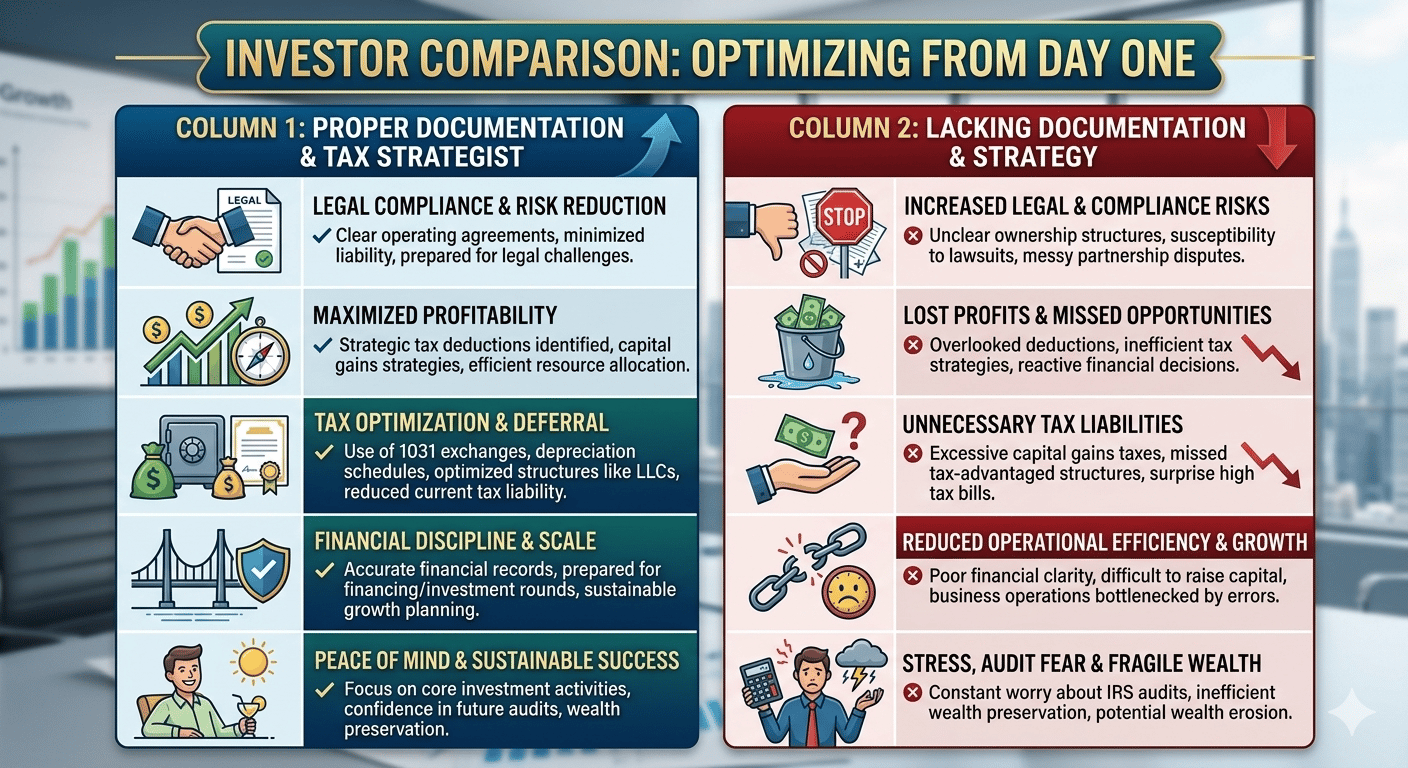
Strategy two: document everything.
This is the one nobody wants to hear, which is exactly why Thomas keeps saying it.
"It's not having a good recordkeeping system and bookkeeping system to keep accurate records. Because if you have accurate records, you can sit there and say, 'Why is that expense so high?' And also, by having the records, you're making sure you're not missing expenses that you could be entitled to from a tax-saving standpoint. Documentation — that's the one biggest thing people can do, and it's the most boring thing they want to hear."
– Thomas Castelli, Hall CPA
The foundation of every solid real estate tax strategy for investors is boring. It is a spreadsheet. It is a business bank account. It is receipts. Without it, everything else falls apart.
What Most People Get Wrong About Rental Property Taxes
This is the misconception I hear most often from the buyers I work with, and tax planning for rental property starts with clearing it up.
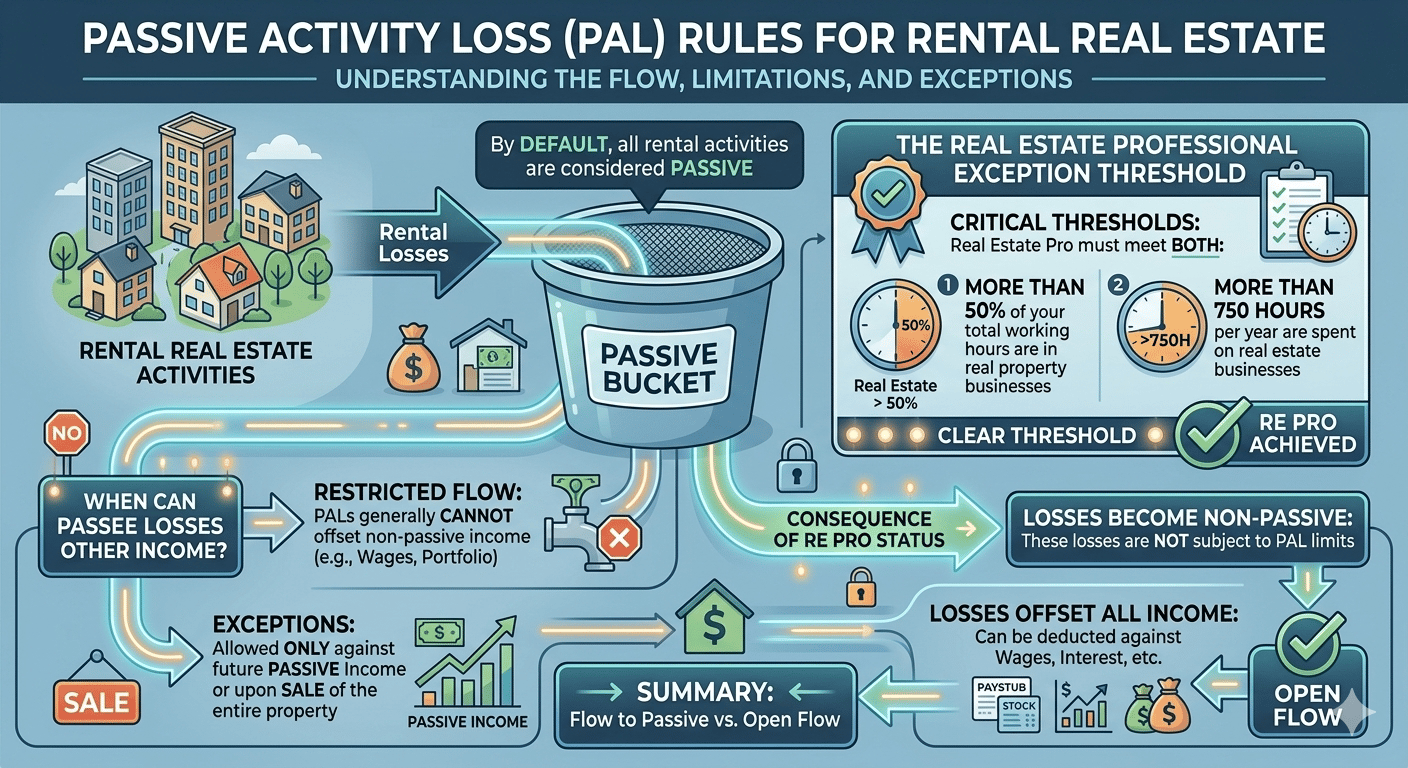
Most people believe that buying a rental property means they can take all of those paper losses from depreciation and use them to wipe out their W2 income. They see a TikTok video about bonus depreciation and assume the savings are automatic. They are not.
Under the passive activity loss rules real estate investors need to understand, losses from passive activities like rentals can only offset income from other passive activities. Rental activities, includingconverting your primary residence to a rental property, are passive by default. Unless you qualify as a real estate professional, which requires more than 750 hours and more than 50% of your total working time in a real property trade or business, those losses stay in a passive bucket and do not touch your W2.
Here is what most people miss though. Depreciation is still doing powerful work. It is sheltering your rental income from taxes. Your cash flow can be completely tax-free. That is an advantage most W2 earners and business owners cannot access anywhere else.
"People think, 'I'm going to get into real estate and I'm going to be able to take all these losses and offset my W-2 or my other business income and save all this money.' And it's not an automatic yes to that. What you can do is shelter your rental income from tax. I might be generating cash flow tax-free, which reduces your effective tax rate and is tax-advantaged in and of itself."
– Thomas Castelli, Hall CPA
The benefit is real. It just does not work the way the internet says it does. And that distinction is exactly why tax planning for rental property requires a real professional, not a 60-second video.
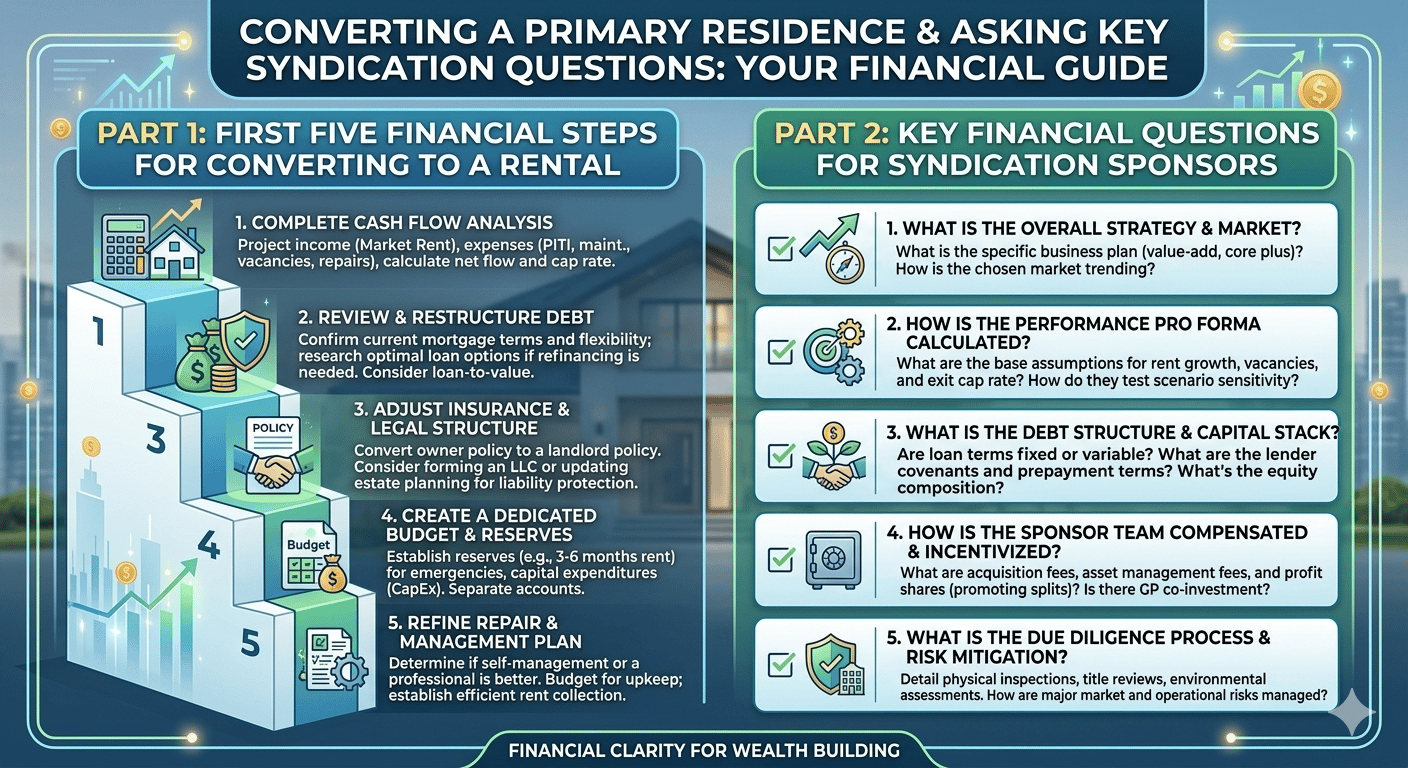
One of the most common questions I get from clients is whether they should keep their current home as a rental when they move into their next one. My answer is almost always yes, if they can float both mortgages. But Thomas gave me the clearest first step I have ever heard:
Open a business bank account. Before anything else.
The moment you areconverting your primary residence to a rental property, the first move is clear: open a dedicated account before you list it or find a tenant. Run all rental income into it and pull all property-related expenses from it. Keep it completely separate from your personal finances from the very first transaction.
Thomas explained that on the accounting side, they regularly see situations where a client has thousands of transactions mixed into a personal account and has to manually sort out which ones were business-related. Solid tax planning for rental property starts with avoiding that mess, andhow to set up QuickBooks for a real estate portfolio is exactly where to begin. A business bank account from day one makes everything cleaner, cheaper, and more defensible.
Here is a quick-start checklist for anyone making this transition:
Open a dedicated business bank account
Deposit all rental income into that account only
Pay all property expenses from that account
Set up a simple spreadsheet or accounting software from day one
Track every repair, maintenance cost, and management fee from the start
Real Estate Syndication Tax Benefits and Red Flags to Watch
For the clients I work with who want to bridge from single family investing into larger deals, understanding real estate syndication tax benefits is critical. So is knowing who to trust with your capital.
Thomas identified two red flags every investor should screen for before committing to a sponsor.
Red flag one: a poor or nonexistent track record.
Everyone starts somewhere, but a first-time sponsor should be partnered with someone who has already done it. Look at how many deals they have closed in the specific asset class, how many succeeded, how many did not, andhow investing in a real estate syndication works before trusting anyone with your capital. Then compare what they projected against what actually happened.
Red flag two: not knowing your own buy box.
Thomas was clear that this one is on the investor, not the sponsor. If you do not know your investment objectives and criteria, you cannot identify whether a great opportunity is the right opportunity for you. Real estate syndication tax benefits can look compelling on paper, but they have to fit your overall strategy to matter.
"Know what your buy box is. Know what your investment objectives are and let that be the filter through which you evaluate opportunities. A sponsor can have a great opportunity, but it might not be the best opportunity for you. And you won't be able to tell unless you have your buy box down and know what your criteria is."
– Thomas Castelli, Hall CPA
I have always told my clients that building a team is non-negotiable. What Thomas did in this conversation was give me the language to explain exactly why a tax strategist belongs on that team from the very first deal, not the second, not after the first mistake.
The bonus depreciation real estate investing example stayed with me most. A two-week difference in closing date eliminated a major tax benefit for one of his clients. Nobody warned them. Nobody was in their corner early enough to catch it. That is exactlythe best deal in the tax code that nobody plans around. The kind of thing that does not show up on a TikTok video and does not get discovered until it is too late to fix.
The passive activity loss rules real estate misconception is the second one I will be addressing more directly with buyers going forward. So many people come into real estate expecting those losses to offset everything. Helping them understand what the advantage actually is, tax-free cash flow instead of a W2 offset, reframes the opportunity in a much more accurate and motivating way.
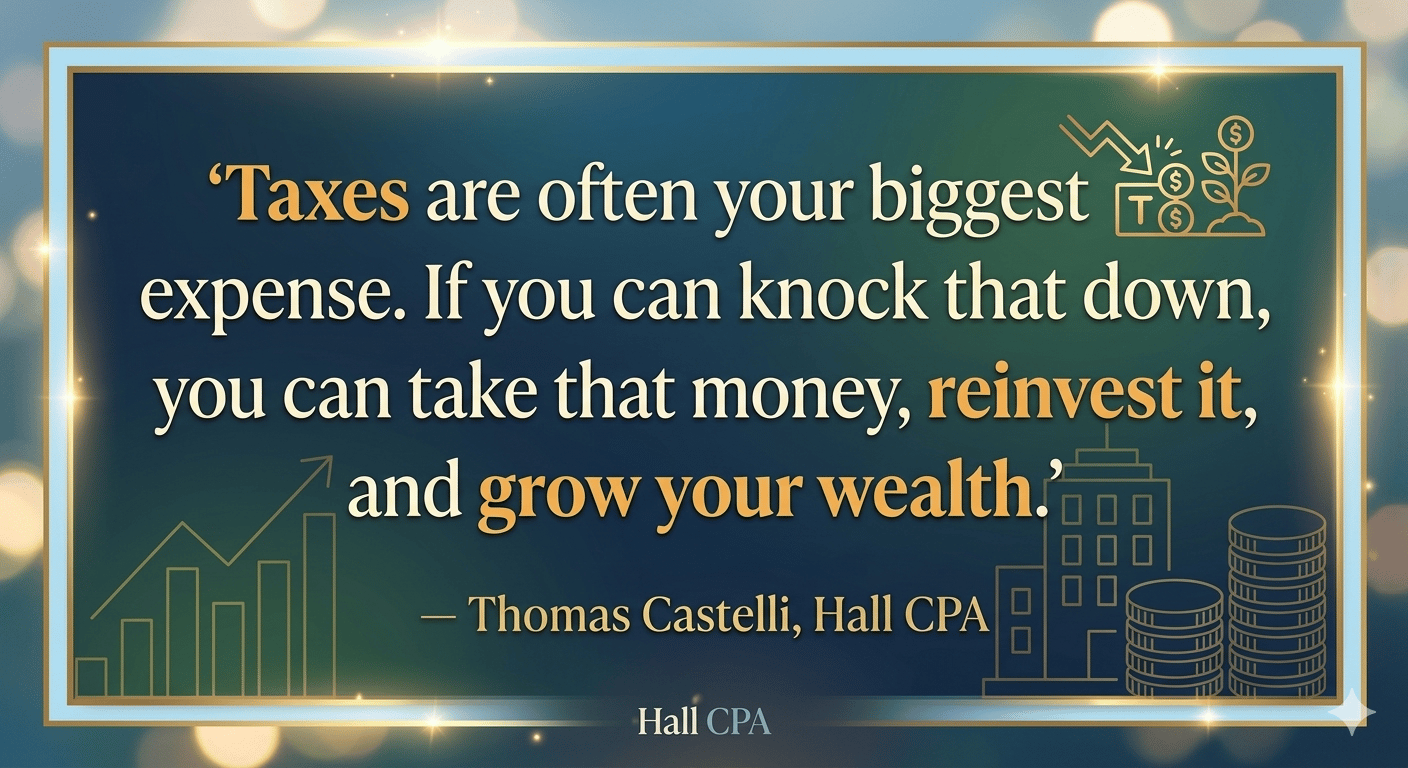
Thomas Castelli reminded me that taxes are not an afterthought in real estate. They are one of the primary levers of wealth. Ignore that lever and you are leaving serious money on the table. Pull it correctly and you are building generational wealth faster than almost any other vehicle available.
If you are building your real estate team and want to understand the full picture of what a strong support system looks like, theIcons of Real Estate Podcast Network is a resource worth exploring. And if you want to see what results-driven real estate professionals are building with the right team around them, take a look at some of thesuccess stories coming out of this community.
Who is Thomas Castelli and what does Hall CPA do?
Thomas Castelli is a CPA, CFP, and partner at Hall CPA, a firm specializing in real estate tax strategy for investors. He is also the co-host of the Tax Smart REI podcast with over 4 million downloads and has personal investing experience as both a general partner and limited partner in real estate syndications.
When should I start working with a tax strategist?
Before your first acquisition. Thomas argues that early engagement gives you the best chance to choose an investment strategy that is already tax-advantaged. At minimum, bring someone in before you close so they can advise on timing, structure, and documentation from day one.
Can rental property losses offset my W2 income?
Not automatically. Under thepassive activity loss rules real estate investors are subject to, rental losses are passive by default. To offset W2 income, you need to qualify as a real estate professional. That said, depreciation still shelters rental income from taxes, which is a powerful advantage on its own.
What is bonus depreciation and why does timing matter?
Bonus depreciation real estate investing allows investors to immediately deduct a significant portion of a property's cost in the first year. The acquisition date determines eligibility. Thomas shared a case where a two-week difference determined whether a client qualified for 100% bonus depreciation.
What is the first step when converting my home to a rental?
Open a dedicated business bank account immediately. Run all rental income into it and all property expenses from it. This separation makes tax planning for rental property significantly cleaner and more accurate.
What should I look for in a syndication sponsor?
A strong track record in the specific asset class and alignment with your investment objectives. Understand the real estate syndication tax benefits being offered and whether they actually fit your overall strategy before committing.
The Conversation Does Not Stop Here
If this episode gave you clarity on where your tax strategy stands and what to do next, stay connected. More conversations like this one are waiting for you.
💼 Connect with Thomas Castelli:
🌐 Website → https://www.therealestatecpa.com/
🔗 LinkedIn → https://www.linkedin.com/in/thomascastelli/
🎧 Follow Deana Brummett:
📷 Instagram → https://www.instagram.com/AtHomeintheCarolinas/
📘 Facebook → https://www.facebook.com/HomeintheCarolinas
Apply as a Guest on the Make Yourself at Home Podcast
Real estate is where wealth is built, protected, and passed down. But getting there takes more than the right property. It takes the right team, the right timing, and the right conversations.
If you are a real estate professional, investor, lender, attorney, tax advisor, or industry expert with real insight to share, I want to hear from you. This show exists to give buyers and investors the clarity and confidence to make moves that actually matter.