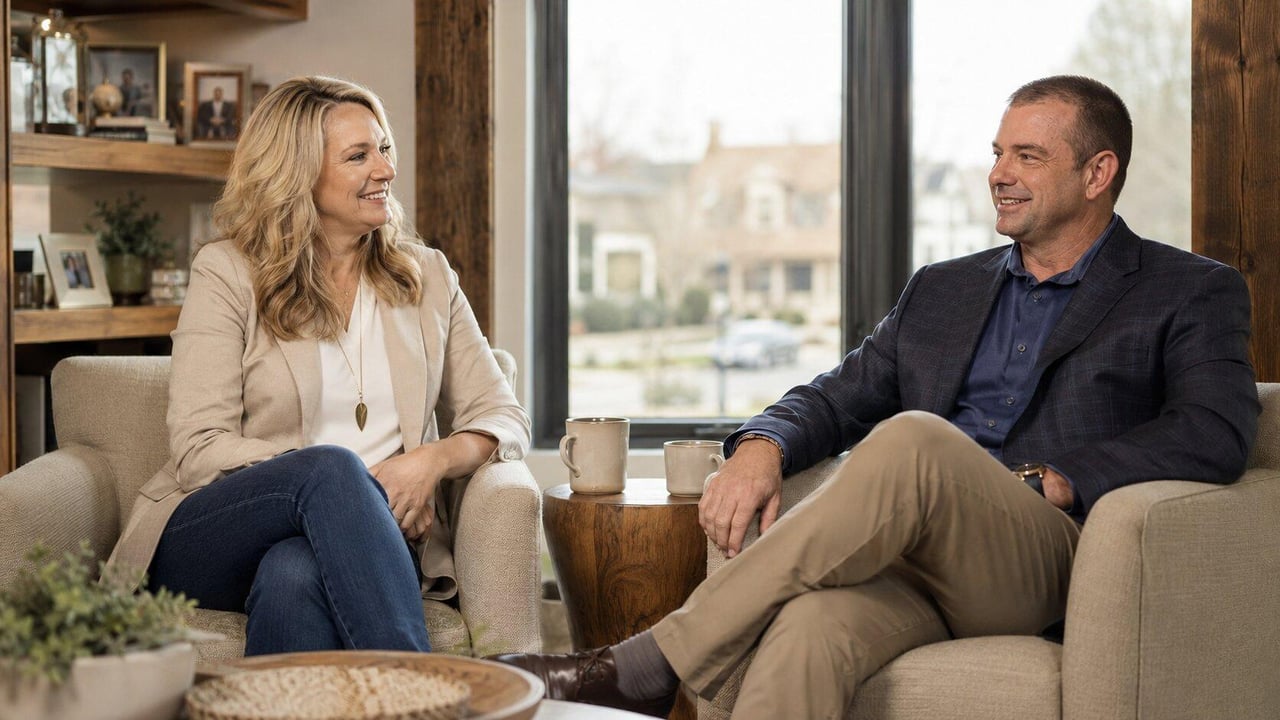
If you own a home in a fire-prone market, the scariest part of a deal is no longer the inspection or the appraisal. It is the insurance. I keep hearing the same story: a buyer falls in love with a house, the offer gets accepted, and then a policy that used to cost a few thousand dollars comes back at six figures. That is why I sat down with Jim Sprouse of Ember Pro Wildfire Defense Systems to talk about what actually protects a home and what is quietly killing transactions.
Jim is an entrepreneur with a degree in environmental studies and a certified wildfire mitigation specialist. He spent 15 years in insurance before co-founding Ember Pro, so he understands both the fire science and the money side of this. What I appreciated most is that he does not sell fear. He told me he would happily go out of business if homeowners did the fundamentals, and he meant it.
Here is what you will learn from our conversation:
Why home hardening and defensible space are two different things, and why confusing them is costly
The real reason most homes burn down, and it is not direct flames
How wildfire defense systems work, and why the pool-pump method falls short
How the California wildfire insurance crisis is reshaping real estate
What I changed about the way I advise clients after this talk
Listen to the full conversation here:
Why I Had This Conversation With Jim Sprouse of Ember Pro Wildfire Defense Systems
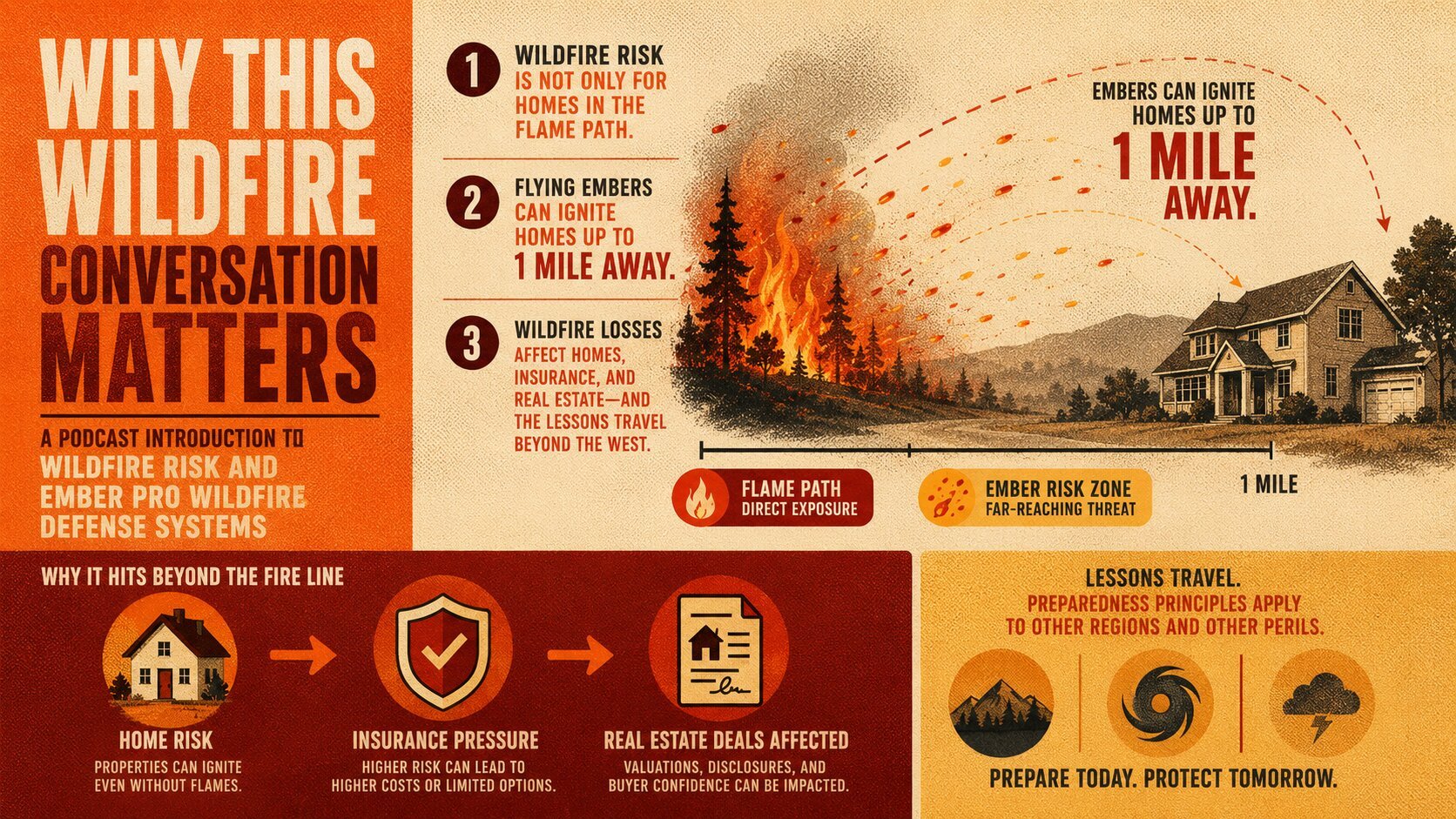
Wildfire used to feel like a problem that belonged to other people in other states. After hearing story after story of homes lost, deals collapsing, and premiums climbing into the tens of thousands, I knew this was a conversation my listeners needed. CAL FIRE notes that flying embers can ignite homes up to a mile away, which is why wildfire risk is not limited to the homes directly in the flame path.
So I invited Jim ontoMake Yourself at Home. His company started over a New Year’s Eve conversation, and the way he framed the whole thing stuck with me.
"Every business starts with a question or they're trying to find a solution to something. So we took 2024 and did some research and found that this is actually a pretty up-and-coming, pretty nascent market. There was a big need for it, especially around insurance. If you can't get insurance when you're selling homes and transacting, that's difficult."
– Jim Sprouse, Co-Founder, Ember Pro
That honesty set the tone for everything that followed, starting with the one distinction he says people get wrong most often.
Home Hardening and Defensible Space Are Two Different Things
The single biggest takeaway from our talk is that people conflate two separate concepts, and that confusion costs them. Jim broke it down for me in a way that finally made it click.
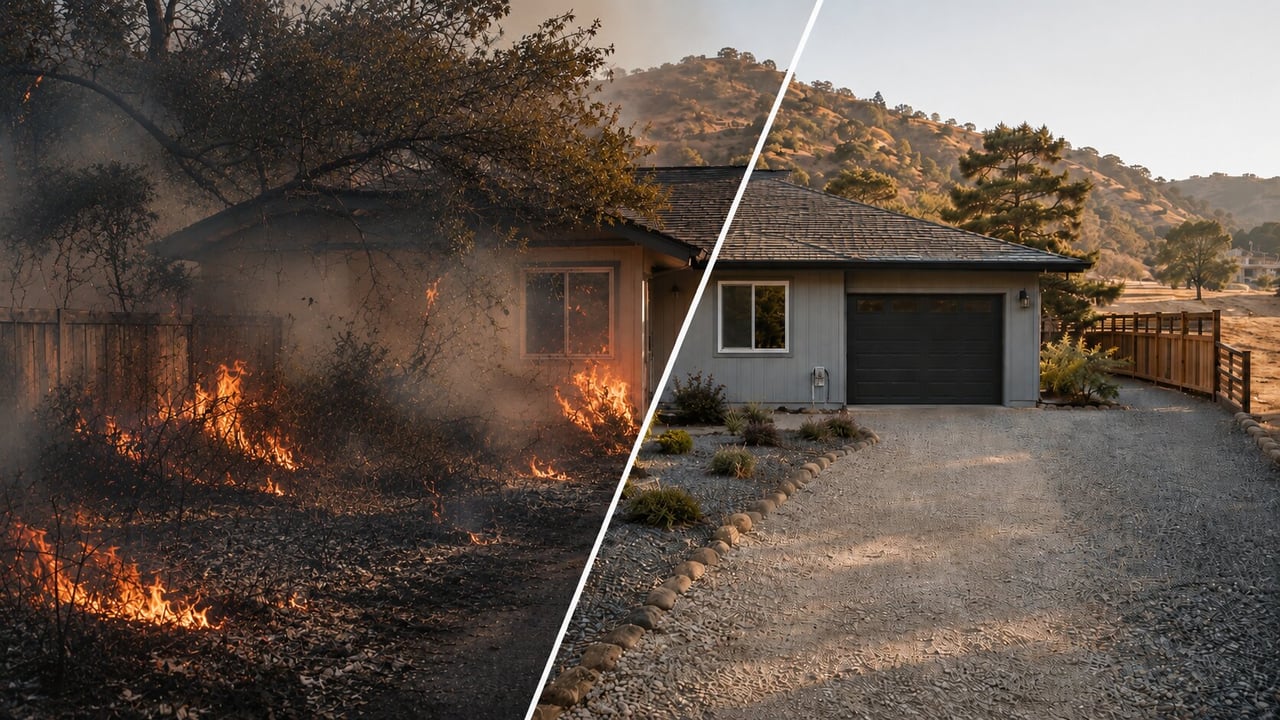
Home hardening is about the structure itself. The roof has to be Class A rated, the siding has to be Class A, vents need one-sixteenth inch mesh to block ember intrusion, and windows should be double-pane tempered glass. Building code has required this on new builds since 2010.
Defensible space is the area around the home. Under California’s AB 3074 defensible space law, this includes "zone zero," which means clearing combustible material within the first five feet of the structure, right down to garbage cans and wood fences.
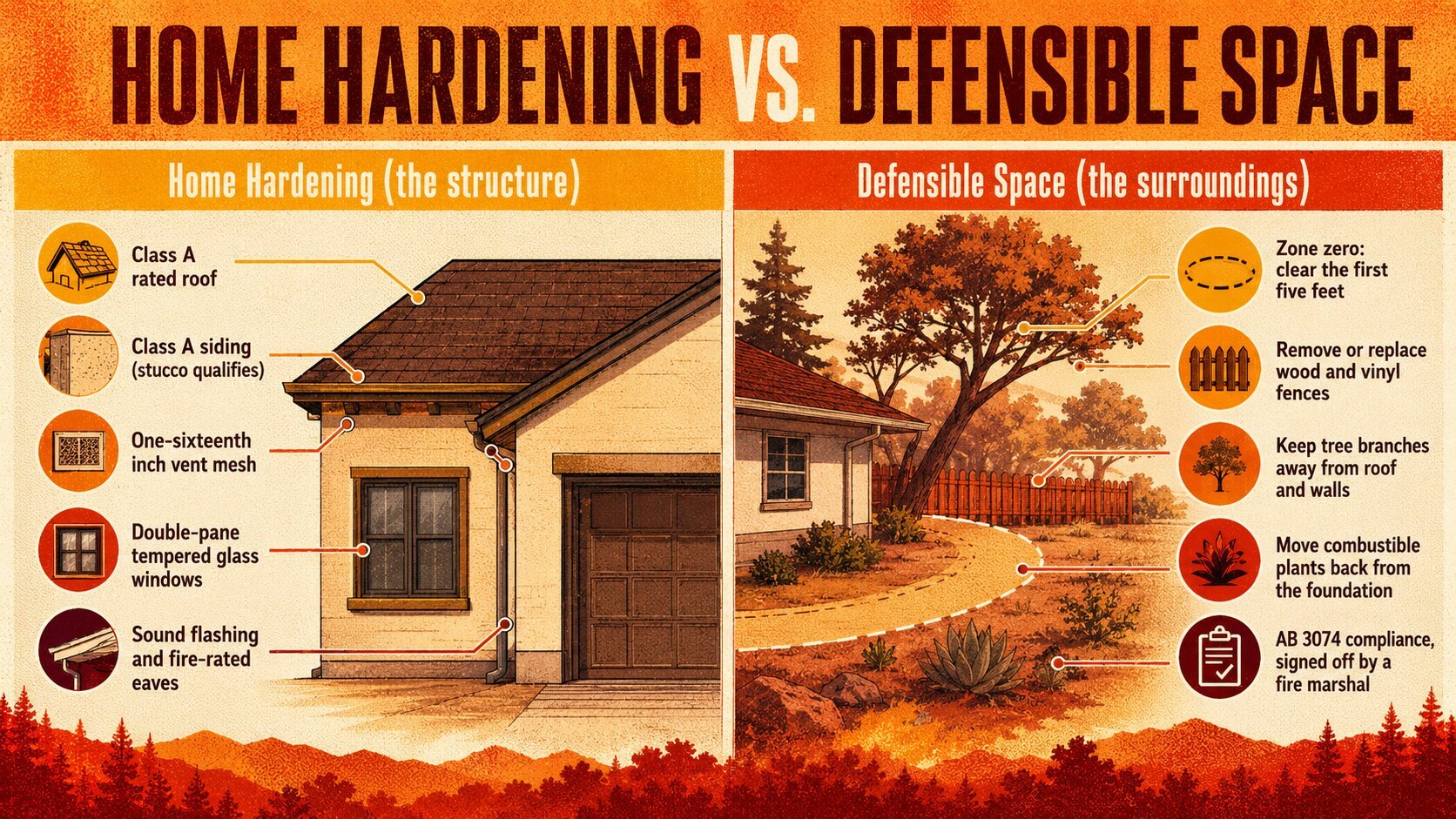
This is the home hardening and defensible space pairing every owner in a fire zone needs to understand.
What surprised me is just how much of the danger comes from something most people never picture.
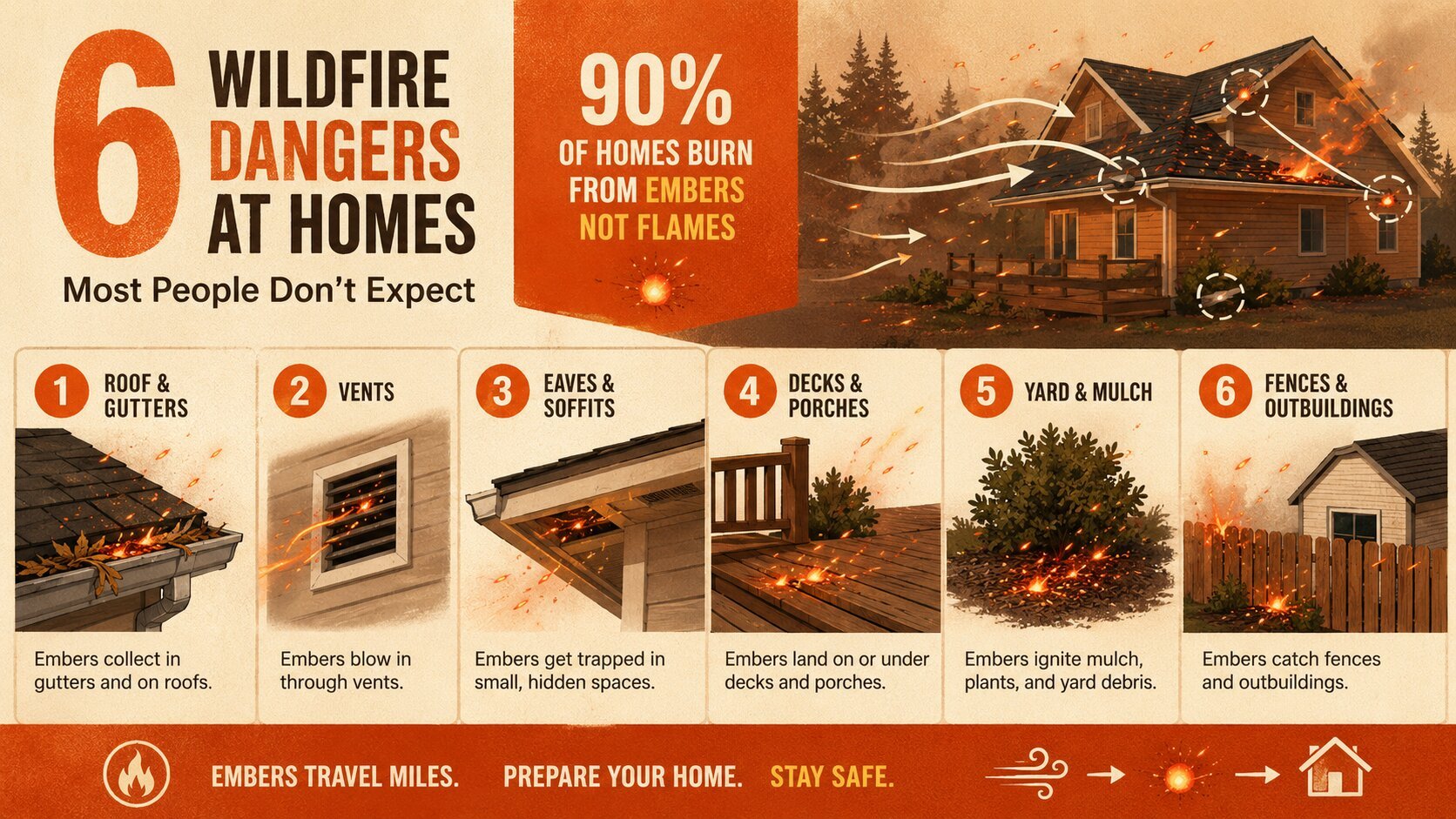
"The biggest reason homes burn down is not direct flames. Ninety percent of homes burn down because of embers and ember cast. There's a huge fire and there's gases and everything going up in the air, hundreds of feet. And then there are huge Santa Ana winds blowing these embers one, two, or even three miles away. They land in a backyard or enter through vents."
– Jim Sprouse, Certified Wildfire Mitigation Specialist
Once Jim explained why hardening matters, the next question was obvious: what do you do when the fundamentals are in place but the fire is still coming?
How Ember Pro’s Wildfire Defense Systems Actually Work
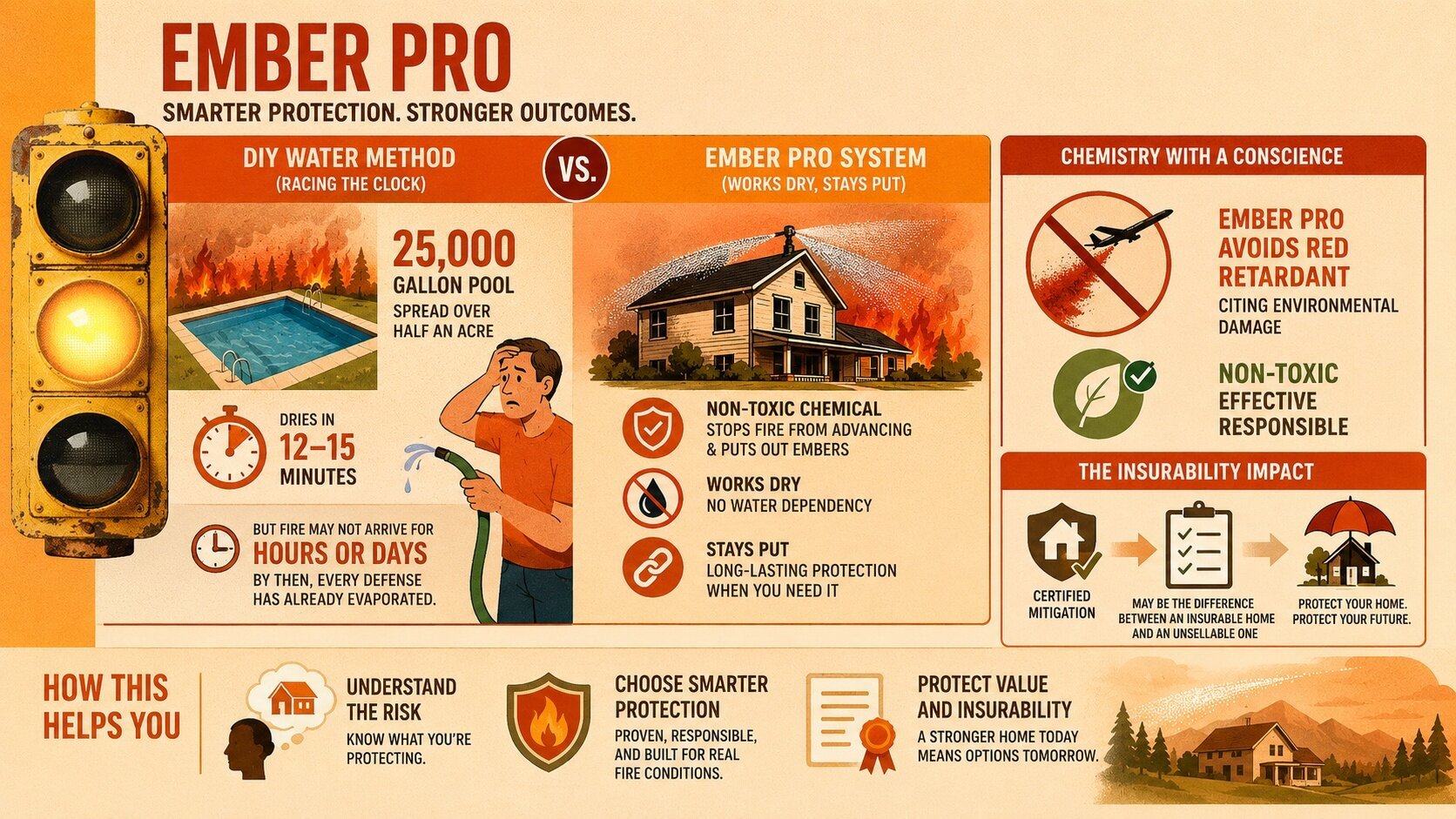
Once Jim explained the science, the product made sense. Ember Pro installs systems that spray a non-toxic chemical to keep fire from advancing and to put out embers. Unlike the pool-pump-and-water approach so many homeowners rely on, his system is not racing the clock.
He pointed out the math that undermines the DIY water method. A 25,000 gallon pool spread over half an acre in fire conditions dries in 12 to 15 minutes, but the fire might not arrive for hours or even days. By then, every defense has already evaporated. His chemical works dry and stays put, which is the whole point of ember cast home protection.
That insurability point is where the conversation hit closest to home for my agent listeners.
The Insurance Crisis Is Reshaping Real Estate
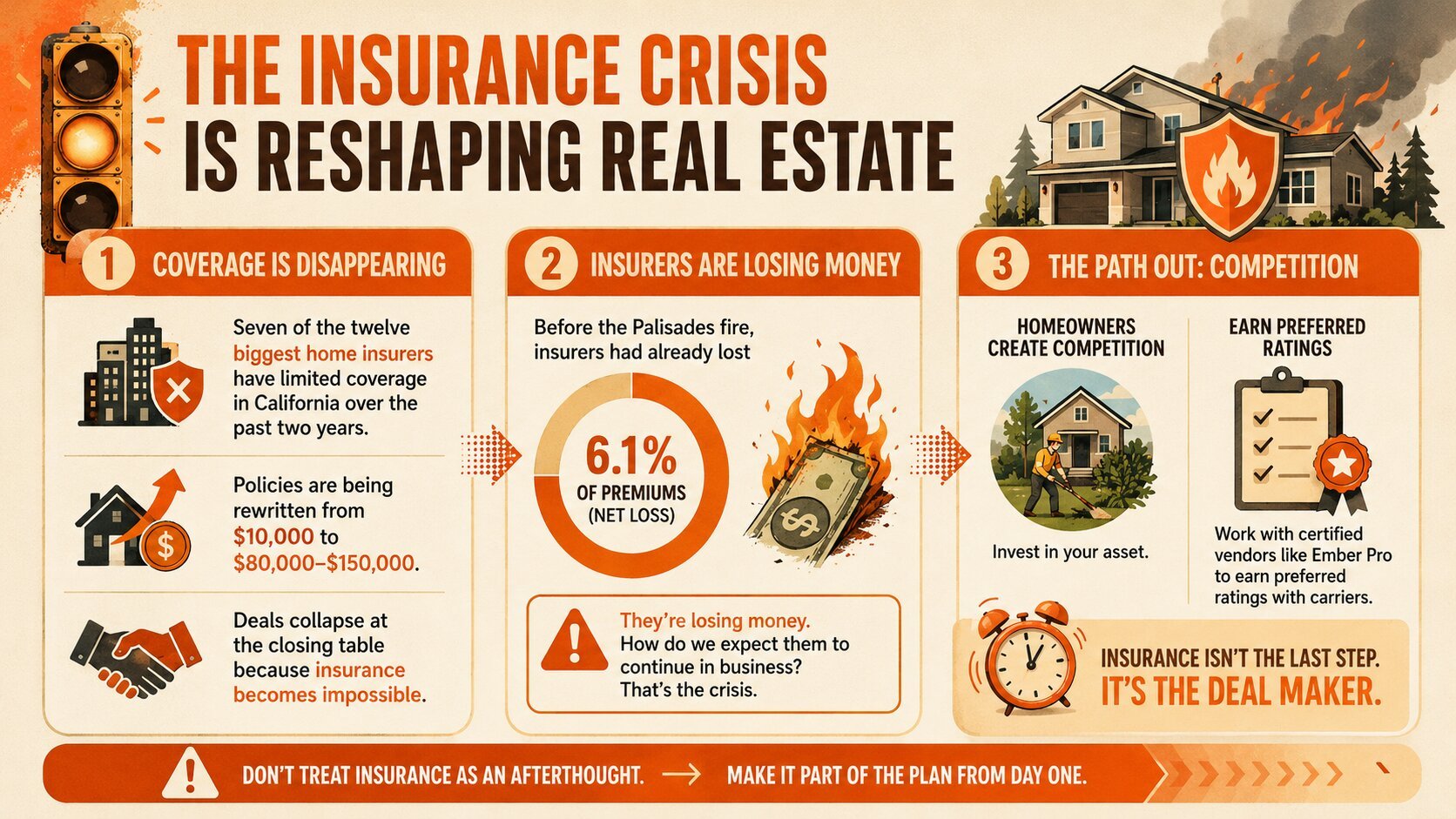
Jim described deals collapsing not because buyers walked away, but because insurance became impossible. He shared a story of a friend losing money on high-end transactions where the former owner's $10,000 policy was being rewritten at $80,000 to $150,000.
NAR also cited Bloomberg reporting that seven of the twelve biggest home insurers have limited coverage in California over the past two years, partly because of increased fire risk. When major carriers pull back at that scale, individual buyers feel it at the closing table.
He was blunt about why carriers are pulling back, and it reframed how I think about who to blame.
"Everyone wants to blame the insurance companies. And before Palisades, they had a net loss of 6.1% of the premiums they received. They were losing money. How do we expect them to continue in business if they're losing money? That's the crisis."
– Jim Sprouse, Co-Founder, Ember Pro
Jim’s tactical advice is that the only path out is a competitive market, and homeowners create that by investing in their asset. Ember Pro is a certified vendor working directly with carriers to earn preferred ratings for mitigated homes. The mistake to avoid is treating insurance as an afterthought at the end of escrow, when it is now the thing most likely to kill the deal.
That shift changed the advice I give, even in a market with very different perils.
What Changed for Me After This Conversation
Talking with Jim shifted how I advise clients. The principles he laid out are not California-specific. They are common sense applied with discipline.
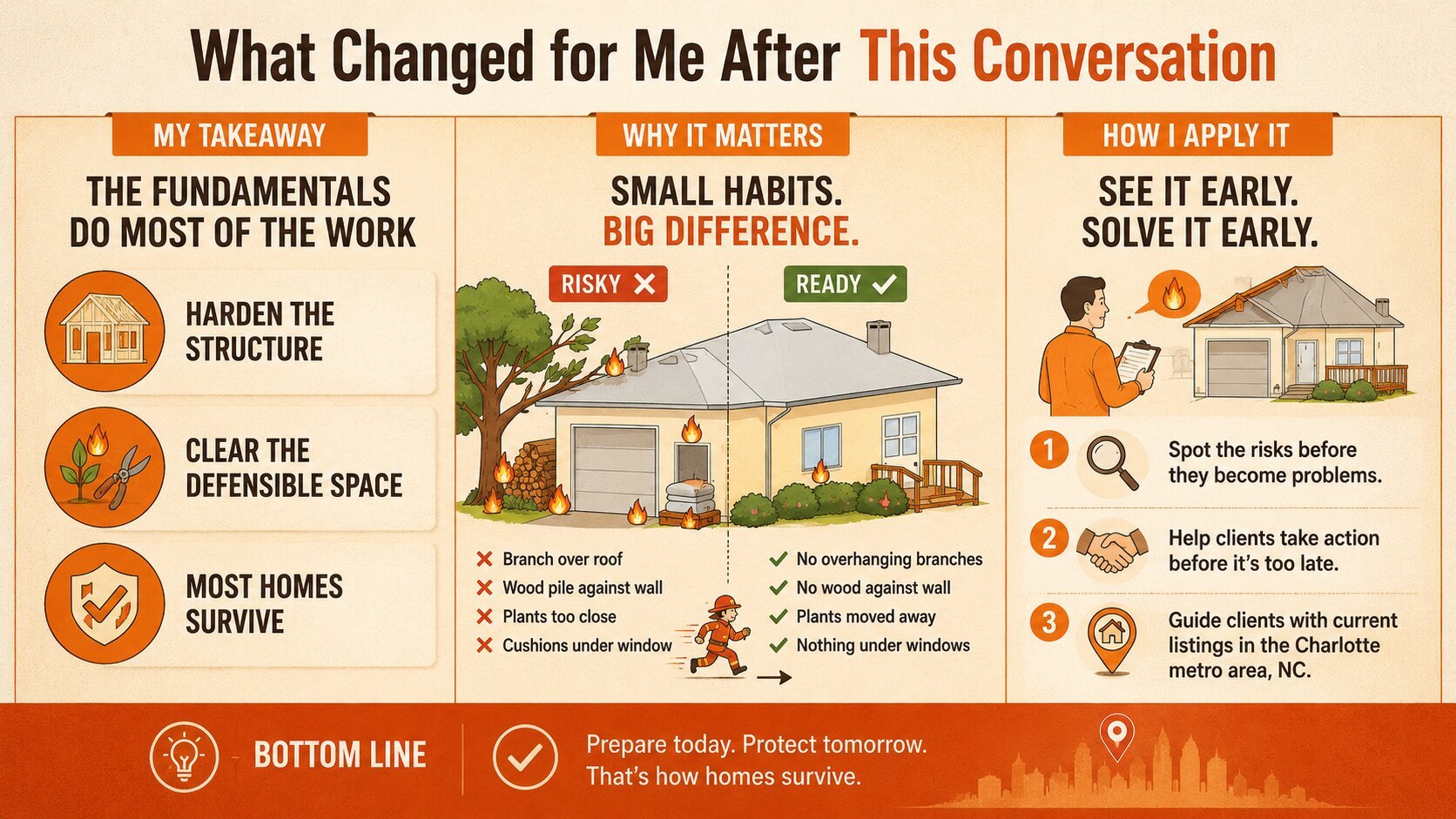
My takeaway as the host is that the fundamentals do most of the work. Harden the structure, clear the defensible space, and most homes survive. I already coach clients to keep plantings away from the foundation, and Jim confirmed why that small habit matters. On new construction here, I tell buyers to dig young plants up and scoot them out another two feet, because by the time you notice they are too close, they are too big to move easily.
How I apply this going forward is simple. I keep pushing buyers and sellers to look at their homes the way Jim looks at every property, spotting the wood pile against the wall, the branch over the roof, the cushions stacked under a window, before a problem ever shows up.
If you still have questions about the basics, the FAQ below covers the points listeners ask most.
FAQ Section
What Is the Difference Between Home Hardening and Defensible Space?
Home hardening protects the structure itself, including a Class A roof, Class A siding, ember-resistant vents, and tempered glass windows. Defensible space addresses the area around the home, starting with clearing combustible material within the first five feet under California’s AB 3074.
Why Do Most Homes Burn Down in a Wildfire?
According to Jim Sprouse, roughly 90% of homes are lost to embers and ember cast rather than direct flames. Wind-driven embers travel miles, land in backyards, and enter homes through vents, which is why hardening and clearing matter so much.
How Is Wildfire Risk Affecting Home Insurance in California?
Major carriers are limiting or declining coverage in high fire zones, and premiums have risen dramatically. Jim described policies jumping from around $10,000 to well over $100,000, with deals falling out of escrow because buyers cannot secure affordable insurance.
Keep the Conversation Going
If you want to protect homes from wildfire risk through mitigation, defensible space planning, and wildfire defense systems, reach out to Jim Sprouse :
Website → https://emberprousa.com/
LinkedIn → https://www.linkedin.com/in/jsprouse/
Facebook → https://www.facebook.com/emberprousa/
Instagram → https://www.instagram.com/emberprousa/
YouTube → https://www.youtube.com/@emberprousa
If something in this episode made you think, question, or laugh, don’t let it stop here.
Follow Make Yourself at Home and stay part of the conversation:
Follow me at:
Website: https://athomeinthecarolinas.com/
Or you can visit the properties in the Charlotte metro area, North Carolina if you’re getting ready to buy a new home for you and your family.
Apply as a Guest on the At Home in the Carolinas Podcast
Real estate is changing fast. Risk is repricing, insurance is tightening, and the professionals who understand how to protect a home and a transaction are the ones clients trust.
If you are working in the industry and solving real problems, whether in mitigation, insurance, brokerage, or development, I would love to hear from you.