Most real estate investors don't have a lead problem. They have an intake problem. When a seller calls and nobody responds within seconds, that seller simply calls the next buyer. Fixing how you catch inquiries often matters more than buying more leads.
That idea drives this episode of Make Yourself at Home. I sat down with Jack Hoss of RealDealCrew Deal Intake Automation, a seasoned investor who builds deal intake automation for investors who want more closings and more time back.
Curious how a five-second text can save a deal? Here's a quick preview of our conversation:
Most Investors Lose Deals at the Front Door
I answer every call that rings my phone. Every single one. Even the ones marked "potential spam."
When my Samsung rolled out an AI call screener, I tried it. Two callers told me they were yelling at it, and it still couldn't hear them. I turned it right back off. I'm not willing to lose a call.
So when Jack said slow response is where deals die, I leaned in.
Jack's story started with a setback. He and his partner were investing full-time when COVID hit. They both had to take day jobs again, but the business still needed running. Jack built automations and processes just to survive part time. Those same systems now power RealDealCrew, where he runs intake operations for other investors.
I've watched the same truth play out in the systems behind high-performing real estate teams. The people who win rarely have the most leads. They have the best process for handling them.
Watch the full episode here:
Speed to Lead for Real Estate Investors Starts With a Five-Second Text
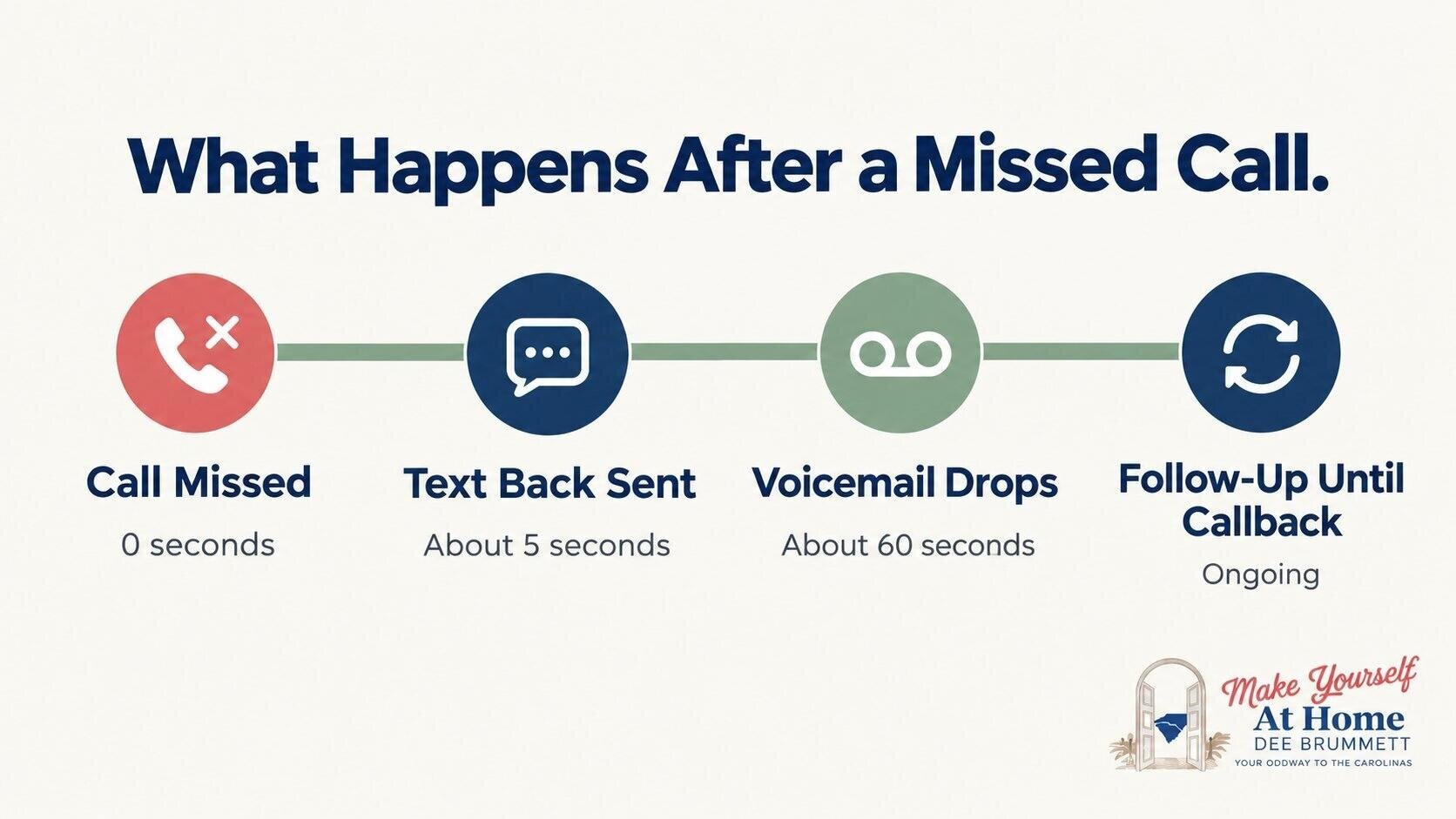
Jack works with distressed homeowners. They call, text, and email when life feels heavy. If he can't pick up, his system texts them back within a few seconds: "Hey, I saw you missed your call. How can I help you?"
About sixty seconds later, it drops a voicemail. Then it keeps following up until they call back.
The goal is simple. Get them to stop calling the next person in line.
To a seller who feels like they're drowning, that quick text is a life preserver. It tells them a real person is working on their problem. I see the same fear in my own sellers, which is why I walk every client through what to expect when selling a home from day one.
Jack was blunt about the money side, too. "If you aren't responding within seconds of somebody calling, you've lost the deal," he said. Before you spend another dollar on ads, fix your intake.
The research backs him up. A Harvard Business Review study on how quickly online sales leads go cold found that most companies respond far too slowly. Firms that answered within an hour were roughly seven times more likely to qualify a lead than those that waited longer. A stat I've heard repeated in our industry is even harsher: miss the first thirty seconds and most of that opportunity is gone.
The good news? You don't need a big budget. Many CRMs already include text-back tools, and Jack's team builds automated lead response for investors who want it fully handled. That's the heart of real estate lead intake automation.
AI for Real Estate Investors Works Best With the Bumpers Up
Jack uses AI everywhere, from funnels to process automation. But he says most investors set it up to fail.
“The big one is that they throw it at a huge problem and expect magic. Where I've seen it really shine is when we are more strategic and clear about what we're doing and the directions we're providing. A good example is the text back system. Simply doing that text-back system first, making sure you get that dialled in, is better, and you're going to see bigger and clearer results than telling AI, 'I have a real estate business, run it for me.' It just doesn't work that way. You're just gonna get better results if we keep things narrow. It's a tool that you have to give specific parameters, and it's always better to start off small, get your feet wet, and then learn as it continues forward. The reason AI hallucinates is that we don't keep the guardrails on and provide the necessary context for it to do a good job.”
His secret is context. Jack trains his AI on his SOPs. Now it can text with distressed homeowners and even answer phone calls.
His property management setup impressed me most. Jack owns rentals in Minnesota and North Dakota, where the laws differ. His AI knows his tenants, their signed leases, and each state's rules. It answers resident questions and takes maintenance requests. He's close to having it schedule the contractor, too.
When an unknown number calls, it switches gears. It treats that caller as a renter and shares available units, rent, deposits, and rules.
I compared it to bowling with the bumpers up. Teach it where the gutters are first. Then let it roll.
Jack did offer one warning. Some companies now use AI to make cold calls, and he expects trouble. He has a point. The FCC has already issued a ruling that AI-generated voices in robocalls fall under federal robocall law. Use AI to answer people who reach out to you, not to chase people who didn't.
Not sure where your own process breaks down? An operations audit built for real estate investors is a smart first step before you automate anything.
Local SEO for Real Estate Investors Puts You in the Top Three
People want to work with someone in their own backyard. Jack made a point that hit home for me as a Carolina girl. When you hear an unfamiliar accent on the phone, you often assume it's a scam and hang up.
That's why local SEO for real estate investors matters so much.
Jack proved it recently with a local med spa. His team pushed the area's largest hospital out of the top three dermatology results. The spa landed at number two. Phone calls jumped 25%, and web traffic climbed right along with it.
Those top three spots carry real weight. According to Jack, about 80% of searchers never click "More businesses." When a seller types "house buyers near me," they choose from the first three results.
Google's own guidance on improving your local ranking says local results lean on relevance, distance, and prominence. Accurate, complete profile information helps. So do reviews and mentions across the web.
Jack's first move is simple. Claim your Google Business Profile. Then claim your Bing profile, too. His reasoning is that ChatGPT can lean on Bing's data because of Microsoft's ties to it. Many people now start a search in an AI tool, then double-check on Google. Bing even lets you import and sync your Google profile, and Microsoft's redesigned Bing Places for Business made that import faster.
Next, earn trust signals. Search engines look for links from nonprofits and local organizations that prove you're a real, operating business. Jack's favorite low-hanging fruit is joining your local chamber of commerce and getting a link from their site to yours. It's one of the cheapest trust signals you can buy.
One last caution. Many website providers recycle the same templated copy for every client. Google spots duplicate content and can push your listing down. Original, local content wins. That's the thinking behind Jack's work on local search visibility for motivated sellers.

Your Content Should Talk to Sellers, Not Your Competition
I shared something I've watched since social media exploded. It started out hyperlocal. Then HGTV and Netflix made people want agents from completely different markets. Those agents know nothing about North Dakota, Minnesota, or South Carolina.
You can go viral with a TikTok dance. It may not bring you a single client.
Jack laughed and admitted his team fell into that trap early. Their TikToks, socials, and website ended up talking to other investors. They were talking to everybody except the people they actually serve.
His fix is to build resources for distressed homeowners, not an audience you're chasing.
He also sees a big opening right now. Feeds are flooded with what he calls "AI slop." Raw content stands out against all that polish. A quick, unedited short of you walking a property feels human, and people crave it. Look at how many folks are buying vinyl and CDs again.
Honesty and a personal touch still win. That's the spirit I try to bring to my Instagram, and you'll find Jack sharing his investor insights on his Instagram.
Real Estate SOPs Before Delegating Keep You From Becoming the Bottleneck
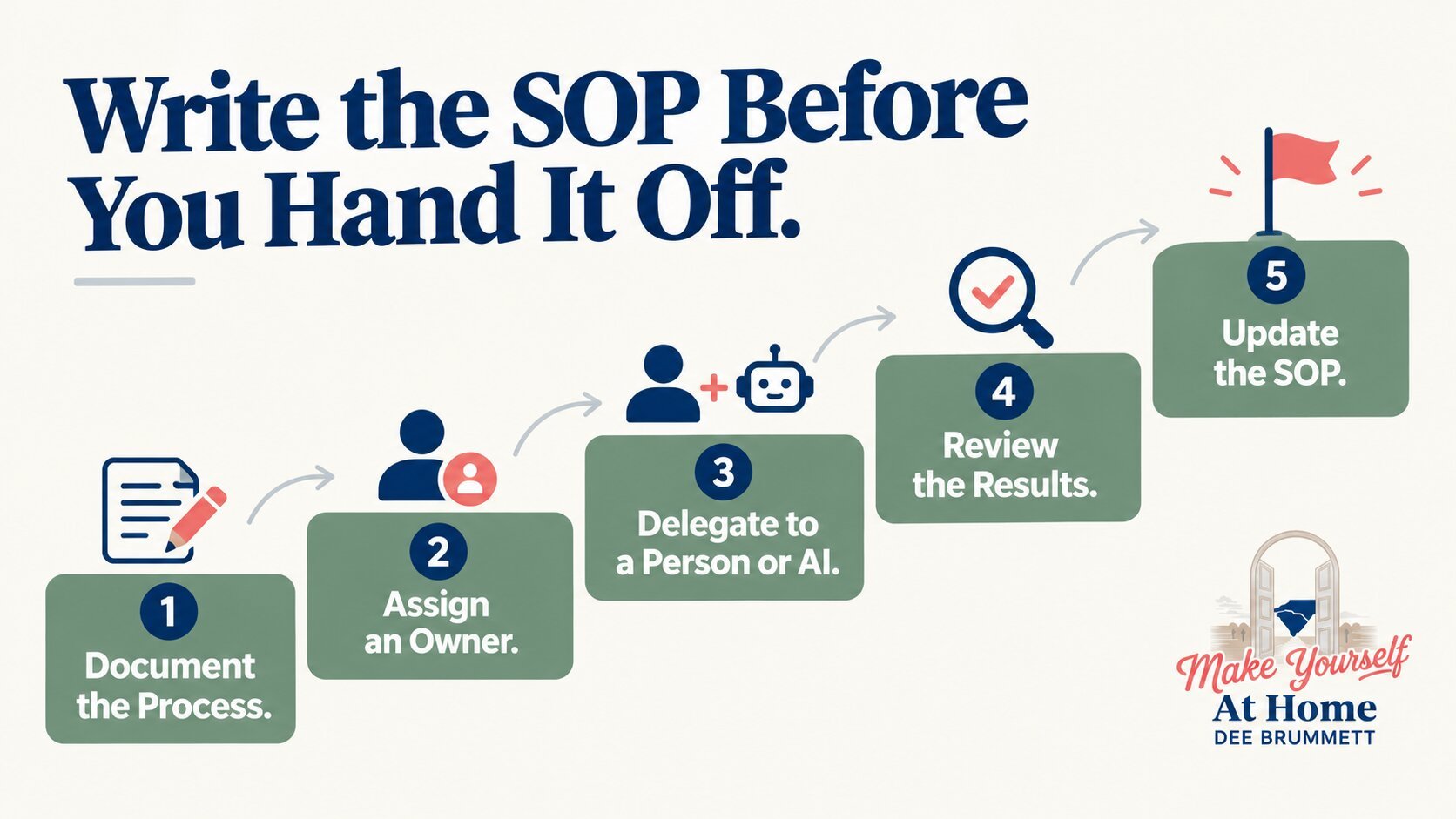
I asked Jack what an overwhelmed investor should delegate first. His answer surprised me. Nothing yet. Write it down first.
“The first thing that they need to do, if they haven't done so already, is to please spend some time putting together your SOPs, your standard operating procedures. You're not handing anything over to anybody without a clear direction, and that includes not only a person but AI. Having that clear direction for your team, whether it's AI or human, is just a vital step. And with the people I end up working with, I usually have them enable their team members. So if a team member notices that some software changed, or a process or a law might have changed, they bring it up and say, 'Hey, we need to update this.' Now it becomes their responsibility to update the SOP, whether it's a video or text, so they become the owner of that update. Giving them the power to do so is critical, because that way everything doesn't fall back on you.”
That last line stuck with me. When I started as a solo agent, I had to answer two questions before I could hand anything off. What do I expect? How do I want it done? That became my playbook.
Jack says the owner is usually the bottleneck. Entrepreneurs love to believe nobody else can do it right. Real estate SOPs before delegating break that habit.
He also hunts for what he calls "time theft." One client spent hours every week filling out certification forms at night instead of being with his young child. Jack wrote a small Python script. Now the job takes five minutes.
The 1-2-3 Rule and the Case for One Thing at a Time
Jack is convinced momentum is underrated. Your best days happen when you're in flow. Constant start-and-stop kills it.
That reminded me of a rule a past guest shared. His team picks three priorities every morning. Everyone works on number one until it's done or stalled. Then number two. Then three. They never circle back early. He said productivity went through the roof.
Jack tied it right back to automation. Implement one thing. Dial it in. Confirm it works. Then add the next.
Deal Intake Automation Protects the Human Conversation
This is where Jack's approach clicked for me. The point isn't to remove people from the process. It's to protect the most valuable part of it.
A fully managed intake system can vet sellers ahead of time, score the opportunity, and pull comps. When you finally sit down with the homeowner, you already have the facts, much like starting with a reliable home value estimate before a listing conversation.
Jack's team runs complete deal intake operations for exactly this reason. "Your biggest asset is you and your time and having that human connection with the distressed seller," he said.
Many of these sellers are saying their problems out loud for the first time. Jack described it as being almost like a therapist. If you're distracted by a dozen other tasks, you do them a disservice.
The time savings can be dramatic. Jack built one investor a social media automation in under an hour. It took his podcast content and reshaped it for LinkedIn, Facebook, and Instagram. A few days later, the investor texted Jack. He'd let two virtual assistants go because he didn't need them anymore.
Looking ahead, Jack didn't sugarcoat it. Real estate is slow to adopt technology. "You either adopt AI or you will be beat by somebody who does," he said. Simple tools will keep getting easier. Connecting CRMs, webhooks, and APIs will likely stay complex enough to need help.
Financial Freedom Is Really About Time
The part of this conversation I keep coming back to wasn't about software at all.
“We talk as real estate investors about this hunt for financial freedom and generational wealth, and I think we need to take a step back and redefine what some of these things are. When you say 'financial freedom,' what do you really mean? Most people actually mean that they want the time to do what they want to do. And if that's the case, you should be working in your business to give you that level of freedom, to give you some of that time back so that you do have the ability to do what you want to do. And as for your generational wealth, let's face it, if you do accumulate any kind of money and pass it down to your kids, it's only going to last a generation, maybe two if you're lucky. They are going to see a much bigger benefit from you freeing up your time to spend it with them.”
As a mom of two boys, I felt that one.
Jack admitted investors chase "mailbox money" and end up creating another J-O-B. I've seen it happen over and over.
I told Jack about a man I'd talked to who never learned to walk through his home once a year, from attic to crawl space. Nobody ever invested that time in teaching him. That's how small problems become hidden defects a thorough home inspection can catch. Time spent teaching our kids is its own kind of wealth.
This conversation changed how I see my own systems. I used to treat answering every call myself as dedication. The response still has to be fast. But a good system can protect that opportunity so I can show up fully for the conversation that matters.
You can always make more money. You can't get time back.
If this episode sparked something for you, connect with me on LinkedIn, join our community on Facebook, or send me an email. You can also connect with Jack on LinkedIn to keep learning from his work. And for local market updates, explore more Charlotte metro real estate insights right here on the site.
Want to hear my entire conversation with Jack Hoss of RealDealCrew Deal Intake Automation about faster lead response, practical AI, local SEO, and why SOPs come before delegation? Listen to our podcast episode!
Questions Investors Ask About Lead Intake and AI
Why do real estate investors lose good leads?
Jack points to slow response and inconsistent intake. When you don't reply within seconds, sellers move on to the next buyer. Improving how you handle inquiries often matters more than generating new leads.
Where should investors start with AI and automation?
Start with one narrow task, like an instant missed-call text back. Train your AI on your SOPs, give it clear guardrails, and check the results before you expand.
What should investors do before delegating work?
Document your SOPs first. Employees, virtual assistants, and AI all need a repeatable process to follow. Let team members own updates when something changes so the work doesn't fall back on you.
Apply To Be a Guest on the Make Yourself at Home Podcast
Real estate keeps changing. Technology is reshaping how deals are found, how sellers are served, and how investors spend their time.
If you're an agent, investor, lender, builder, or service provider solving real problems in this industry, I'd love to hear your story.