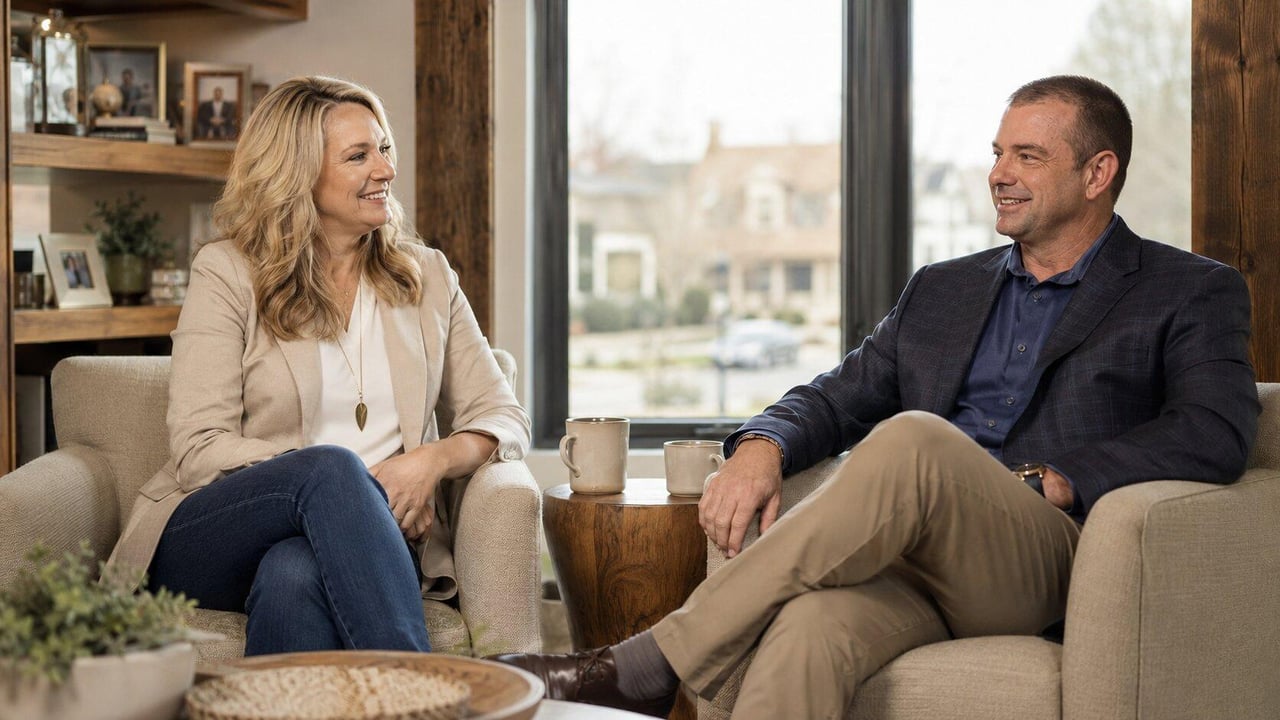
Deana Brummett Make Yourself at Home Podcast: Checkers vs Chess in Wealth Building
If you’ve ever done everything “right” financially - saved consistently, maxed out your 401(k), stayed out of debt - and still feel like it’s not enough, this episode is for you. When I joined Deana Brummett Make Yourself at Home as a guest, I brought the framework I’ve spent years refining as a Chartered Financial Consultant® (ChFC®), Accredited Investment Fiduciary® (AIF®), and author of Freddie Rappina Playing the Wealth Game: the checkers vs chess framework.
I’m the founder of Opta Financial and manage nearly $40 million in client assets. A former police officer turned wealth advisor, my career has been built on one uncomfortable observation: the financial strategy sold to the middle class is not the one the wealthy actually use.
Here’s what this episode covers:
-
The difference between a checkers vs chess wealth building strategy - and why it matters more than any single investment decision
-
Why the 401(k) is a great tool with an oversold expectation
-
How strategic debt real estate investing actually works in practice
-
What cash flowing assets passive income looks like at every life stage
-
The mindset shift at the foundation of generational wealth financial planning
Listen to the highlights:
Check out the full conversation here:
Why I Came On Deana Brummett Make Yourself at Home Podcast
Nearly 20 years of working with clients as a wealth advisor gives you a clear picture of how financial decisions play out over time. When Deana invited me onto Make Yourself at Home, I wanted the conversation to go deeper than investment tips. I wanted to talk about why the standard financial playbook isn’t producing the outcomes most families expected.
I built Opta Financial while still on the DC-area police force, running it across the street from my precinct for seven years. The pattern I kept seeing: a stark gap between how wealthy people actually build money and what financial institutions were telling everyone else to do. That gap became my framework and my book.
The Checkers vs. Chess Framework - And Why It Changes Everything
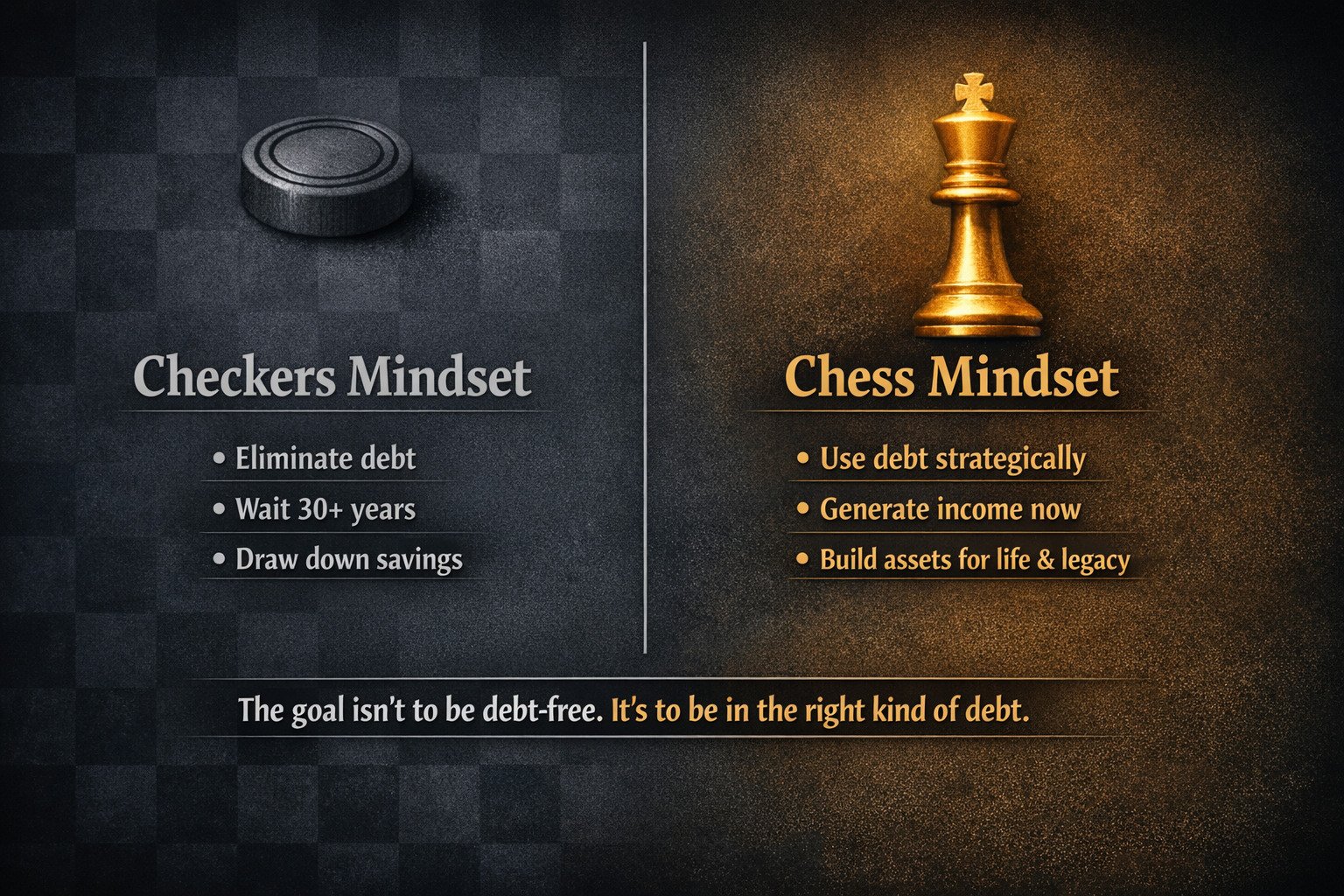
The central idea I brought to this episode: most people are playing checkers vs chess wealth building strategy - and they don’t even know which game they’re in.
-
A checkers mindset focuses on eliminating debt, maxing out the 401(k), and letting compound interest work over decades.
-
A chess mindset uses leverage - acquiring cash-flowing assets like real estate and businesses using debt as a deliberate tool.
The goal of chess isn’t to be debt-free. The goal is to be in the right kind of debt: debt that produces income now, not 30 years from now.
|
Checkers |
Chess |
|
|
Attitude toward debt |
Eliminate all debt |
Use debt strategically |
|
Primary vehicle |
401(k) / market accounts |
Cash-flowing real estate & businesses |
|
Timeline to income |
30+ years |
Now (rental income, cash flow) |
|
End goal |
Pay off everything, draw down |
Income-producing assets for life & legacy |
What I wanted the audience to walk away with: the financial institutions pushing checkers on the middle class are simultaneously playing chess with the same money.
As I mentioned in the podcast episode, large corporations and insurance companies carry debt - they just call it bonds. The move labeled “too risky” for you is exactly how institutional wealth is built.
Why the 401(k) Isn’t the Whole Answer
I want to be clear: the 401(k) is not a bad tool. The problem is the expectation placed on it.
"The tool isn’t bad. The expectation of the tool, I feel, is just oversold - especially the idea of compound interest. Humans just don’t live long enough for compound interest to do what people would like it to do. I call it the Golden Wheelchair Plan, because by the time that growth happens, you may be too old to really enjoy it."– Freddie Rappina, Chartered Financial Consultant & Wealth Advisor
The numbers back him up. As of 2024, the median retirement savings for Americans aged 55–64 is approximately $185,000 - generating only about $7,400 in annual income under the traditional 4% withdrawal rule.
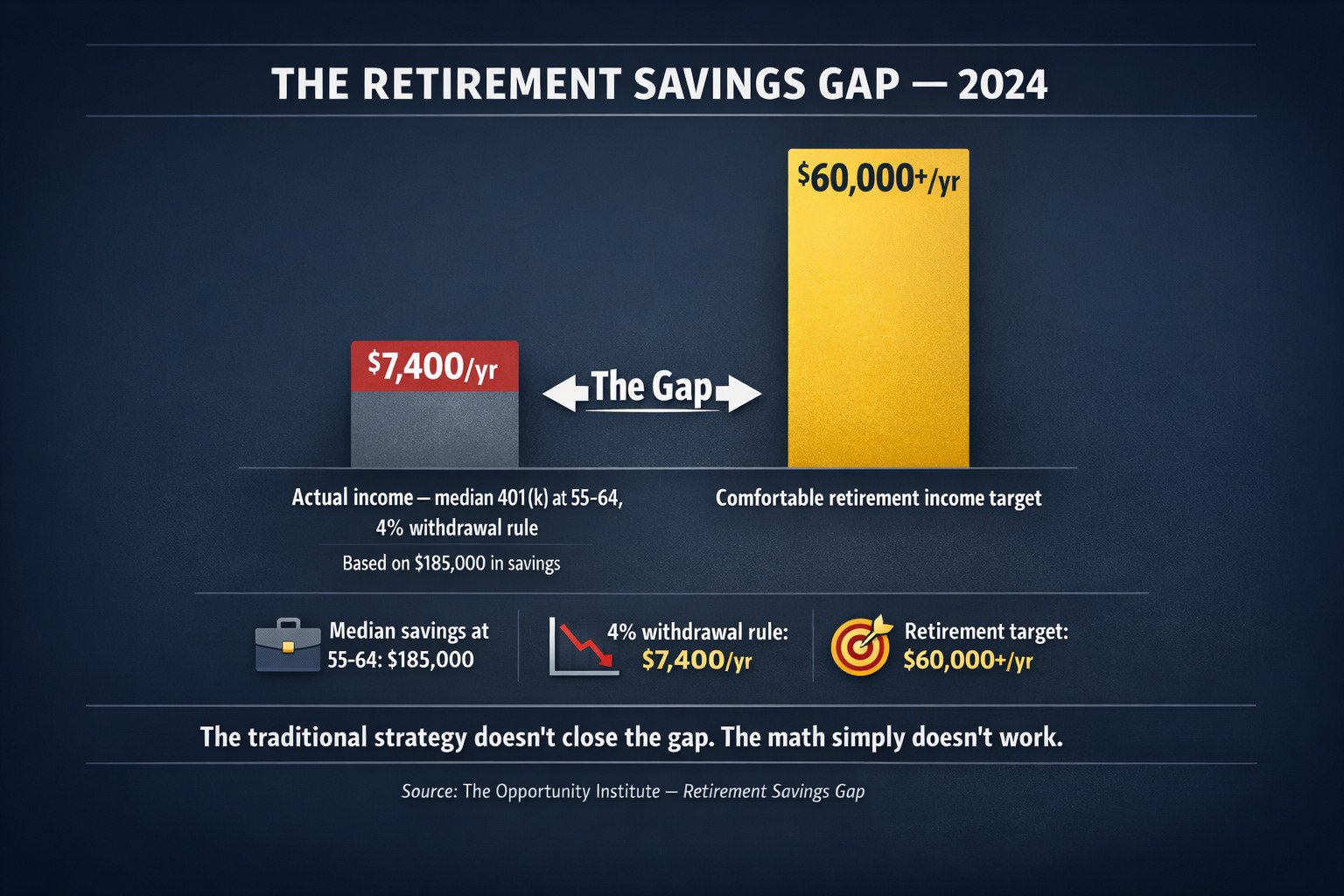
|
Comfortable Retirement Income Target |
$60,000+ / year |
|
Actual income: median 401(k) at 55–64, using 4% rule on $185,000 |
$7,400 / year |
Source: The Opportunity Institute - Retirement Savings Gap
Our parents’ generation had pensions, 401(k)s, and Social Security working together. Pensions disappeared, and the 401(k) - designed to supplement a pension - became the entire plan.
Here’s my alternative: use your retirement accounts as collateral - a credibility tool with lenders - to access loans for cash-flowing assets. The account becomes a foundation, not the destination.
How to Use Strategic Debt Real Estate Investing the Right Way
Strategic debt real estate investing has a specific definition: borrowing money to purchase assets that cash flow enough to service that debt and still put money in your pocket. Not borrowing for lifestyle - borrowing against real assets to acquire more real assets.
"Debt is like fire. You use it well, it cooks your food, it heats your house - very great. If you use it incorrectly, it burns everything to the ground. Once you have resources where you’re able to pay off the debt anytime you want and you don’t want to - that’s where you’re in a good spot."– Freddie Rappina, Chartered Financial Consultant & Wealth Advisor
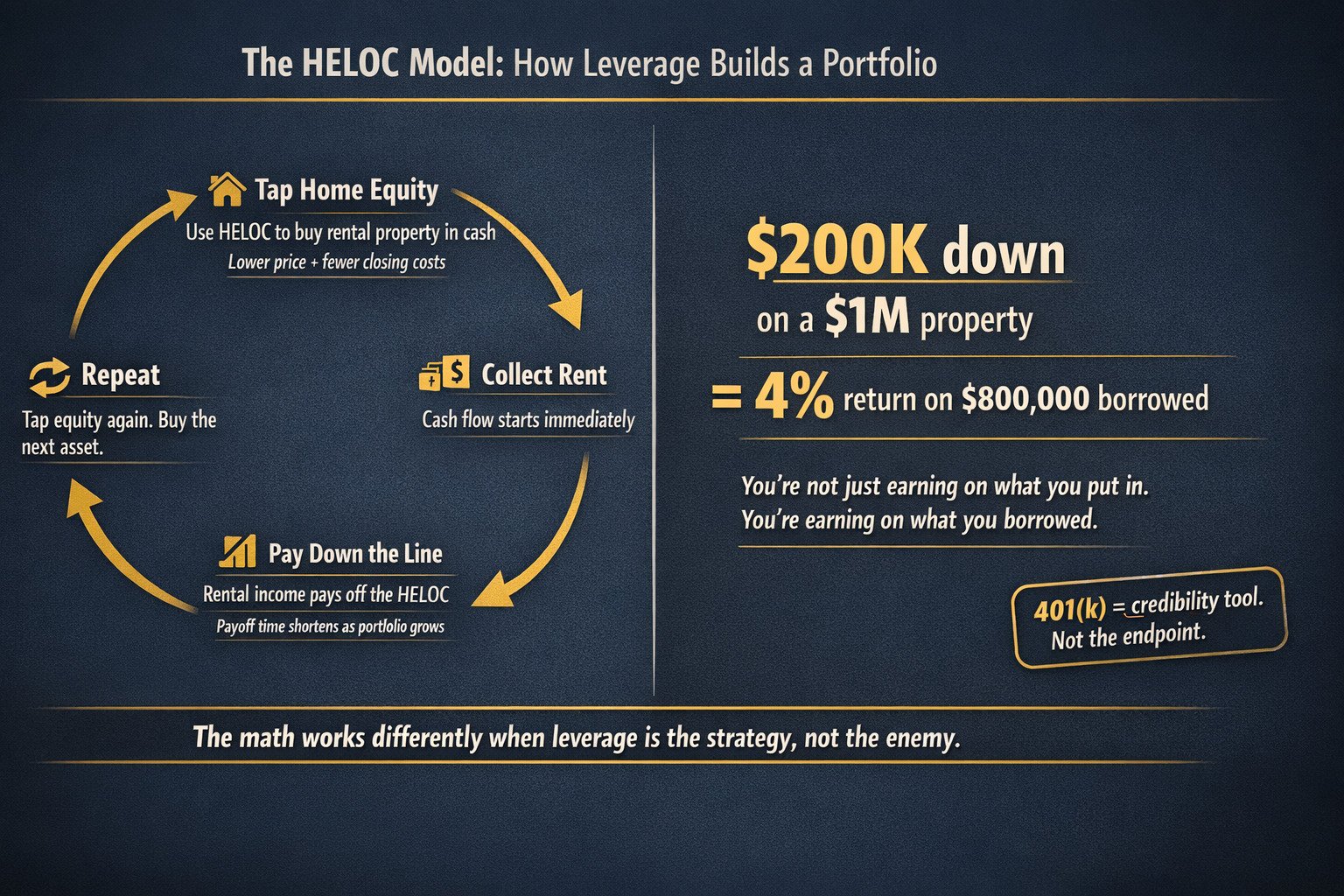
My practical HELOC (Home Equity Line of Credit) model:
-
Use home equity to purchase a smaller rental property in cash - often reducing the price and eliminating some closing costs
-
Pay the line down quickly using rental cash flow, then repeat - as your portfolio grows, payoff time shortens
-
Your 401(k) and brokerage accounts serve as lender credibility tools throughout, not retirement endpoints
The math also works differently than most advisors present it. A 4% return on a $1M property purchased with $200K down means you’re earning that return on the $800,000 you borrowed.
For anyone wondering whether investment properties in the Charlotte Metro Area, NC, make sense right now: financial readiness matters more than market timing. Real estate is an amplifier. You need savings, creditworthiness, proper insurance, and good property management before you start.
Real Estate Across Different Life Stages
One of the areas I covered in depth on the Make Yourself at Home episode was how chess strategy changes by life stage.
In Your 20s: Rent Where You Live, Buy Where It Cash Flows
My counterintuitive take: rent where you want to live and buy rental properties in more affordable areas, like in Charlotte Metro Area, North Carolina. Your rent stays a ceiling of expense rather than a floor (the way a mortgage is), while you build equity and income through investment properties. The podcast episode also highlighted house hacking - buying a duplex, living in one unit, letting the other cover the mortgage.
In Your 40s–50s: Accounts and Equity Both Matter
This is the decade to funnel money consistently into accounts and think seriously about what retirement income looks like - not just the balance. If you’re weighing where to put your equity, this is when those decisions compound most.
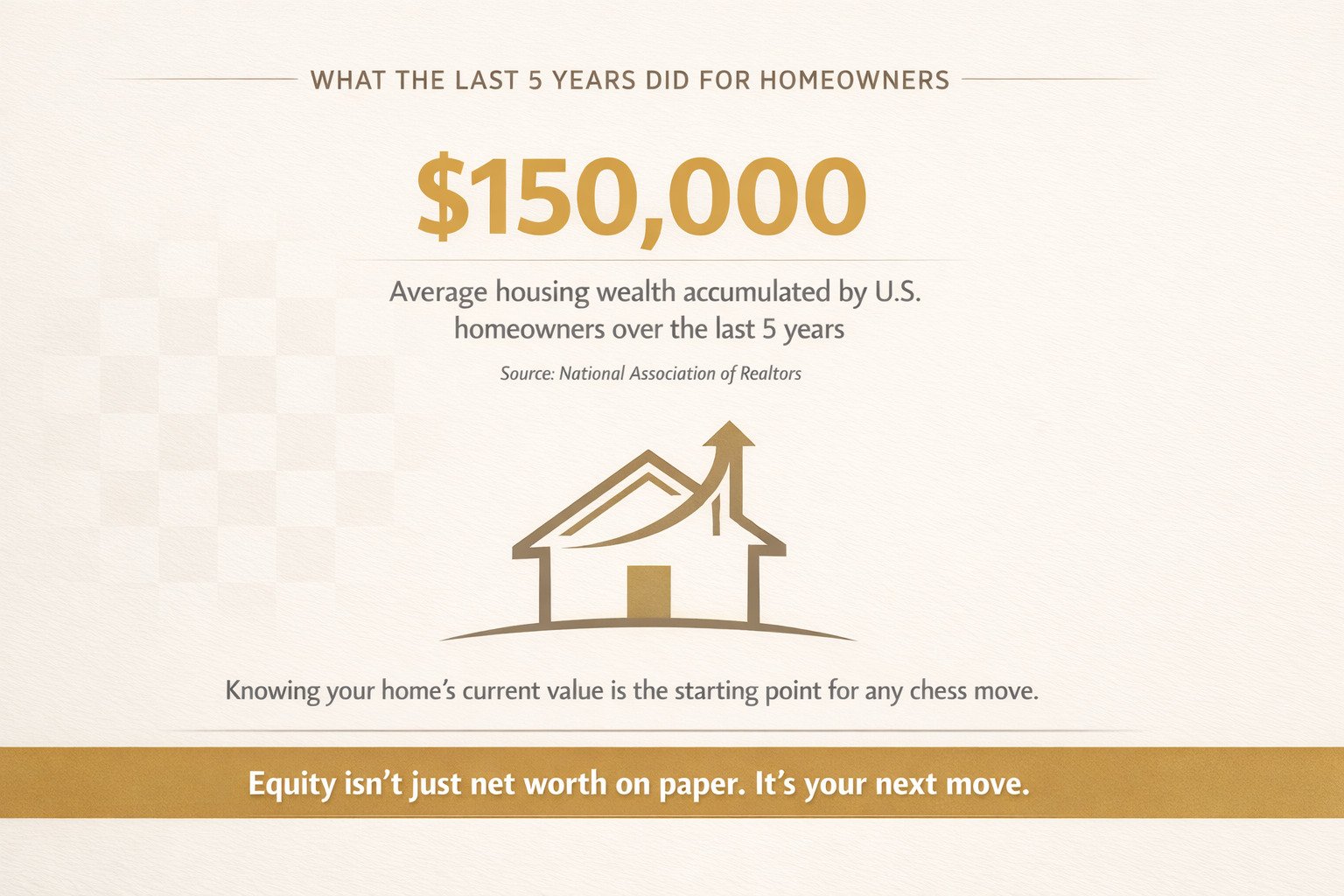
According to the NAR, the average homeowner has accumulated nearly $150,000 in housing wealth over the last five years. Getting your free home valuation in Charlotte is the starting point for any chess move.
Approaching Retirement: Legacy Becomes the Game
Where is income actually coming from? Is there a trust and a step-up in basis protecting the next generation? These aren’t optional anymore. And my message to anyone who thinks it’s too late: “Unless you stop breathing.” Course-correcting is always possible.
What I Hope You Take From This Conversation
Going on this podcast gave me the chance to say what I tell clients every day: the Opta Financial wealth strategy isn’t about being radical - it’s about asking a better question. Not “How do I get out of debt?” - but “Which game am I playing?”
"What's bothered me over the past 20 years is the idea of screaming at the moon: why do the rich keep getting richer? You're not playing the same game. But that game is available to you if you're in a good position to play it. The companies are not playing checkers. The governments are not playing checkers. I could never be a checkers player again. I was, but I can never go back."– Freddie Rappina, Chartered Financial Consultant & Wealth Advisor
A first-time buyer building a rental portfolio needs a completely different conversation from someone buying a forever home to pay off in full. Both are valid - but they’re different games.
If you’re asking yourself which game you’re playing and wondering whether a purchase is a chess move or a checkers move, that’s the right question to be asking. Reach out - that conversation is always worth having.
FAQ
What is the difference between checkers and chess financial strategies?
Checkers: eliminate debt, save in qualified accounts, rely on compound interest. Chess: use strategic debt to acquire cash-flowing assets - real estate, businesses - that generate income now. Neither is wrong, but they produce very different outcomes and require different mindsets.
Is strategic debt safe for the average homeowner?
Strategic debt can be a powerful tool when used correctly — but I’m clear that over-leveraging is a real risk. The key: only use debt to purchase assets that cash flow enough to service the loan and still produce income. Start small. Build reserves. Prioritize good property management and insurance before scaling.
How do I know if I’m ready to invest in rental real estate?
You need savings, a strong credit profile, and a realistic understanding of landlord responsibilities. Start small, prioritize good property management, and make sure any deal cash flows past the mortgage and expenses. Ready to look? Browse current listings in North Carolina or check your home’s current value in Charlotte as a starting point.
Keep the Conversation Going
If the Freddie Rappina Opta Financial Wealth Strategy made you rethink your approach to wealth or real estate, reach out:
💼 Connect with Freddie Rappina:
🌐 Website → https://www.optafinancial.com/
🔗 LinkedIn → https://www.linkedin.com/in/freddie-rappina
📘 Facebook → https://www.facebook.com/freddie.rappina/
If something in this episode made you think, question, or laugh, don’t let it stop here. Follow Deana Brummett Make Yourself at Home Podcast and stay part of the conversation:
🎧 Follow Deana Brummett:
🌍 Website → athomeinthecarolinas.com
📷 Instagram → @AtHomeintheCarolinas
📘 Facebook → HomeintheCarolinas
Apply to Be a Guest on “Make Yourself at Home” Podcast
Real estate is evolving. Wealth is being built in ways most people were never taught to see. If you serve the real estate industry - through staffing, lending, brokerage, technology, or advisory - and help agents grow smarter, let’s spotlight your insights.