
Most buyers will get three quotes before hiring someone to fix a leaky roof, but they'll sign with the first real estate agent who happens to call back. That gap between how carefully we vet small decisions and how little research goes into the biggest financial transaction of our lives explains why so many buyers and sellers end up regretting the agent they chose.
I had the pleasure of speaking with Alex Mayer of Rochester Area Homes on my podcast, Make Yourself at Home, where he shared what real representation actually looks like, drawing on his work as a multi-award-winning Rochester, Minnesota agent and co-author of Top Producer Secrets. Alex built his business around a direct representation model, walking away from the team structure that most agents chase because it pulled him further from the clients he was supposed to serve. What stood out to me was how plainly he laid out the gap between what large teams advertise and what buyers and sellers actually receive.
Here’s a preview of that episode:
Why I Had This Conversation
I talk to agents across the country every week, but Alex's perspective on representation captivated me. Many buyers pick an agent the way they'd pick a restaurant off a map, based on whoever shows up first.
Alex's story, from auto sales to running a team to walking away from it on purpose, explains why experience and availability aren't the same thing. At Rochester Area Homes, he spends his time with clients instead of chasing new ones.
Watch the full episode here:
Why Most People Choose the Wrong Agent
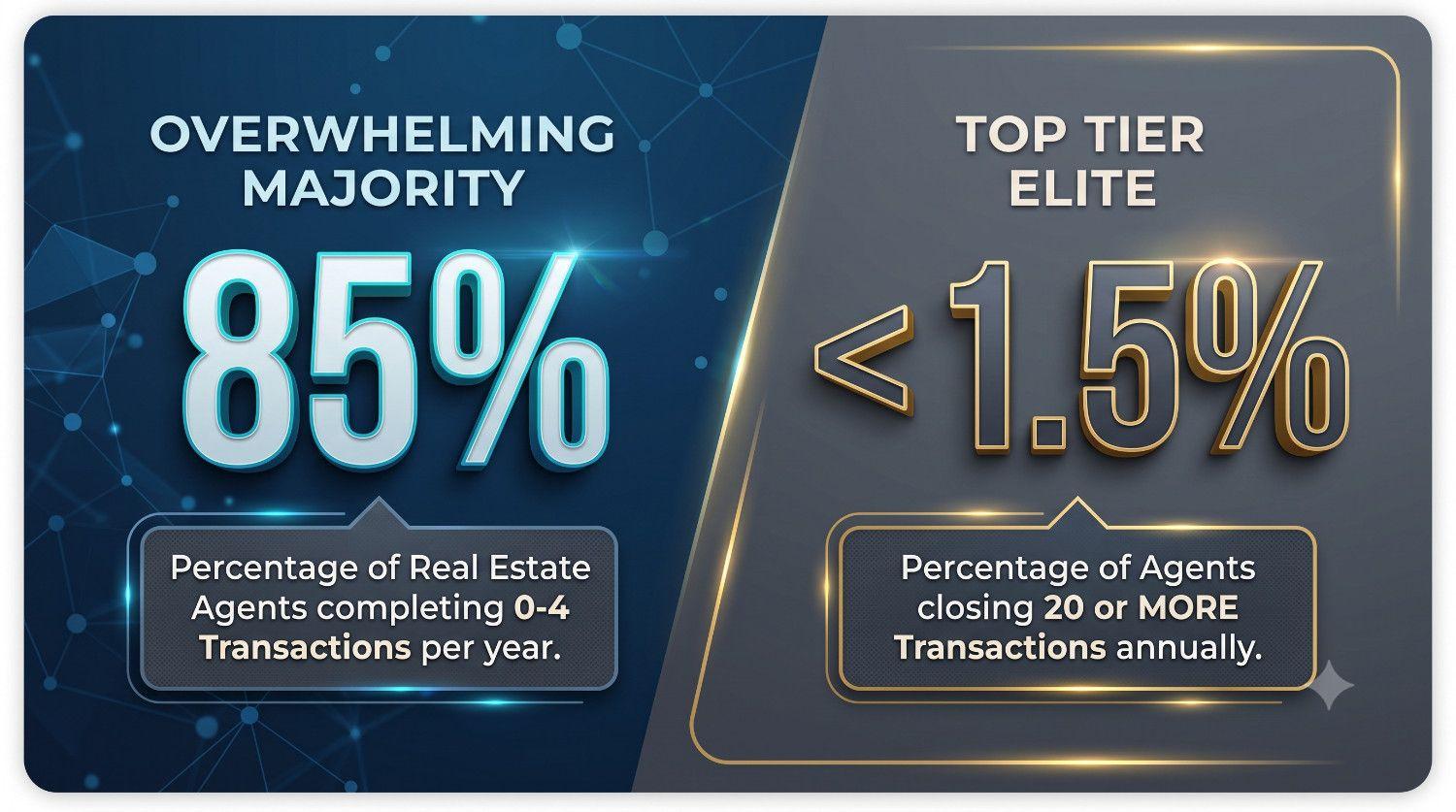
Alex was direct about this: most agents simply aren't doing enough business to give reliable advice. According to the statistics he referenced, roughly 85% of real estate agents complete zero to four transactions a year, and fewer than 1.5% close twenty or more. That's a massive gap in experience hiding behind similar-looking websites and listings.
How Direct Representation Changes the Outcome
This is where Alex's direct representation model clicked for me. His biggest competitors, he said, aren't other solo agents, but large teams, because they funnel every transaction under one lead agent's name while newer agents handle the showings.
"I always say my main competitors aren't other direct solo agents. They're large teams, because they've got one lead agent and a dozen or more agents doing the work underneath, and a consumer rarely knows which one they're actually getting."
–
He explained that mega teams often spend tens of thousands a month chasing leads, money he'd rather put toward marketing for clients he already has. That shift, from chasing business to representing people, is the heart of his model.
What to Tell Clients About Experience and Process
Alex walks every buyer and seller through the same intake call, education session, and weekly check-in because a documented process keeps communication from breaking down when problems arise.

"When bad things happen, you're going to know about it right away, but I try to come to you with a few solutions and possibilities for what's going to happen. There's a lot of unknown in real estate, and I'd rather run toward bad news than let you find out later."
–
That reframed something for me. Responsiveness isn't about answering every call immediately; it's about never leaving a client guessing.
Where Misinformation Creeps In
One of the more eye-opening parts of our conversation was Alex's take on where bad advice comes from today. A year ago, he'd have pointed to search engines. Now, it's AI tools that confidently hand out numbers that sound official but don't reflect local reality.
He pointed out that automated home value estimates and AI citations often run weeks or months behind, because they're built on broad national algorithms rather than real estate agent transaction countand feet-on-the-street activity in a neighborhood. Real estate is local, and the agent representing you should be too.
Helping Families Through Probate and Inheritance
Alex specializes in probate and estate sales, and the way he described that work changed how I think about these transactions. Families are often exhausted, grieving, and navigating an executor process that can stretch six to nine months before a home reaches the market.
"Someone got sick and passed away, and things fell by the wayside. That's why the home is priced where it's at. You try to have understanding and heart in these situations, because eye contact keeps people civilized, and this industry forgets that far too often."
–
That line is one I keep coming back to. Inherited properties deserve patience, not judgment, and an agent who understands probate timelines can protect both the estate's value and the family's peace of mind.
What Changed for Me After This Conversation
Now, I encourage buyers and sellers to ask one extra question before signing with At Home in the Carolinas: “Will you personally represent me, or will I be handed off once I'm under contract?” Alex's model exists to answer that question honestly, and it's a standard I now hold every agent I recommend to, whether they're working with first-time homebuyers or families settling an estate.
I'm also reminding my own audience to be cautious with online estimates and AI-generated answers. They're useful starting points, but not a substitute for someone who knows your market today. If you're browsing homes for sale in the Carolinas, that same principle applies—work with someone local who's active in that market right now.
Want to hear my full conversation with Alex on choosing the right real estate agent?
Frequently Asked Questions
What does a direct representation model mean in real estate?
It means the agent you hire is the same one who shows up to your showings, negotiates your offer, and stays with you to closing, rather than handing you to a teammate once you've signed.
How many transactions should an experienced agent close each year?
Alex referenced national data showing most agents complete fewer than four transactions yearly. Anyone doing significantly more has likely built real, current expertise.
Why shouldn't you rely on AI tools or online estimates for pricing?
AI citations and automated valuations are often weeks behind local market activity and built on broad algorithms rather than real, current neighborhood data, which is why a local agent's read still matters most.
Apply as a Guest on the Make Yourself at Home Podcast
My conversation with Alex Mayer of Rochester Area Homes reminded me that the right representation changes everything, whether you're buying a first home or settling an estate. If you're active in real estate, lending, investing, or relocation services and have insight that could help buyers and sellers decide, I'd love to have you on my show!
Make Yourself at Home is produced by Icons of Real Estate, the #1 Real Estate Podcast Network. If you are a real estate professional, apply to be a guest speaker across the network!