
Charlotte home buying: should your down payment leave room for goals beyond the house? In Part 2 of our conversation on Make Yourself at Home, I talked with Luke Stelzer and Alex Provenzano of MTG Home Loans about comparing loans, fees, cash reserves, and your plans after closing. This is general information, not financial advice.
Quick takeaway: Look beyond the rate. Ask about fees, keep some cash in reserve, and tell your team what you want your life to look like after closing.
Meet Luke Stelzer and Alex Provenzano of MTG Home Loans
Luke is president of MTG Home Loans, and Alex is a loan officer who has been with the company for five years. They are based in the Charlotte metro area. They work on purchases, refinances, jumbo, FHA, and VA loans, and they serve clients in North Carolina, South Carolina, Florida, Virginia, and Tennessee.
I have 18 years in real estate, since 2008. I always say you are the boss of your home purchase, but you do not do this every day. They do.
Mortgage Affordability Across the Southeast
I asked what trends stand out. The team says affordability is the hot topic in every state they serve. In the city, the suburbs, or a rural town, the question is the same: how do you bridge the gap between the price of the house and what you make?
Florida is the exception, they said, because of hurricanes and homeowners insurance trouble, especially with condos.
North Carolina Due Diligence Money
I told them North Carolina can be a little wackier because of due diligence money. Buyers who move here from out of state are often surprised by paying the seller up front. I think it is the biggest hurdle, so I want a team that knows North Carolina well. Ask a local team to explain it before you write the check.
FHA vs. Conventional Loans: Matching the Product to the Buyer
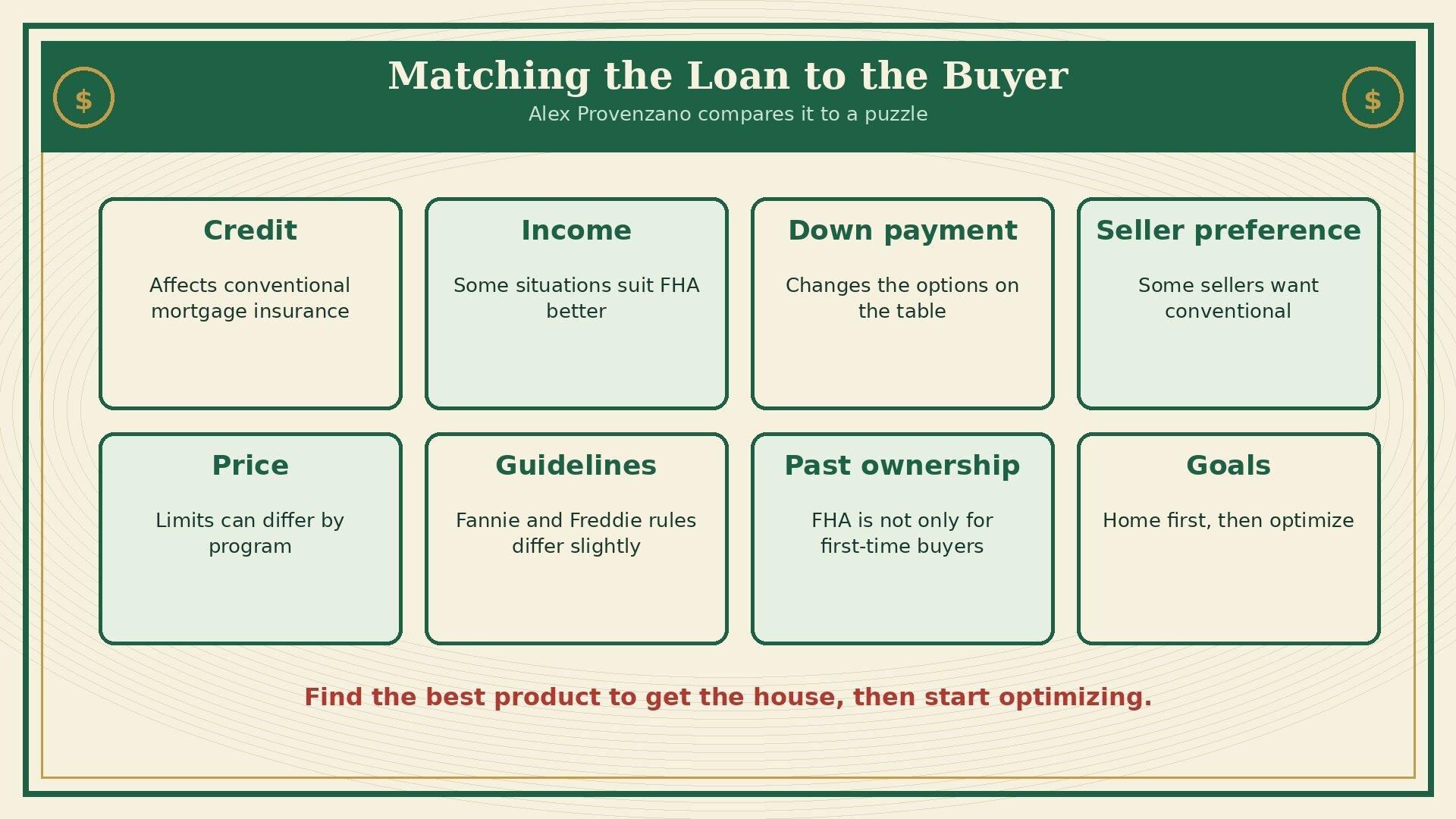
Alex Provenzano of MTG Home Loans says choosing a loan is like a big game of sudoku. Many buyers qualify for more than one product, so he looks at what fits their situation.
Price: some buyers can go a little higher with one program.
Income: a buyer with unusual income may fit FHA better.
Mortgage insurance: on a conventional loan it is based on credit, so a payment can be lower with FHA.
Seller preference: a seller may only want a conventional loan.
A common myth: FHA is not only for first-time buyers.
For FHA vs. conventional loans, the best product depends on the whole situation. They first find the product that gets you into the house, then they start optimizing.
I added one example. Someone who moved from New York and has not had a mortgage in three years may count as a first-time buyer again. That is why you want an expert on your team.
Why Your Home Buying Team Should Ask About Fees
One question on my list for any lender is what the fees are on a loan. As an example, I said a large bank might charge 1 percent for loan origination. On the Charlotte average price of $458,000, that is about $4,500. I told listeners that MTG's origination fee is zero. That is my example, so please confirm current fees with any lender you consider.
You do not need 20 percent down, I tell buyers, but you do need to know what each option costs.
Matching Your Mortgage to Long-Term Goals
The MTG team says a loan officer, an agent, and a buyer pushing in the same direction can overcome a lot. They also ask what you want after the house.
“We want to be your loan officer not only for this house, but we want to help manage your debt beyond this house, too. [...] Maybe you could put 20% down on this, but if your overall objective is to buy another house as an investment property, maybe we put less down and we save that money for this other goal. Or maybe you want to put your kids through college. Or maybe you have other aspirations of starting a business.”
Tell your lender if the home could become a rental, or if you may want a second home. They describe their role as managing your debt, while a financial adviser manages your assets.
Down Payments, Cash Reserves, and 15-Year vs. 30-Year Terms
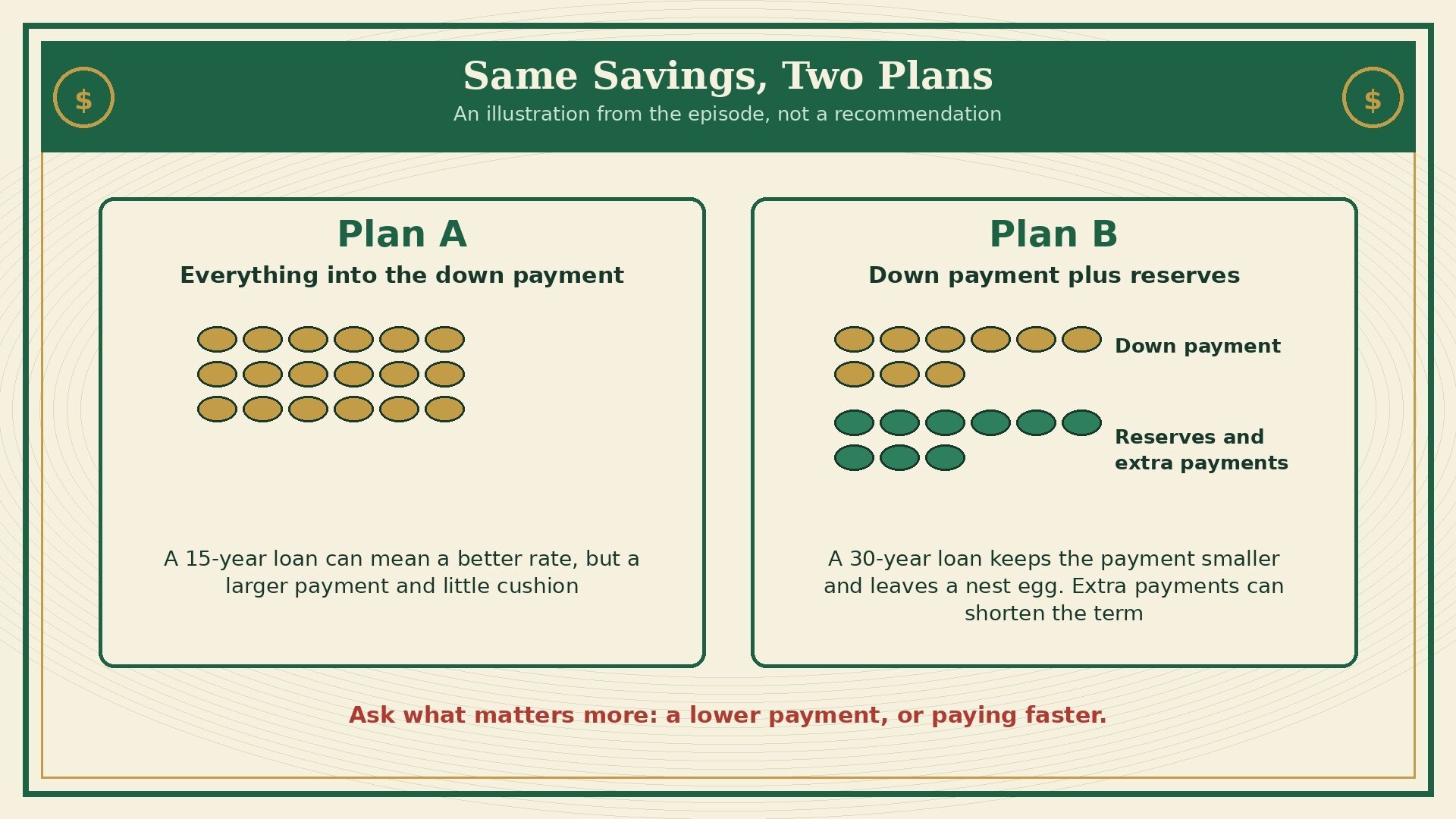
Buyers often tell me they have $60,000 and will put all of it down. I ask them to pause. A 15-year vs. 30-year mortgage comparison matters here. A 15-year loan can come with a better rate, but a large payment hangs over you when the HVAC or washing machine breaks.
With a 30-year loan, the payment is smaller. You could keep part of your savings as a nest egg and make an extra payment once or twice a year, or quarterly. That can shrink the term and cut interest. Your down payment and cash reserves should reflect what matters more to you, a lower payment or faster payoff.
Alex adds that owning gives you security, since you know your payment, and you can rent a room if times get tough.
What to Do If You Struggle to Pay Your Mortgage
I tell every first-time buyer that life happens, such as a job loss or a medical crisis. How you respond makes all the difference. If you struggle, call your mortgage servicer, explain what happened, and ask what options exist. They do not want your house, they want to communicate with you. The MTG team agreed, noting there are many loan modification options.
Making the Process Clearer, and the Human Side of Mortgage Technology
For keeping families from feeling overwhelmed, the team says to state where you are starting and where you are going at each stage, and to repeat it. Removing uncertainty helps tremendously.
We also talked about AI and desktop underwriting, the red light, yellow light, green light system. One of them shared a hope.
“Everybody's pushing to put AI and just kind of jam it into everything. I do think that there's a big place for the human touch still in mortgages that people don't see. [...] We have our guidelines, but there's a lot of interpretation in there, and that's a very human thing. [...] We can talk to underwriters, we can explain the situation. [...] My hope is as long as humans are involved, it doesn't close any doors for people that aren't your cookie cutter buyers.”
I pointed out that changing one or two inputs, such as a larger down payment, can change a yellow light to a green light. It is not manipulation. It is finding the way to the goal.
Why You Should Talk to a Lender Early
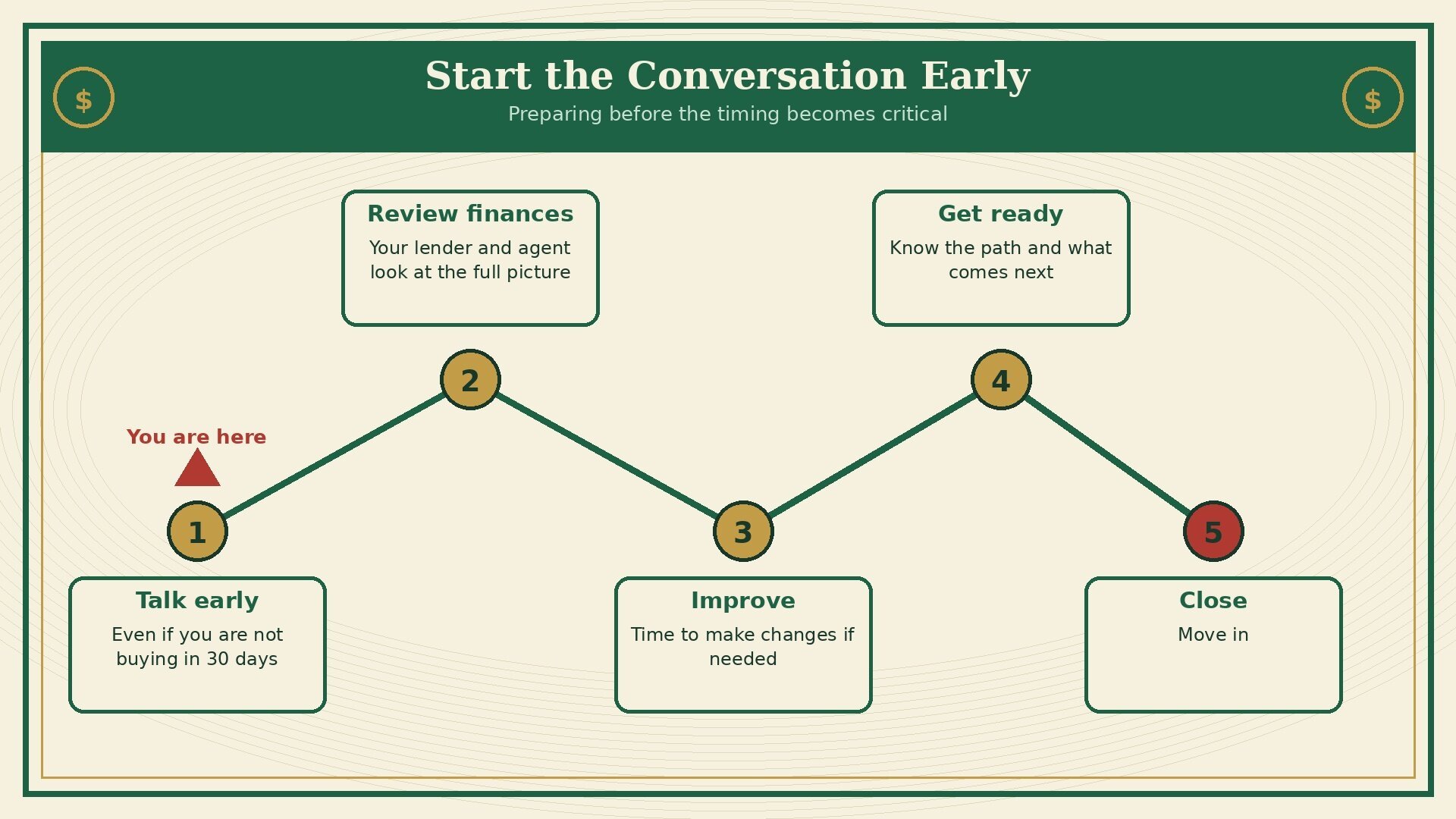
Their one piece of advice is to talk to a mortgage professional early.
“Talk to us, whether it's us or whatever mortgage professional you trust, as early as possible. The quicker we can review your financial situation and have those conversations, the more time we have to make any improvements if needed or to make suggestions. [...] We don't care if you're not buying in the next 30 days. We're totally fine with the long game.”
I added that you do not plant a rose by digging a hole and sticking it in. You prep the land first. If you do not give up, you will get there.
Frequently Asked Questions About Choosing a Mortgage
Are FHA loans only for first-time buyers?
No. FHA financing can also be an option for eligible repeat buyers, according to Alex.
Why might FHA and conventional payments differ?
Credit-related differences in conventional mortgage insurance can be one factor. The best fit depends on your full situation.
What should I do if I struggle to pay my mortgage?
Contact your servicer, explain the hardship, and ask what options may be available.
When should I speak with a lender if I am not buying right away?
Start early. It gives your team more time to suggest improvements.
Connect With MTG Home Loans and Deana Brummett
VisitMTG Home Loans or find them onFacebook andLinkedIn. To follow my work, visitAt Home in the Carolinas or find me onLinkedIn andInstagram. Thank you to Luke Stelzer and Alex Provenzano of MTG Home Loans for showing the human side of the mortgage industry.
Apply to Be a Guest on the Make Yourself at Home Podcast
Buying, selling, and moving all touch many professionals. If you work in real estate, lending, or construction and solve real problems for Carolinas homeowners, I'd love to hear from you.
This podcast is produced by the Icons of Real Estate - #1 Real Estate Podcast Network. If you are a real estate professional, apply to be a guest speaker across the network.