"There is a price for every location. Everything is price sensitive." That line from Joe Arnao landed about two minutes into our conversation on Make Yourself at Home, and it reframed the entire hour that followed.
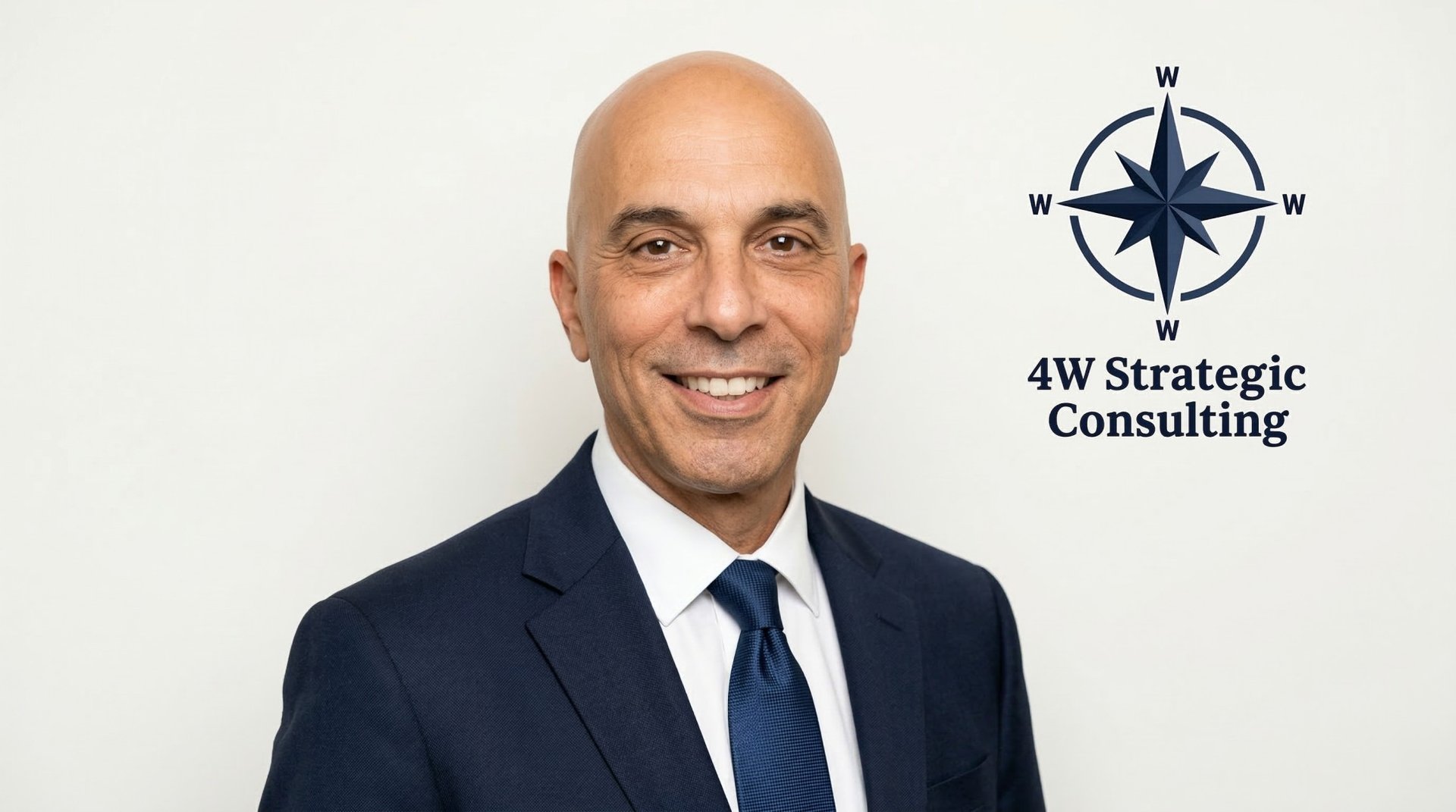
As the founder of 4W Strategic Consulting in Wake Forest, North Carolina, Joe draws from over 20 years of experience across recruiting desks, coaching calls, and listing appointments. He’s seen firsthand what agents often get wrong, and he shares those insights regularly—you can keep up with his latest strategies by connecting with him on LinkedIn, Instagram, and Facebook
Who Is Joe Arnao & What Does 4W Strategic Consulting Do?
Joe Arnao, a real estate coach by trade, isn't selling homes. He's improving the professionals who sell them.
After leading multi-office teams at Keller Williams and William Raveis, overseeing growth, P&L, and agent development, Joe built his firm around gaps he watched go unsolved for years. His firm focuses on:
-
Agent development and performance coaching
-
Brokerage alignment and culture matching
-
Recruiting strategy and proprietary placement
-
Business growth systems for brokerages and teams
The core issue he tackles is one most consumers never see: agents misaligned with their environment, reactive on pricing, and operating without a communication system.
A Great Agent Is an Advisor, Not a Salesperson
I asked Joe about the qualities of a great real estate agent, and his answer had nothing to do with sales volume or Instagram followers. He went straight to the mindset.
"A great real estate agent is one that would actually be rather referred to as an adviser than an agent. They would come in looking at your property as your investment. They get to understand the seller or the buyer, what their real goals are, who they are, why they live where they live, what's their big why, and where's their life going. How does real estate fit into that?"
I've watched agents lose clients because they treated the process like a retail transaction instead of a financial consultation. When an agent understands why you're moving, they protect your interests in ways a "feature-matcher" never will.
If you're figuring out how to interview a real estate agent, start by listening for those deeper questions. Our sellers page walks through how we approach every listing with that same advisory mindset.
Emotional Control & Professionalism Matter More Than You Think
Agents who bring drama into a transaction are doing their clients a disservice. I've seen it firsthand: an agent on the other side gets emotional, makes it personal, and the whole negotiation goes sideways over ego. Emotional intelligence in real estate separates the professionals from the amateurs.
"Keeping your emotions out of it. Agents have to be the calm ones keeping everybody in check and keeping the goal in mind. Don't bring drama from the other agent; the consumer does not need to see or hear that. You've got to ask first. The agents don't have that power or say. They are there to guide the client. I was talking to someone this morning about countering an offer, and I said there are three options: they accept, they say no, or they counter."
I always tell my clients there's never a time to panic unless my hair is on fire. Joe's coaching builds structured real estate negotiation habits and emotional discipline into agents because that's what keeps deals from collapsing.
Red Flags Consumers Should Watch For, and Agents Must Avoid
Here's something consumers rarely consider: an agent who comes in with a listing price higher than you expected might be the one to walk away from. Knowing the red flags when hiring a real estate agent can save you thousands.
"If somebody is too quick to say yes to everything, the price, getting it down. If an agent comes in with a listing price higher than you expected, that is strangely a red flag. They might just be trying to buy the listing to get their name on the board and attract other buyers. People always say location, location, location. I counter that with price. There is a price for every location. Everything is price sensitive."
|
Red Flag |
What It Signals |
What to Do Instead |
|
Agent agrees to an inflated list price |
They may be "buying" the listing |
Get a second CMA and ask for absorption rate data |
|
Agent is unresponsive before you sign |
Communication only gets worse |
Test response time with a phone call first |
|
Agent avoids discussing pricing strategy |
They may lack local market knowledge |
Ask for days-on-market data specific to your area |
|
Agent has no communication protocol |
You'll be chasing updates for months |
Agree on a weekly check-in schedule upfront |
|
Agent dismisses inspection concerns |
Your interests aren't their priority |
Find someone who takes every concern seriously |
Overpricing carries consequences beyond a slow sale. Homes priced correctly from the start consistently sell faster and closer to asking price, and the longer a listing sits, the more negotiating leverage shifts to the buyer.
If you want an objective starting point before the listing appointment, a home valuation can ground that conversation in data.
Pricing Strategy: What Costs Sellers the Most Money
I asked Joe what costs sellers the most money, and his answer was immediate.
"Time on market, overpricing, 100%. It goes back to price. If their price point is at all above what the consumer and the market's willing to pay, it's going to cost them more than that gap, right? Because it's going to sit and they're going to get less and less percentage of what they originally asked for. If they don't adjust fast enough to a market that is trending downward or flat, they're going to lose every week that's on the market."
I've lived this. We priced the biggest house in a neighborhood just under seven figures, and the seller got $50,000 over asking. Joe did the same with his own home: priced below market to create energy, got his reach price immediately.
If you want to know how to price a home correctly, let the data lead, not your ego. Joe and I both used that strategy and watched it work. Every week a listing costs real money, and the time on market impact on sale price is measurable.
How Remote Work Changed What Buyers Want
Understanding how remote work changed home buying is now a baseline requirement for any serious agent. Joe watched this shift happen in real time.
"COVID had a huge impact. Before COVID, I was working in New Hampshire and Cape Cod. People started wanting pools because sharks were showing up at the beach. Then kitchens became outdoor kitchens. The home became an entertainment center. When COVID hit, that blew up. People work at home now; they want their spaces to be different."
The shift to remote work between 2019 and 2021 reshaped buyer priorities permanently. Joe put it simply: location became optional. My own office doubles as a recording studio. During COVID, a designated home office became prime real estate in every listing, and the home office demand that followed has been permanent. That shift isn't going away.
Move-In Ready vs. Renovation Fatigue
Today's buyers don't want a project, and the move-in ready home demand reflects it. As Joe put it during our conversation, "People don't want to do anything to the home. They want it done. HGTV is the curse."
The HGTV effect on home buyers is real. Our kids watched us constantly replacing floors and redoing bathrooms, and now they just want to drop their stuff and live. The move-in ready home demand tells the whole story.
If you're selling a home that needs work, pricing has to reflect that reality or the listing will sit. For sellers weighing which improvements actually move the needle, our breakdown of top resale-boosting upgrades in South Charlotte can help you prioritize exactly where to spend your budget.
Accessibility & Communication: The Silent Deal Breaker
Joe shared a statistic during our conversation that should concern every consumer shopping for an agent. If you're unsure what questions to ask a real estate agent, start with this one: will you answer the phone?
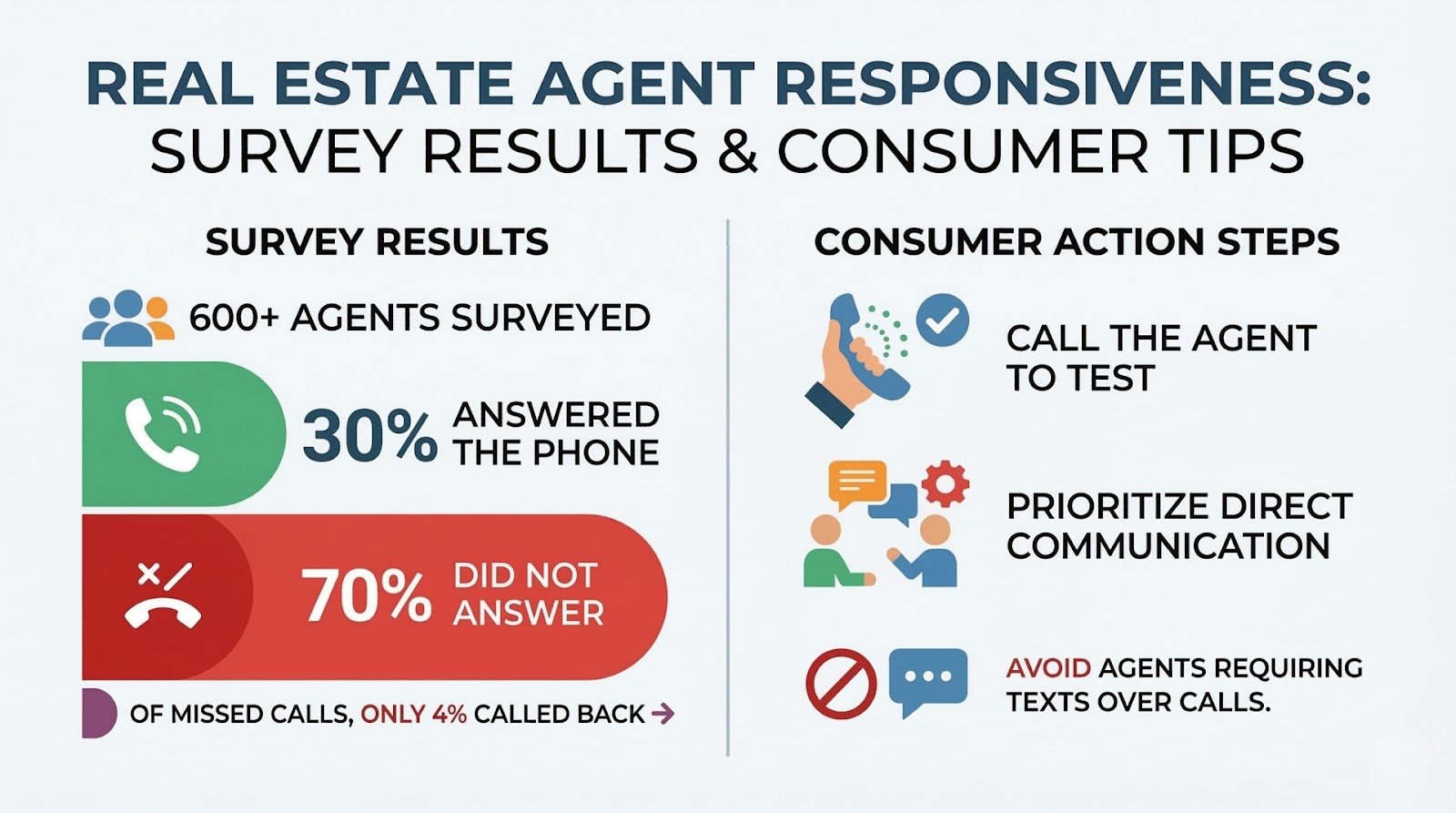
"This summer I did a survey. I dialed 600+ real estate agents. Only 30% answered the phone. Of the 70% who didn't, only 4% called back. For a consumer: call the agent. See if they pick up. If they say 'text me for a quicker response,' that feels like I'm inconveniencing them. I'm the client!"
I answer every single phone call I can, and I tell my clients I won't ask them to hold it unless it's my kid's school. Joe coaches agents to establish clear communication protocols before the first showing: how often you'll talk, what channel you'll use, and what to expect between check-ins. If an agent can't spell that out, they probably don't have a system.
Does Brokerage Matter? Luxury vs. General Market
I asked Joe whether consumers should care about brokerage names. Does brokerage matter when selling a home? The agent matters most, every time. But Joe acknowledged the exception: in luxury markets, brand prestige opens doors. "Certain firms can afford marketing channels that smaller firms can't. But other than that, the brokerage doesn't have power over how an agent performs."
For agents, finding the right brokerage is about culture and support, not logos. Joe's placement work matches agents to environments where they perform, because that alignment directly benefits the consumer.
Team vs. Solo Agent: Transparency Matters
The team vs solo real estate agent debate comes up constantly, and Joe's advice is direct: find out who you'll actually be communicating with throughout the process.
He shared a story from his own experience: "I once lost a listing to an agent who dazzled them at the start, and then the client never heard from her again."
The lead agent wins the listing, then hands you off to a coordinator you've never met. That's fine if it's communicated upfront, but surprises in a real estate transaction erode trust fast.
Why Agent Fit Matters for Consumers
Joe sees this from the consulting side, and it's something most consumers would never think to evaluate: when an agent is stuck in the wrong environment, the client feels it. Local real estate expertise and hyperlocal market knowledge are what separate agents who perform from agents who just show up.
"You can tell when someone is in a flow state. A good brokerage allows an agent to be in their own skin and focus on the client rather than just the commission. Don't listen to the national news about the market. Real estate is hyper-local. The news is a map; local real estate is a pinpoint."
I talk to agents who blame the economy or interest rates for a slow year, and then I talk to agents having their best year because they focused on service and ignored the noise. The difference comes down to environment, training, and mindset—precisely what Joe Arnao and 4W Strategic Consulting work to align.
You can stay connected with the conversation and see how we’re redefining the industry by following me on Instagram and Facebook. If you’re an agent or broker with a unique perspective worth sharing, we’d love to have you join the dialogue—apply to be a guest speaker on one of the shows in our network.
Frequently Asked Questions
What does 4W Strategic Consulting do?
Based in Wake Forest, NC, 4W Strategic Consulting provides coaching, training, recruiting, and placement for real estate agents and brokerages. The firm focuses on agent development, pricing strategy, and brokerage alignment.
How do I know if my real estate agent is overpricing my home?
Compare your agent's suggested list price against recent comparable sales. If their number is significantly higher, ask them to justify it with absorption rate data and days-on-market statistics.
What questions should I ask before hiring a real estate agent?
Ask about their communication protocol, who you'll actually work with (especially on a team), and how they approach pricing. Test their responsiveness by calling directly before signing.
Does the brokerage my agent works for matter?
The individual agent's skill matters far more than the brokerage name. In luxury markets, certain brokerages offer exclusive marketing channels. Beyond that, focus on the agent.
How has remote work changed what buyers want in a home?
Remote work has made dedicated home offices a top priority. Many buyers have relocated to areas they couldn't previously consider because proximity to the office is no longer required.
Why do homes that sit on the market sell for less?
Extended time on market signals to buyers that something is off with the price. Buyers gain negotiating leverage the longer a home sits because the seller is under increasing pressure.
What's the biggest red flag when choosing a real estate agent?
An agent who agrees to an unrealistically high listing price to win your business. They may be buying the listing to build their portfolio, and you'll pay when the home sits and sells for less.
Should I work with a solo agent or a team?
Both work well when expectations are set clearly. If you're on a team, know who handles each part of the process and who your primary contact will be.
How important is agent responsiveness?
Joe Arnao's survey of over 600 agents found that only 30% answered their phone, and only 4% called back. If an agent can't return your call, they're unlikely to advocate effectively during time-sensitive negotiations.
This podcast is produced by the Icons of Real Estate - #1 Real Estate Podcast Network.
Apply to Be a Guest on the Make Yourself at Home Podcast
If you're solving real problems in your market, whether in coaching, brokerage leadership, or agent development, we want to hear from you. The best conversations come from people doing the work, and Joe Arnao and 4W Strategic Consulting set the bar.