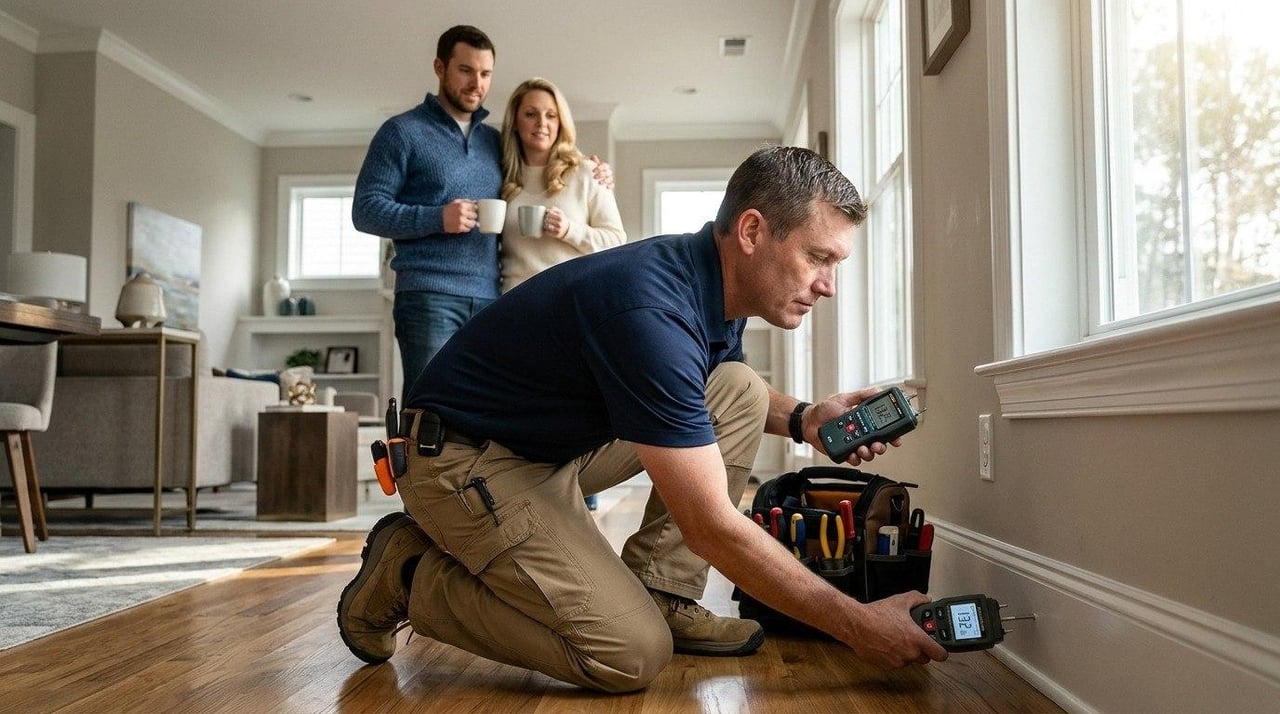
A loose floorboard and a cracked foundation can look almost the same to an untrained eye, but one costs fifty dollars to fix, and the other can cost tens of thousands. I had the pleasure of sitting down with Matthew Query of Freedom Contracting Serviceson my podcast, Make Yourself at Home, where he walked me through exactly how to tell the difference. His insights will help Charlotte area buyers, sellers, and homeowners protect their investment before small issues become expensive ones.
Here’s a preview of that episode:
Why I Had This Conversation
I talk to a lot of buyers who panic over a nail pop and a lot of sellers who ignore a real structural issue. I wanted someone who could draw that line clearly, so I brought in Matthew, a licensed South Carolina residential builder, certified master inspector, and expert witness with more than 20 years inresidential construction.
Matthew has spent his career in Rock Hill and the greater Charlotte Metro area, and he has seen firsthand what happens when homeowners are never taught what is normal wear and what actually threatens the house.
Watch the full episode here:
The Moisture and Termite Combination That Costs Homeowners the Most
Matthew told me that moisture and pests almost never show up alone. Where you find one, you usually find the other, and together they are the most destructive combination a house can face.
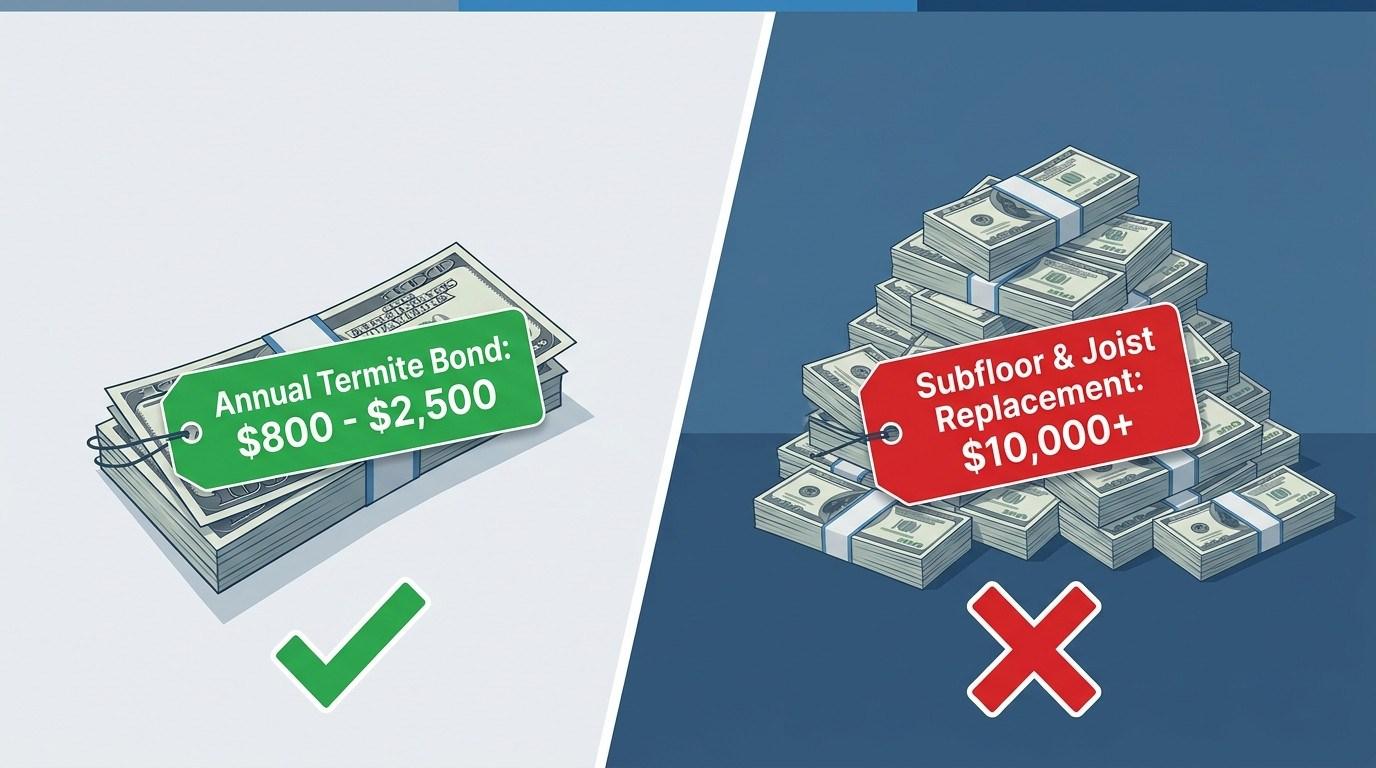
He also put a number on it. A termite bond can run anywhere from about $800 to $2,500 a year. Compare that to the cost of tearing out and replacing an entire floor system, and the math makes the decision easy.
Why I Trust an Inspection Report Over a Guess
This is the part of our conversation that stuck with me the most, because it explains why Matthew treats termite damage so seriously even when a house looks fine on the surface.
“So in our area, I'm sure there's some of your listeners who are not from the Carolinas, but termites exist in a lot of different states. Even if you have a small chance of having termites or some sort of wood-destroying organism, I have taken apart and torn walls off, and the combination of moisture and wood-destroying organisms is deadly to a house. And usually they're coinciding. So if you have a high level of moisture, you actually bring pests in.”
That is exactly why I tell my clients that a home inspection is never a wasted expense, even on a home that looks move-in ready. Matthew's years of hands-on repair work give him a perspective most people never get, because he is the one who has to open up the walls after the damage has already spread.
The Warning Signs I Now Look for Before I Ever Call an Inspector
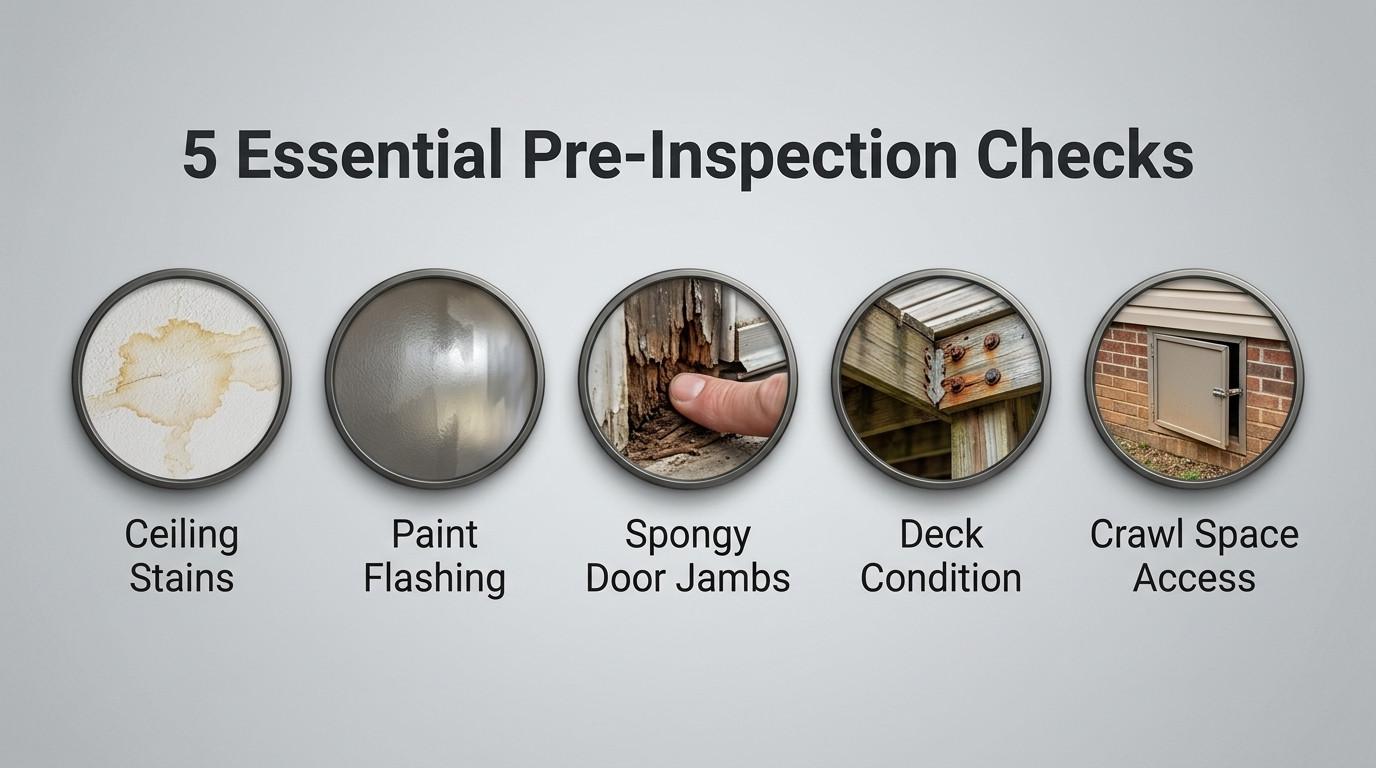
Matthew gave me a running list of things any buyer, seller, or agent can check with their own eyes before an inspection even happens. Stains on the ceiling are the easy one. Freshly painted patches on an otherwise older wall or ceiling, what he calls flashing, are worth a second look, too, since some sellers paint over a stain rather than fix it.
Soft or spongy wood around exterior door frames is another sign of hidden water damage underneath, and it often means there is more going on below the surface than what you can see.
Why Your Deck Might Be the Riskiest Part of the House
According to Matthew, the deck is the single most expensive and most frequently failing part of a home. Pressure-treated lumber does not deteriorate overnight, so visible wear on deck boards usually points to years of neglect and possibly a structure that was never properly attached or flashed to the house in the first place.
Deck safety matters even more once you factor in what people put on top of a deck. A hot tub on an aging, poorly maintained structure is a real risk, not a hypothetical one, and Matthew has seen the injuries that can follow when a deck simply is not built to hold that kind of weight.
How to Know When You Need a Handyman and When You Need a Contractor
I ask Matthew this one for almost every client, because the line is not always obvious.
“So if it's a really easy way to say that is, do you need a permit? If you need a permit, you probably need somebody who is a licensed builder or general contractor. If it's really anything that's electrical, mechanical, plumbing, or structural, you need a licensed contractor. If you're just doing a drywall patch, call a handyman.”
Alicensed contractor can pull a permit and is accountable to the state for years after the work is done. Matthew explained that an unlicensed handyman can simply change his business name and disappear if something goes wrong, and he has personally served as an expert witness on cases where a $25 repair turned into a $20,000 problem because the original work was never done by someone qualified to do it.
What I Would Fix Before the Moving Trucks Arrive
Matthew's list surprised me. Drywall, paint, and flooring top it, simply because living around that kind of work after you move in is miserable. But the one that stuck with me was duct cleaning, which is something almost nobody thinks to do before closing, even though it directly affects the air your family breathes every day.
Active leaks and anything related to water intrusion should never wait. Everything else is really about convenience and protecting your peace of mind during those first few weeks in a new home.
What Changed for Me After This Conversation
Matthew's philosophy on due diligence is one I now share with every single client, no exceptions.
“The expectation that I would give to people about buying and selling a house is, do your due diligence up front. And if you've been in the house for a long time, get another inspection or get a contractor like me to come out, and I'll look at all the major things. I'll go into all the nether regions of the house and look around and see if you've got any mysterious leaks or anything that might have occurred over the lifetime of you living there.”
I used to think of a home valuation as a number tied only to square footage and comparable sales. After my conversation with Matthew, I think of it as a number that is only as honest as the inspection behind it. Whether you are buying your first home or selling a home you have lived in for twenty years, doing that due diligence up front changes everything about how the transaction goes.
Want to hear my full conversation with Matthew on home inspections that must be done before they cost thousands?
Frequently Asked Questions
What home problems are the most expensive to ignore?
Moisture intrusion, water damage, and termites or other wood-destroying organisms can quietly damage subfloors, joists, and band sills until the repair becomes far larger than the original problem.
When is a handyman not enough for a home repair?
A handyman can typically handle smaller jobs, like drywall patches or limited flooring work. Anything electrical, mechanical, plumbing, structural, or permit-required should go to a licensed contractor instead.
What repairs should be completed before moving into a home?
Disruptive work, like drywall repair, painting, flooring, and duct cleaning, is far easier to handle before furniture and daily life fill the house. Active leaks or water-related issues should always be addressed first.
Apply as a Guest on Make Yourself at Home
Every time I sit down with someone like Matthew Query of Freedom Contracting Services, I am reminded how much buyers, sellers, and agents in the Carolinas still need to hear directly from the professionals doing this work every day. If you are in real estate, construction, lending, or a related field, and you have insight that would genuinely help my audience make better decisions, I would love to have you on my show!
Make Yourself at Home is produced by Icons of Real Estate, the #1 Real Estate Podcast Network. If you are a real estate professional, apply to be a guest speaker across the network!