
What does it take to move from buying individual properties to investing in larger rental communities? On this episode of Make Yourself at Home, I talked with August Biniaz of CPI Capital, who moved from building homes to raising capital for multifamily and build-to-rent projects. He explained how syndication works, how investor trust is built, and why asset management matters. This is general information, not investment advice.
Quick takeaway: Build trust with investors before a deal appears, find partners who fill your skill gaps, and be careful with debt.
From Homebuilding to Private Equity: Meet August Biniaz
August got his real estate license in his early 20s, but he did not see himself as a broker long-term. He started with small fix-and-flips, then built homes from the ground up, both custom and spec, for close to a decade.
He wanted to scale. He saw large projects going up and wondered how deals worth hundreds of millions of dollars come together. That led him to study private equity through books, podcasts, and YouTube. CPI Capital co-founder August Biniaz later teamed up with partners to start the firm, which raises capital to acquire multifamily and develop build-to-rent communities. He also attended a Harvard private equity program, though he says hands-on experience taught him the most.
How Real Estate Syndication Works
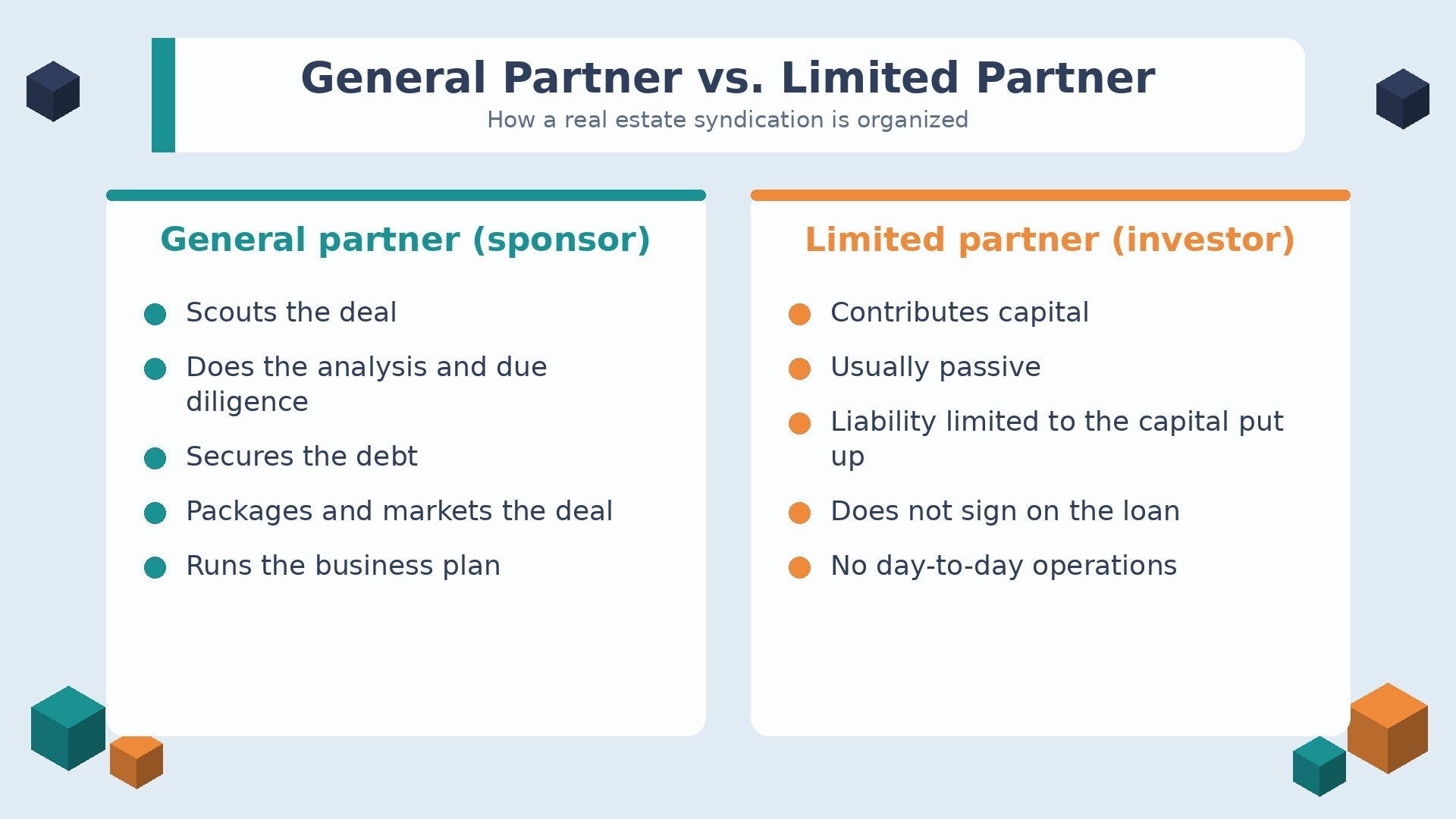
I asked August to explain real estate syndication for listeners new to this level of investing. In his description, a general partner, or sponsor, builds the deal. Limited partners provide the capital.
“Syndication is basically a process where a general partner, the sponsor of a deal, goes out there, scouts the deal, does the analysis, does the due diligence on a deal, puts it together, secures the debt, and then packages up the deal, the marketing material, and brings it to investors to invest. The investors are in most cases passive. They're limited partners that are putting up their capital, but they have limited liability. Their only liability is the capital they have put up. They don't have to sign on the loan. They don't have to pull up their sleeves and get involved in day-to-day operations.”
He also separates a syndication from a fund. A syndication is usually tied to one project. A fund holds a basket of deals. Structures and terms vary from offering to offering.
Raising Capital Takes Trust, Not Just a Great Deal
A common hurdle for first-time sponsors is a chicken-and-egg problem. You are busy finding deals, then a great one arrives and you must raise money fast.
“When a great deal comes across your desk, you are in a rush to try to go out there and raise the capital. And a lot of times it's difficult to turn cold leads into investors who are going to come and invest $100,000, $200,000 with you. So it's got to be a process where you are managing both sides. The equity side of the business, connecting with investors, raising capital, nurturing those leads, while at the same time you are working on the main part of your business, which is going out there and acquiring deals and managing deals and executing the business plan.”
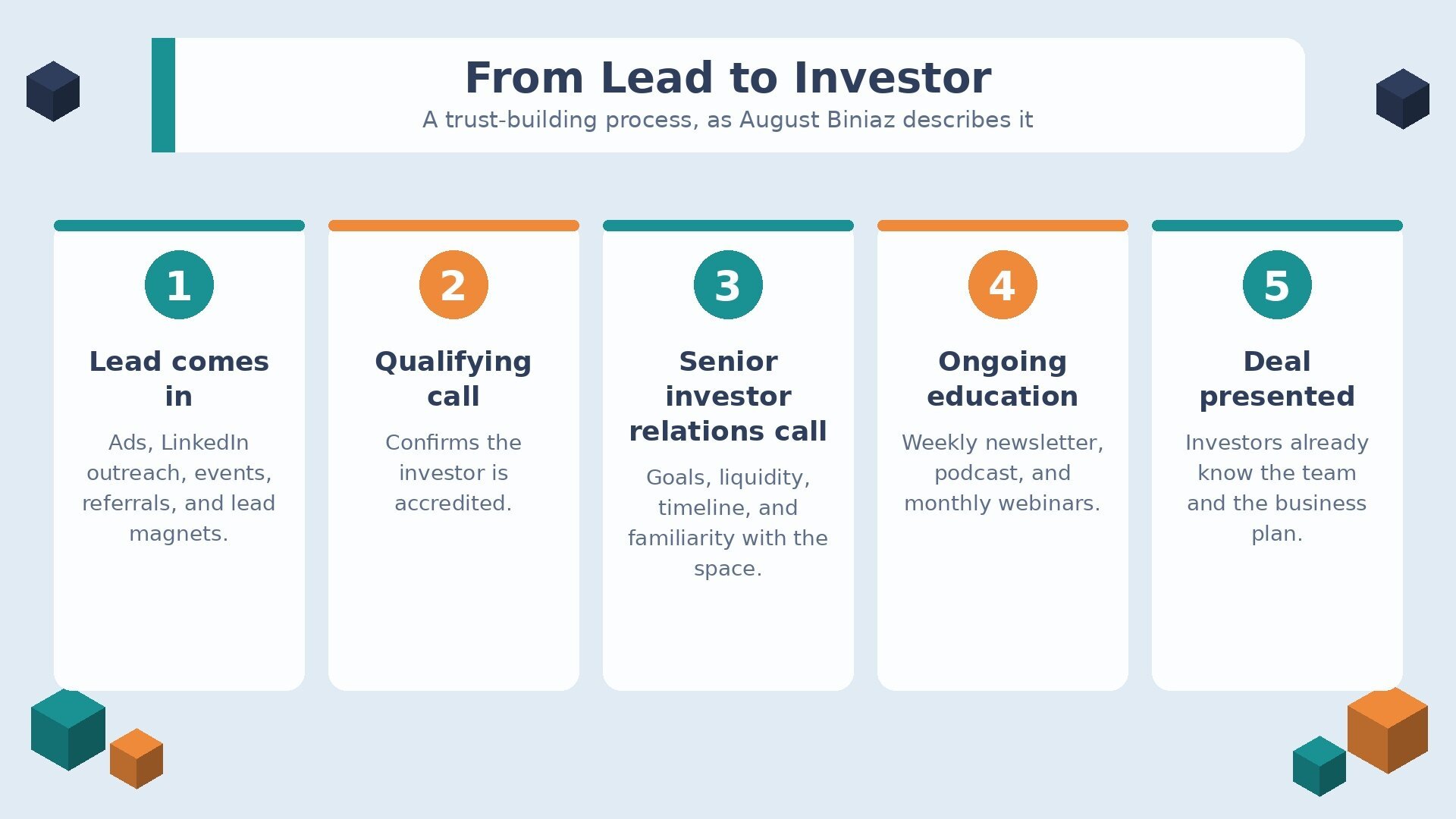
August says a firm needs a dedicated investor relations team. His team starts with a qualifying call to confirm accredited status, which he says securities regulators require. A senior team member then discusses goals, liquidity, and timeline. After that, they educate through a weekly newsletter, a podcast, and monthly webinars. He says trust is built over time, along with a track record and replies within 24 hours.
Why Multifamily Investing and Build-to-Rent Communities
August Biniaz, co-founder and chief investment officer of CPI Capital, explained why the firm focuses on U.S. rentals. He says more than 100 million Americans rent, and about 50 million live in apartment communities. He also says the U.S. offers some of the highest rental yields in the world, based on his firm's research.
Build-to-rent communities target renters by choice. He says about 5 million Americans fit that group. They like features such as a garage and no neighbors above or below, in a community of other renters. For markets, he looks at population growth, job growth, and median income growth. CPI is working on projects in San Antonio and Denton, in the Dallas-Fort Worth market.
I told him we saw this in Charlotte. After 2008, hedge funds bought single-family homes, then HOA pushback grew around COVID. Build-to-rent started to explode here.
Asset Management After Acquisition
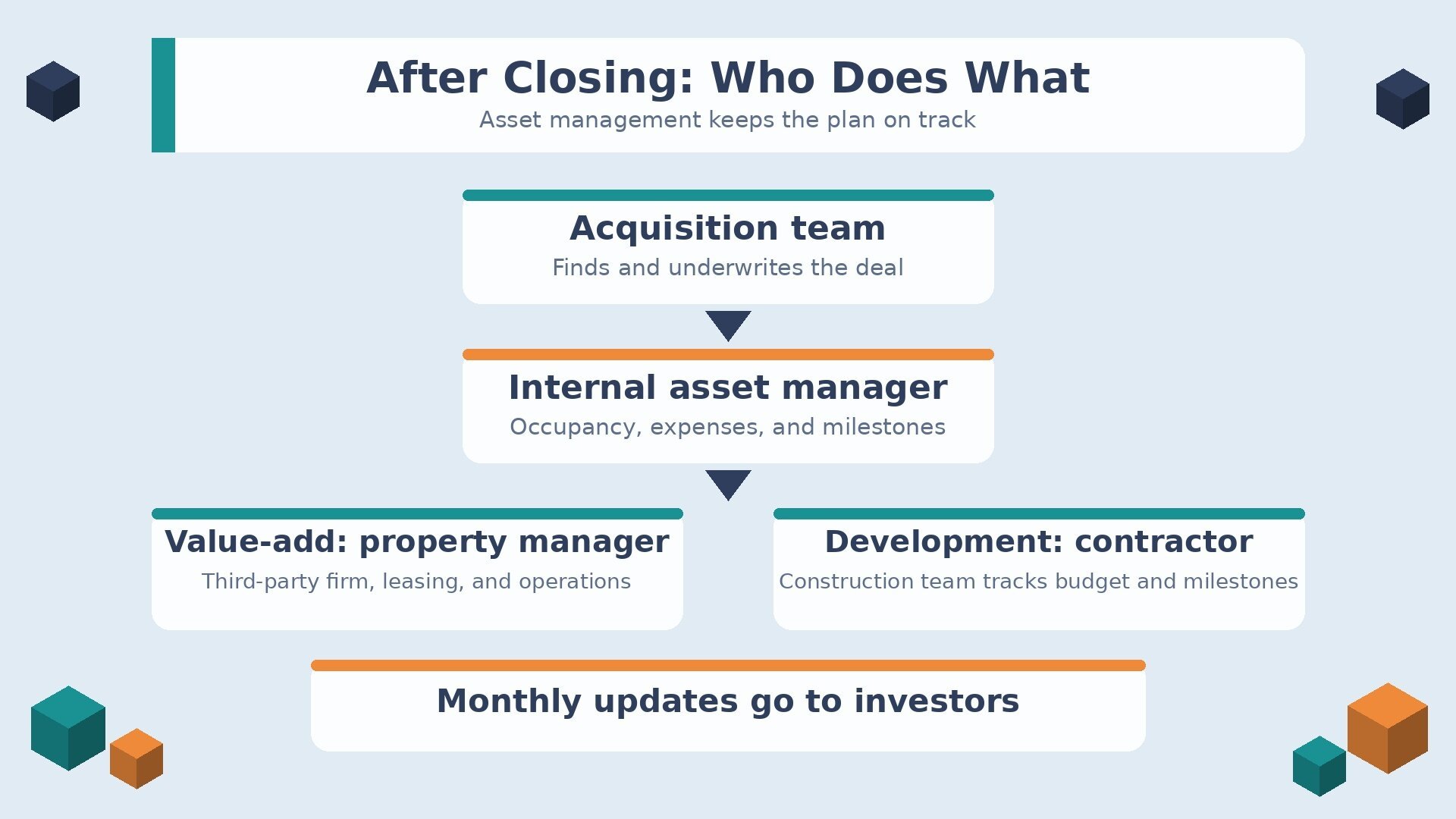
For multifamily investing, August calls asset management one of the most important parts of the business. After a deal closes, the internal asset manager oversees the third-party property manager. The manager watches occupancy, expenses, and milestones. On development deals, a construction team oversees the general contractor first. Asset management takes over once the project is stabilizing.
The asset manager also supplies reporting that investor relations passes to investors monthly. I added that investors want their money to perform for the time they have it invested.
Where New Syndicators Go Wrong: Property Managers and Bridge Debt
August says the wrong property manager can break a deal, even with a great asset manager. Aggressive underwriting is another risk. The biggest is debt.
He explained that many groups used short-term bridge loans, usually about three years, to buy deals in 2021 and 2022.
“Because the term is much lower, three years, a lot of groups bought deals in 2021, 2022 at the peak of the market, and then three years later when their loan matured and now they're coming to get a new debt, their property is worth less, their occupancies have dropped, rents have dropped, and the lender is saying, hey, I'm only renewing you if you can bring in more capital to the deal or I'm just going to call my note. So it created a lot of distress in the real estate market.”
His takeaway is that debt makes or breaks real estate, so choose it carefully.
Advice for Moving From Solo Investor to Sponsor
For anyone thinking about this path, August offers these tips:
Bring in partners who are stronger than you in investor relations, underwriting, or asset management.
Define your business model and make sure you have experience in it.
Invest as a limited partner first to see how a sponsor communicates.
Find a mentor or a mastermind to meet future partners.
He adds that your reputation is everything. Investors can forgive a deal that goes wrong if you have made them money and communicated well.
Start With the Big Goal, Then Work Backward
He mentioned Traction by Gino Wickman and the Entrepreneurial Operating System. You set a 10-year goal, then a three-year goal, a one-year goal, and quarterly priorities. I said the same to our sons: you eat the elephant one bite at a time. CPI's own goal is to reach the NMHC's top 50 apartment owners over 10 years, and to keep growing build-to-rent.
What August Sees Ahead for the Rental Market
August says real estate moves in cycles of roughly 20 years. Cheap debt after COVID led to a lot of new supply, and rents fell in some growth cities. He expects occupancy and rents to firm up over time, though he calls it an anxious market. He stays bullish long-term.
Frequently Asked Questions About Syndication and Build-to-Rent
What is real estate syndication?
Investors pool capital to fund one property deal. A general partner organizes it, and limited partners contribute capital passively.
What is the difference between a syndication and a fund?
A syndication is often tied to one project. A fund can hold a collection of investments.
Why might someone choose a build-to-rent home?
It can offer a garage and no neighbors directly above or below, while residents stay renters.
How can someone evaluate a real estate investment firm?
Look at track record, communication, team, and how it reports progress to investors.
Connect With August Biniaz and Deana Brummett
VisitCPI Capital or find August onLinkedIn andX. To follow my work, visitAt Home in the Carolinas or find me onLinkedIn,Instagram, andFacebook. Thank you to August Biniaz of CPI Capital for shining a light on this space.
Apply to Be a Guest on the Make Yourself at Home Podcast
Real estate decisions are easier when you hear from people doing the work. If you invest, build, lend, or advise in the Carolinas and beyond, I'd love to hear from you.
This podcast is produced by the Icons of Real Estate - #1 Real Estate Podcast Network. If you are a real estate professional, apply to be a guest speaker across the network.